
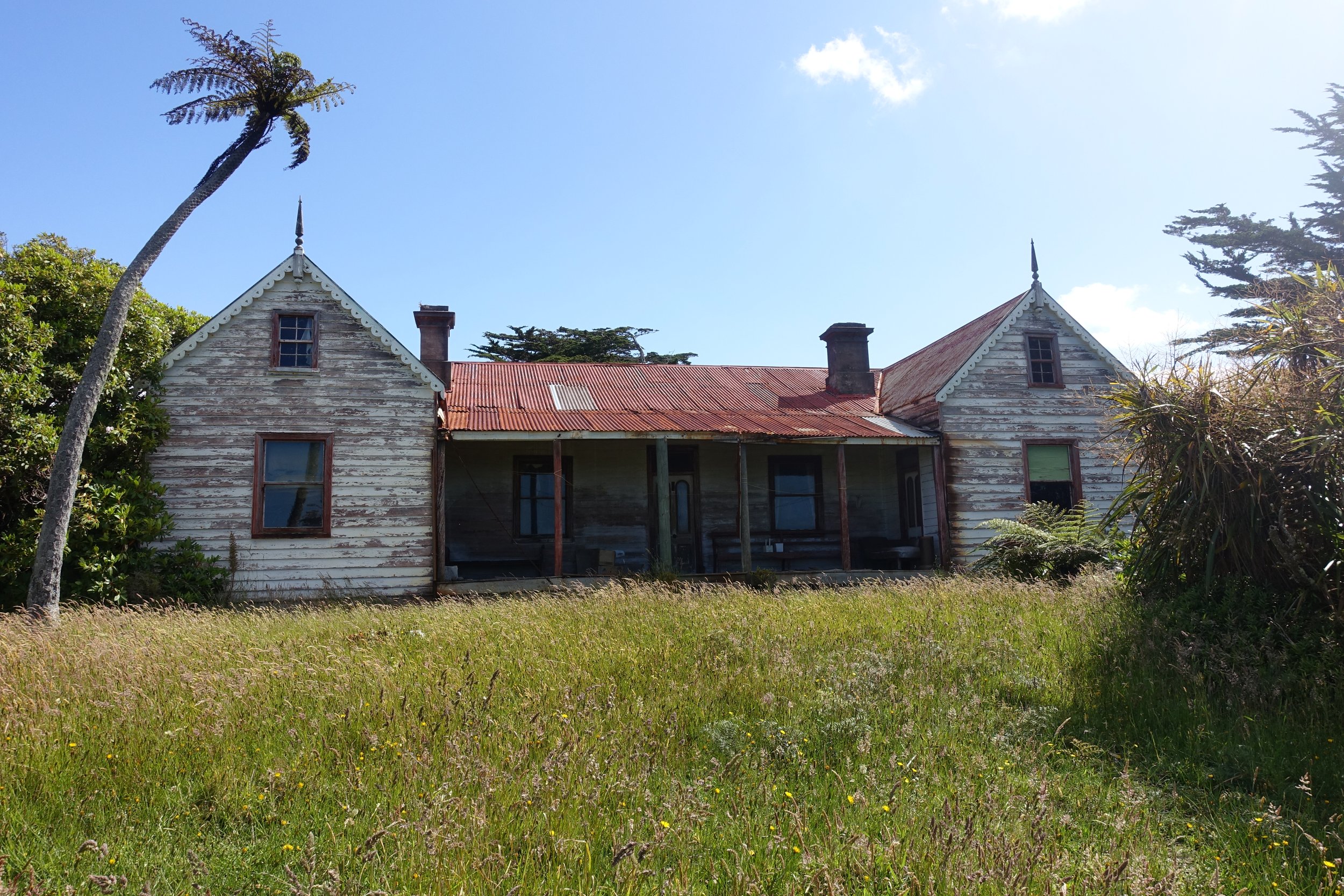
Travellers Rest, Stewart Island / Rakiura. CC BY-SA 4.0 Image courtesy of commons.wikimedia.org | Schwede66 | 25/12/2018 | Schwede66 – Wikimedia Commons
Traveller’s Rest
Part of Sec 36 Blk I Paterson Survey District (part of RT SL12A/21), Southland Land District
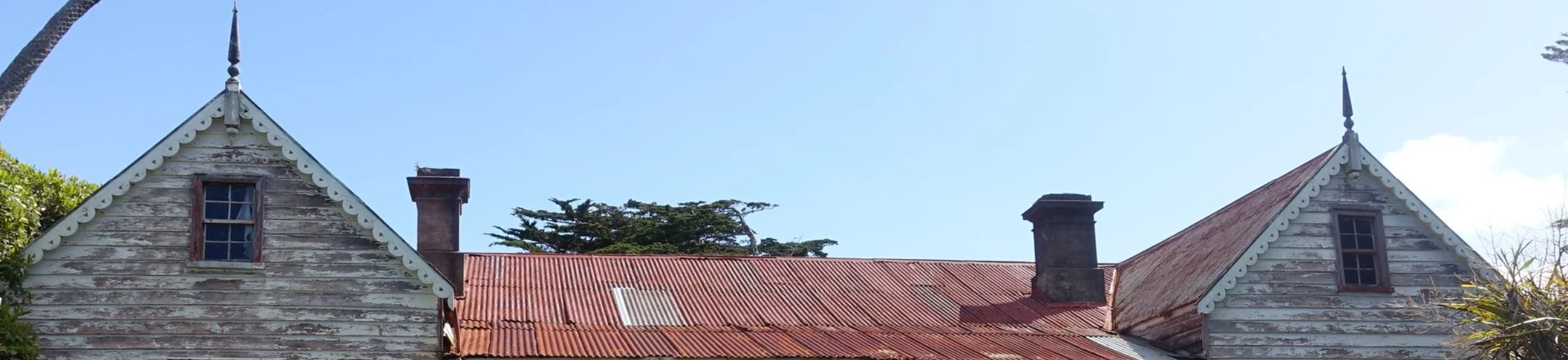
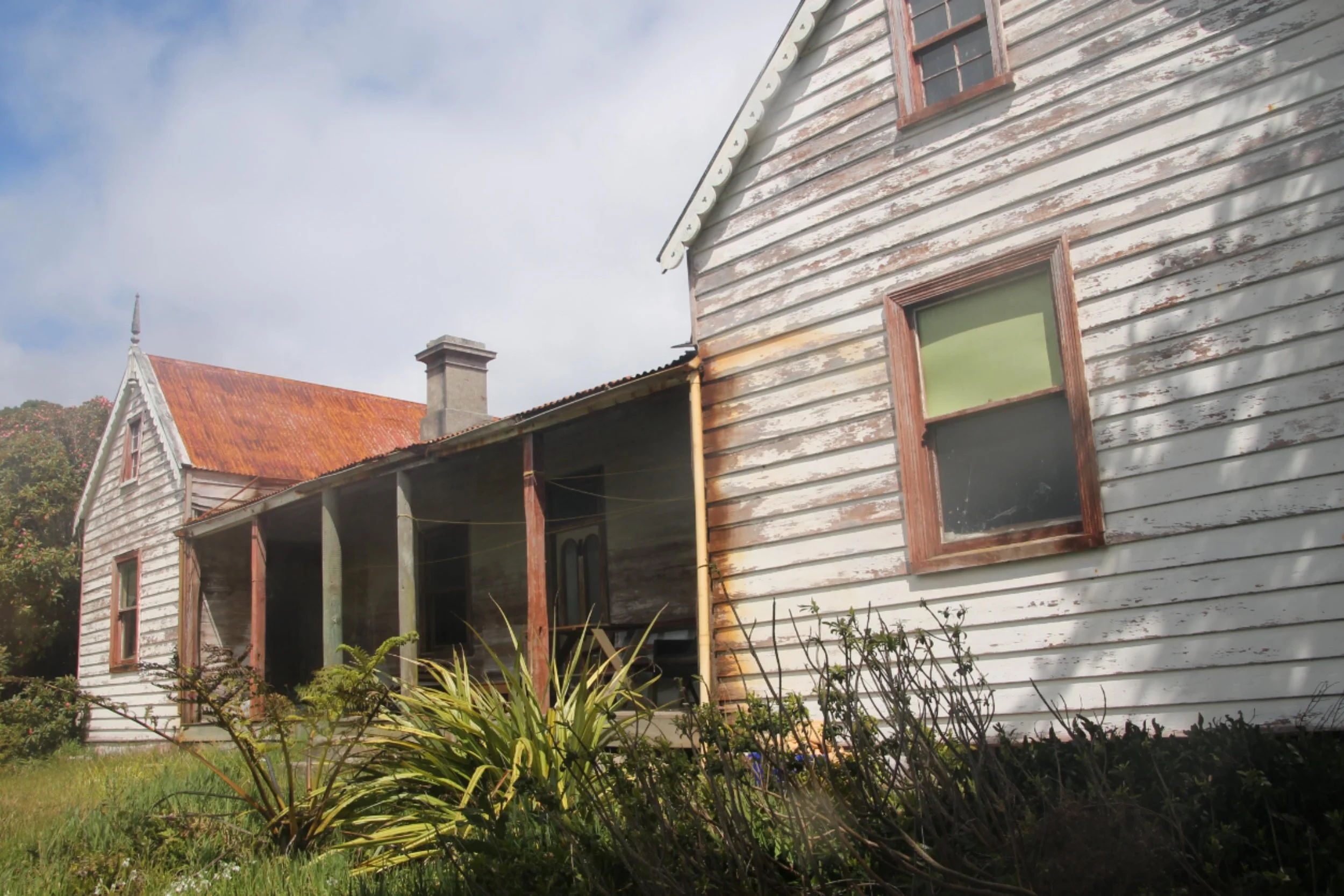
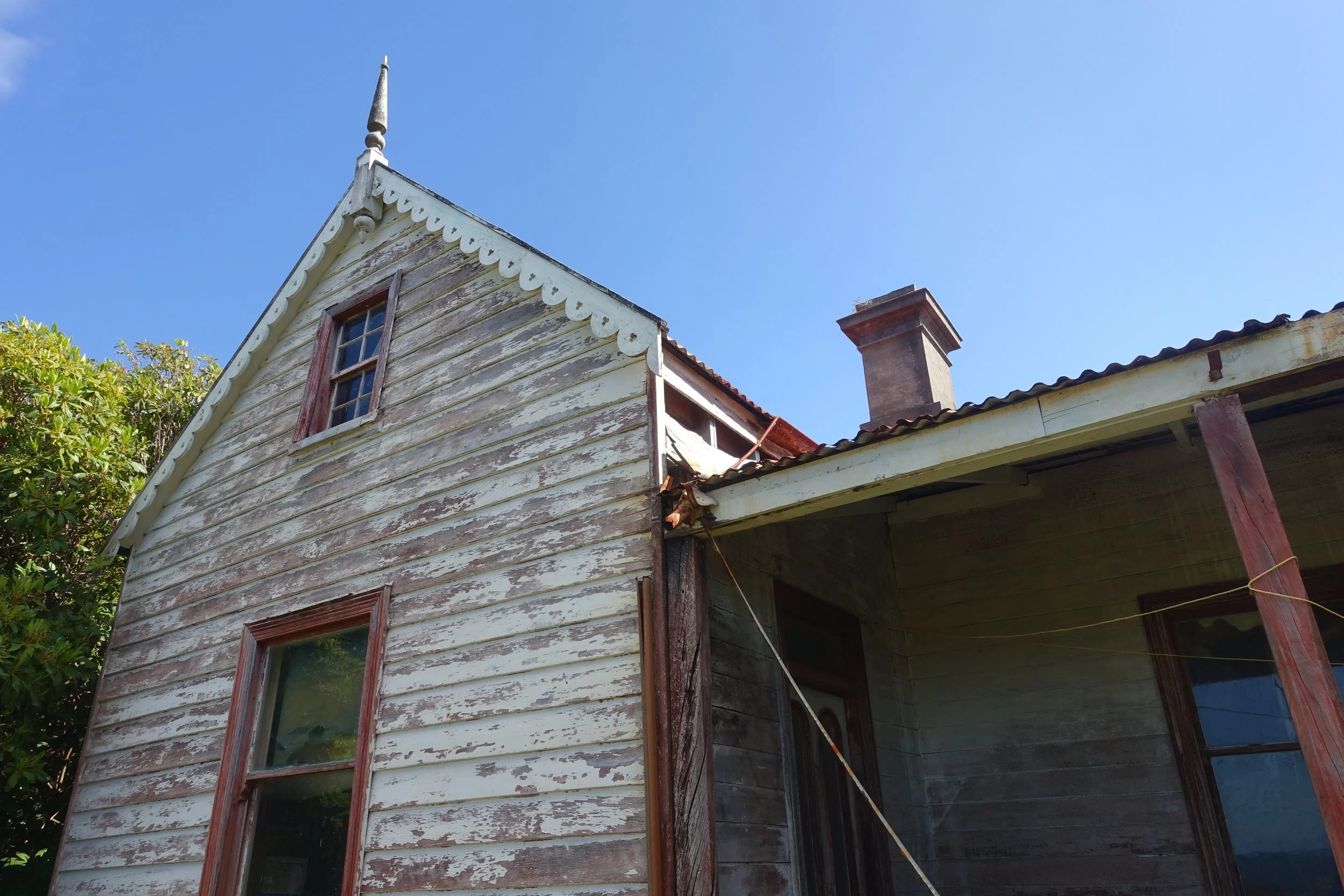
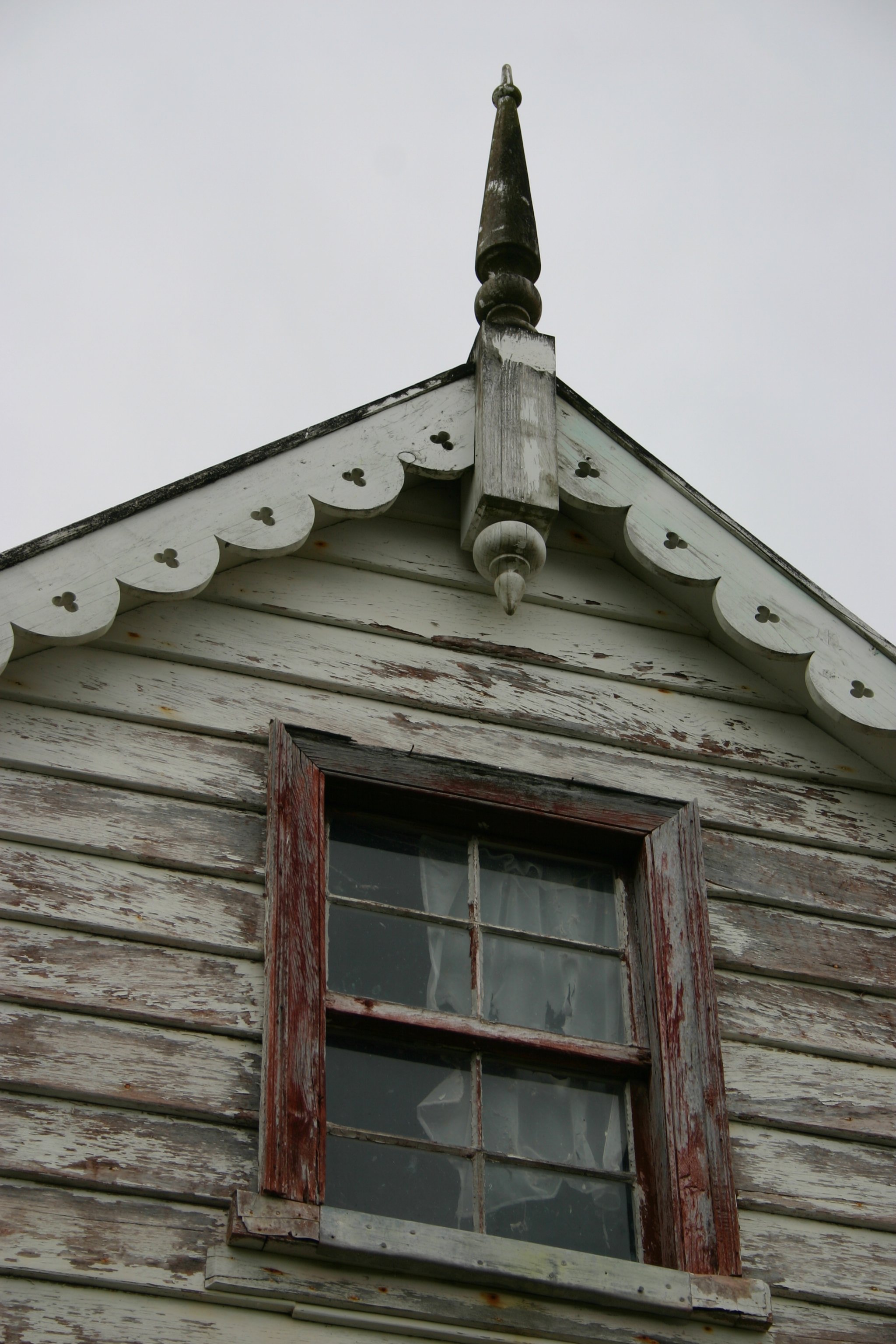
Traveller’s Rest is one of the earliest surviving houses on Stewart Island and an exceptional example of early settler architecture from the 1870s. Built by local carpenter Robert Harvey, the house demonstrates the practical building traditions that shaped the island’s first permanent European settlement. Its simple gabled form, hand‑worked timber construction, and use of locally milled rimu and totara reflect the resourcefulness required in an isolated southern community.
The place has strong historical significance through its long association with the Harrold family, who became its early occupants and later operated it as one of Stewart Island’s first boarding houses. For decades, “Mrs Harrold’s” was a familiar name in newspapers, visitor accounts, and shipping notes, marking Traveller’s Rest as an important early accommodation house for fishermen, sailors, and tourists exploring Rakiura.
Architecturally, Traveller’s Rest is a rare survivor of early domestic construction on the island. Despite later lean‑to additions and minor alterations, the building retains its original form, materials, and character, offering an unusually intact example of early vernacular design.
The house also holds considerable social value. Generations of islanders and visitors passed through its doors, and it remains closely tied to community memory and the story of early life at Halfmoon Bay. Its elevated position overlooking the harbour makes it a recognisable and much‑loved landmark.
Together, these qualities give Traveller’s Rest outstanding heritage significance as one of Stewart Island’s oldest homes, a rare example of early construction, and a place deeply woven into the island’s social and tourism history.
-
65 Leask Bay Road, STEWART ISLAND / RAKIURA
Note: The home is privately owned and not open to the public.
-
Builder: Robert Harvey
Construction date: Early 1870s
Architect: None (vernacular construction)
First occupants: James & Agnes Harrold
Function: Family home and early boarding house
Construction Materials
Timber framing and cladding with timber window joinery, and a corrugated iron roof
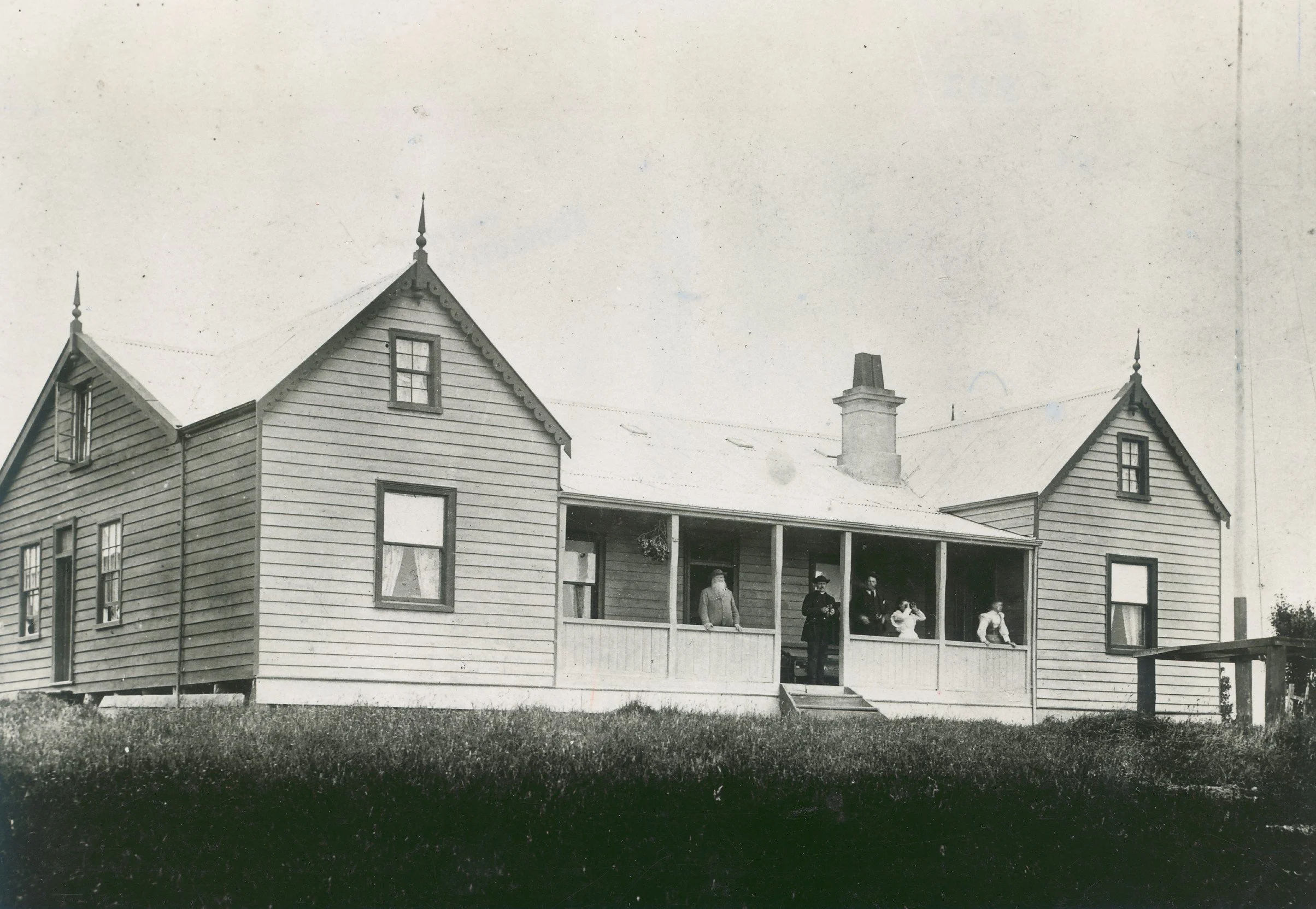
'Ye Traveller's Rest' - Courtesy of Rakiura Museum
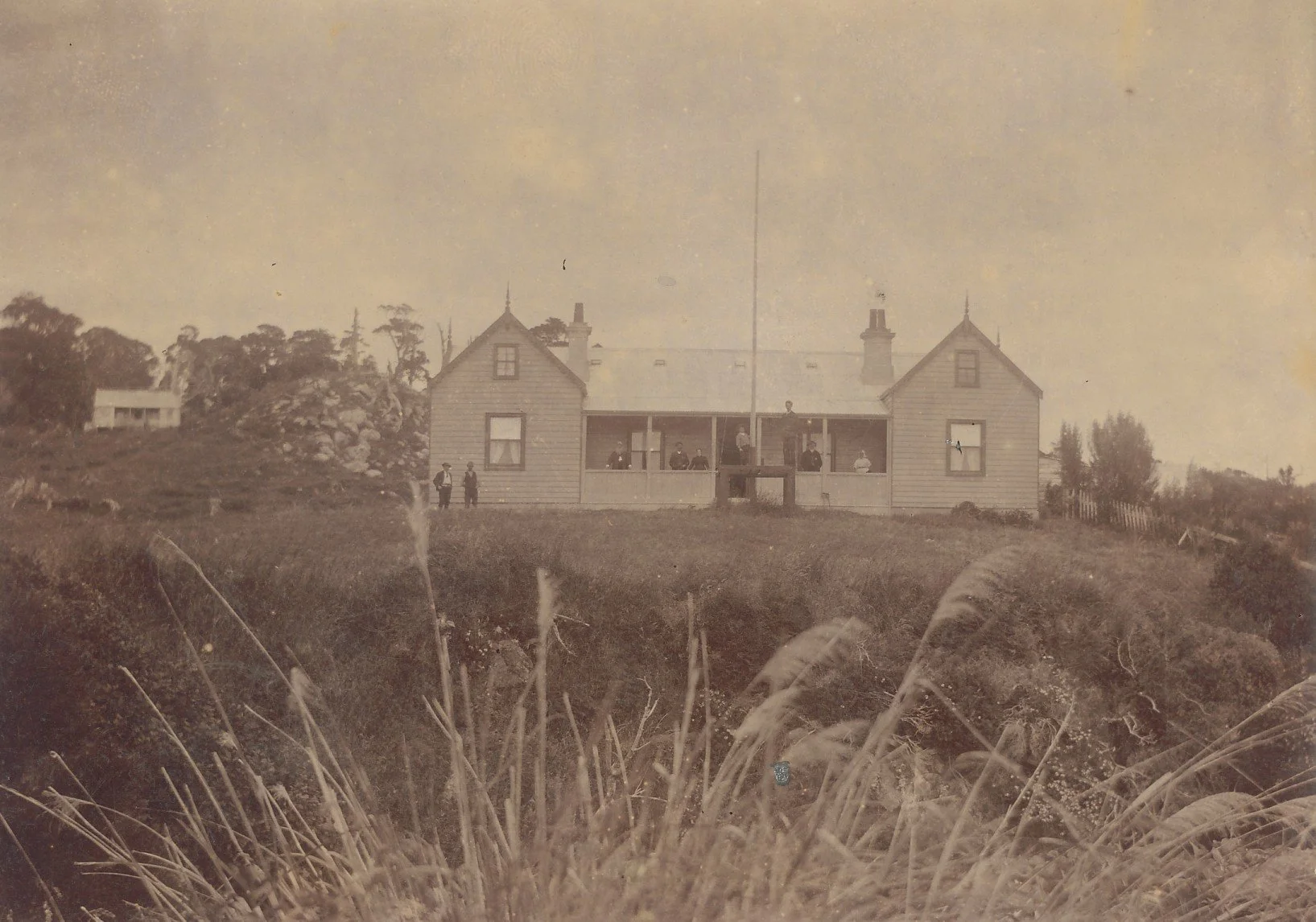
Traveller's Rest with Orphan House - Courtesy of Rakiura Museum
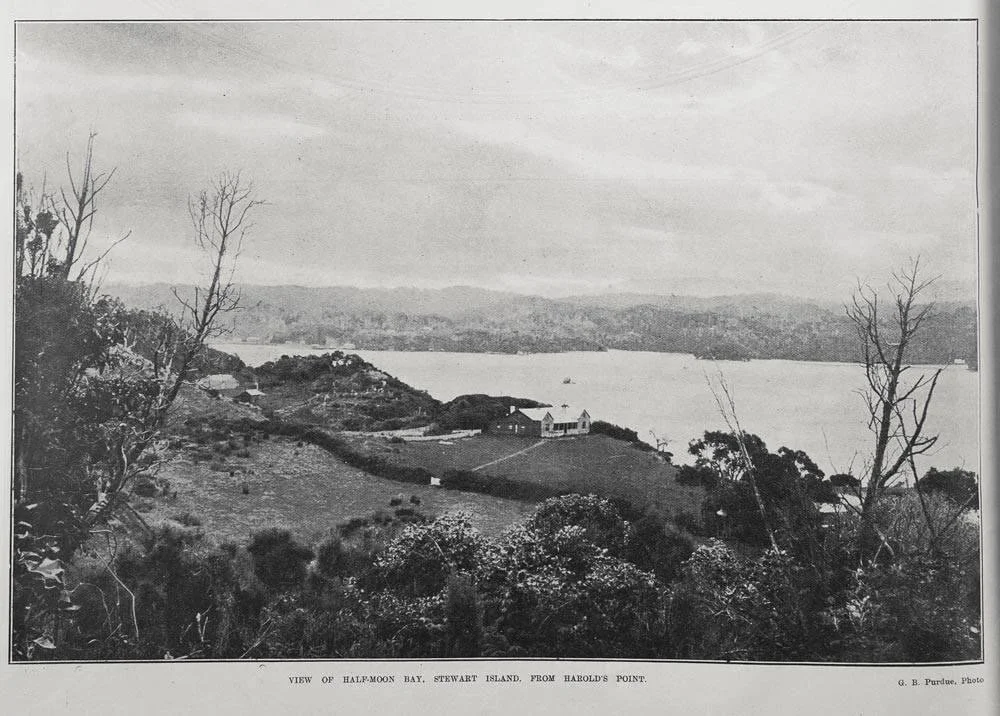
View from Halfmoon Bay, Stewart Island, From Harrold's Point - Courtesy of Rakiura Museum
History.
Harrold’s Point – Stewart Island / Rakiura
Harrold’s Point is one of the earliest named places in Halfmoon Bay, taking its name from the Harrold family, who were among Stewart Island’s first permanent European settlers. James and Agnes Harrold arrived on the island around 1861, after earlier years working at Taieri Ferry on the mainland. They quickly became central figures in the small but growing community. Their home and later boarding house, Traveller’s Rest, overlooked the bay, and the family’s presence on the shoreline became so well‑established that the headland below their property came to be known locally as Harrold’s Point. The name reflects both their long occupation of the site and their role in shaping early life in Oban. Captain Harrold, originally from the Orkney Islands, operated fishing stations, built a shop and jetty, and later expanded into coastal trading with his own vessels, making him one of the island’s most active early entrepreneurs. His work in fishing, boatbuilding, and local commerce helped anchor the settlement during its formative decades.
The point itself forms a distinctive feature on the northern side of Halfmoon Bay, marking the transition between the sheltered inner harbour and the more open waters beyond. In the late nineteenth and early twentieth centuries, Harrold’s Point was a familiar landmark for fishermen, visiting vessels, and early tourists arriving by launch or steamer. Its association with one of the island’s foundational families gives it strong historical and social significance, anchoring the Harrolds’ story in the physical landscape of Rakiura. Today, Harrold’s Point remains an enduring reminder of the island’s early settlement era and the people who helped establish the community at Halfmoon Bay.
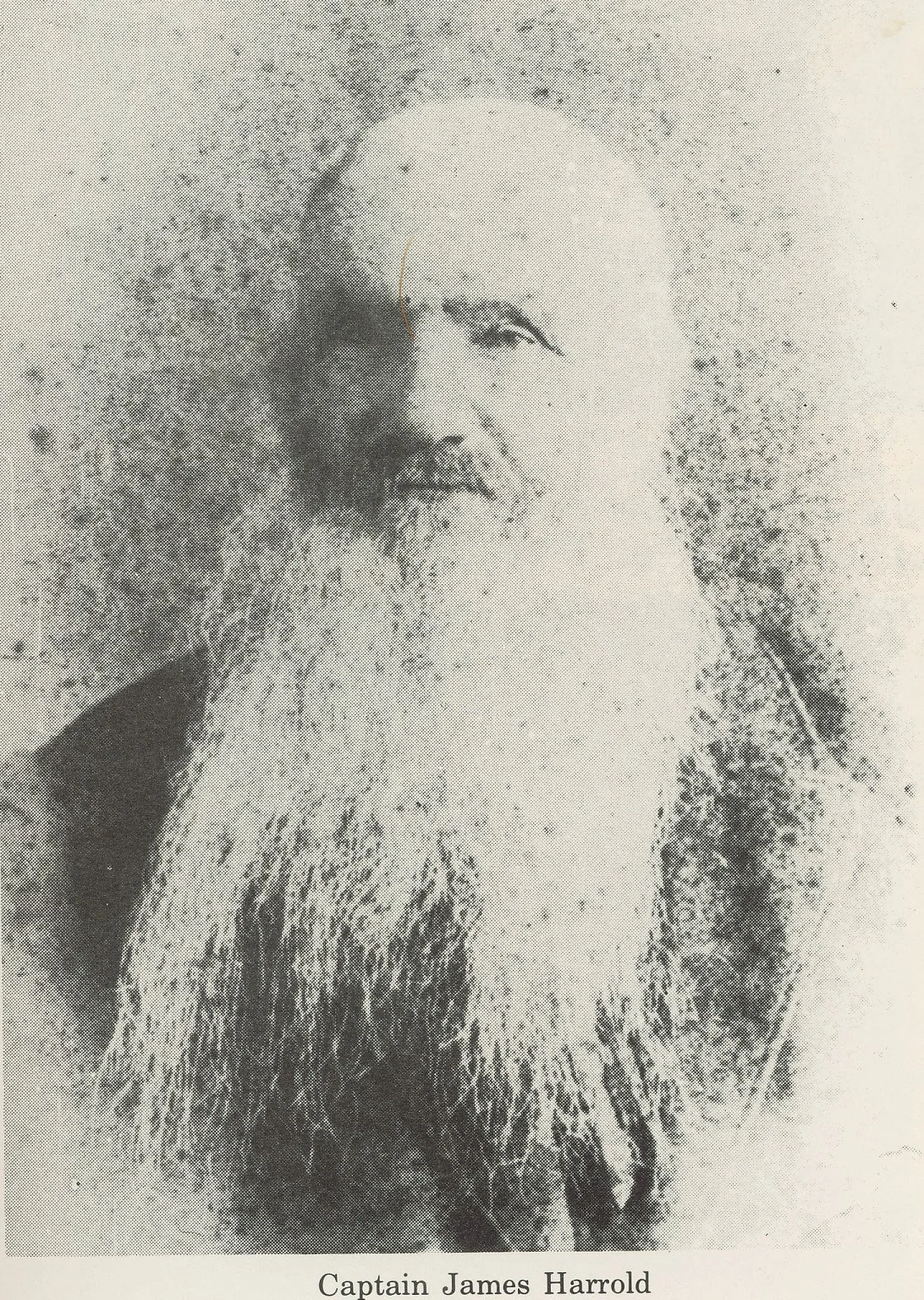
Image Right: Captain James Harrold, courtesy of Rakiura Museum
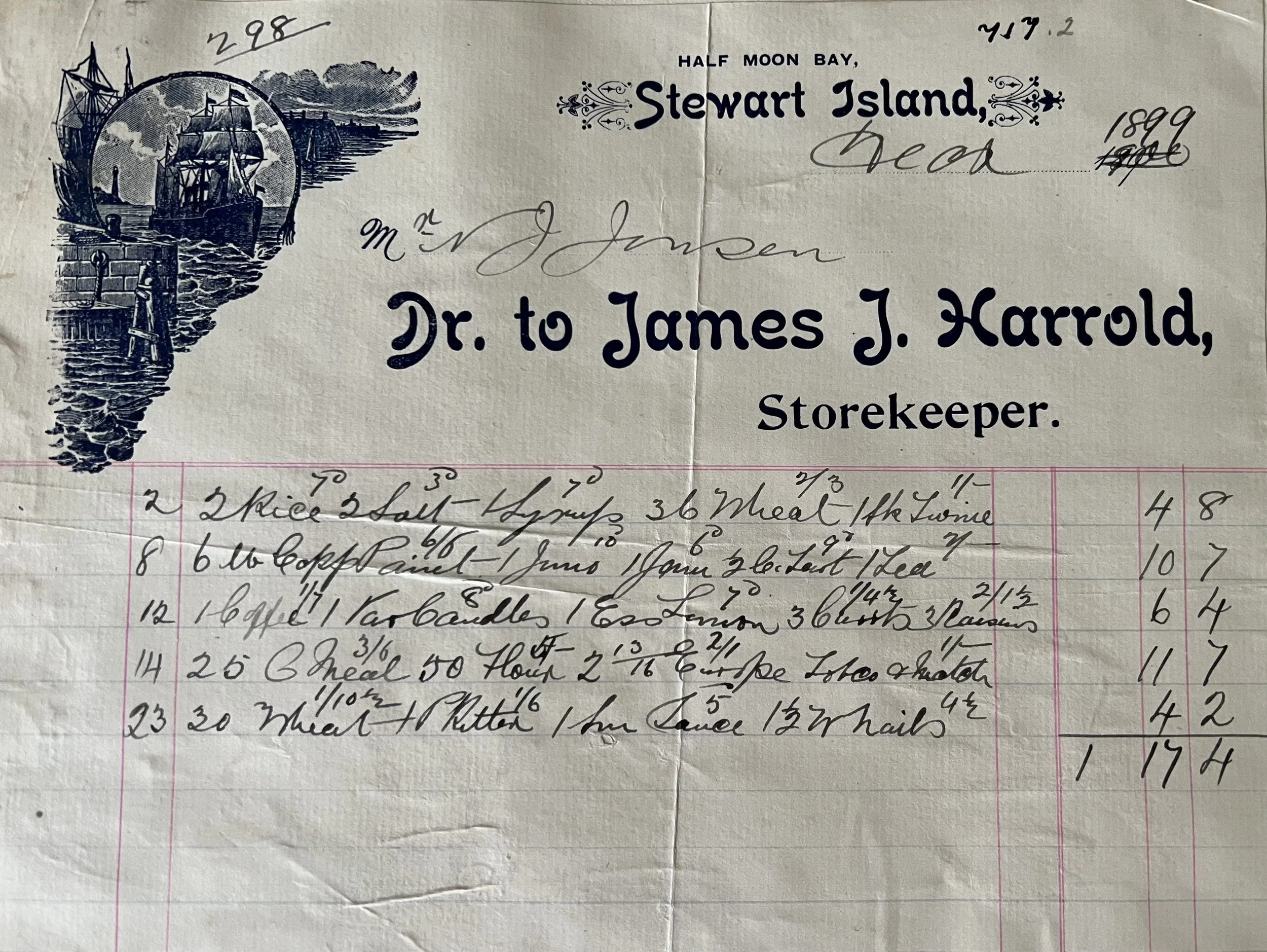
Image Below: Bill head dated 1899 from James J. Harrold, shopkeeper, to J. Jensen, courtesy of Rakiura Museum
Stories.
“Ye Traveller’s Rest” – Naming Fashion and Early Stewart Island Tourism
From the 1890s until the 1910s, Stewart Island experienced a steady rise in domestic tourism as improved steamship services brought increasing numbers of holidaymakers to Halfmoon Bay. Visitors came for fishing, walking tracks, coastal scenery, and the island’s reputation for peace and natural beauty. During this period, Oban supported a surprisingly active visitor economy, with multiple boarding houses and guesthouses operating around the bay. Early postcards from the era depict well‑known establishments such as Ferndale House, Greenvale House, Oban House, Bay View House/Woodslea, and Sailor’s Rest, alongside visitor facilities like Korari Tearooms. Their frequent appearance in postcards confirms that Stewart Island had a well‑developed accommodation network catering to the growing tourist trade.
It was in this same era that the quaint, faux‑archaic “Ye…” naming style became fashionable across New Zealand. Boarding houses, tearooms, and small accommodation providers often adopted spellings such as “Ye Olde…” to evoke rustic charm and old‑world hospitality that appealed to Victorian and Edwardian travellers. Within this context, the name “Ye Traveller’s Rest” appears. Although never the official name of the Harrold family’s accommodation house, the “Ye” form was a stylistic flourish used informally in local writing, captions, and promotional language of the time. The phrase is found in published sources, including Olga Sansom’s The Stewart Islanders, reflecting how locals and visitors sometimes styled the name to suit the romanticised tone of early tourism. It is highly likely that the Harrolds, later owners, or early tourism promoters used “Ye Traveller’s Rest” as a decorative label, aligning the house with the broader marketing language of Stewart Island’s early visitor era.
🩺 Granny Harrold & the History of Nursing on Stewart Island / Rakiura
(Kindly shared by Rakiura Museum — with gratitude for preserving and sharing this history) 💙🏥
NURSING ON STEWART ISLAND
For many years there were no doctors on Stewart Island, so medical assistance had to be sought from capable local women. Cases were wide-ranging, from childbirth to tuberculous, sawmilling and other industry-related accidents, to dentistry.
It was not until 1911 before a formal district nursing placement on the island came about. From this date until 1985 fourteen nurses took up the mantle of dispensing medical aid, giving good advice, and providing first aid training to the island’s inhabitants.
The job was not, unexpectedly, without its challenges, but the most difficult was getting to and from their patients. Up until the arrival of the first nurses’ car on the Island in 1953 there was no reliable means of transport around the island for medical aid. If a person got sick or injured, they would have to wait with only basic first aid treatment while someone ran miles to get assistance. Then the nurse used to have to walk back or be rowed along the coastline to their patients.
To get patients from the island to Invercargill Hospital on the mainland, the nurse and her patient had to travel by boat. It was quite an ordeal for an ill patient to travel two and a half hours in often rough seas by boat and then continue the journey by ambulance across seventeen miles of rough road from Bluff to Invercargill Hospital. In 1960 when an amphibian plane service began, patients only had to endure a twenty-five-minute plane ride directly to Invercargill airport. Today it is only a brief helicopter ride away for medical emergencies.
It is said that there are four main characteristics that make a good district nurse on Stewart Island:
First and most important is the ability to make decisions; second, the nurse should have good common sense; third, a good basic grounding in all aspects of nursing, especially advanced first aid and finally, the ability to cope in stressful situations.
👵 Send for Granny Harrold!
For over 40 years ‘Granny’ Agnes Harrold was Stewart Island’s self-appointed nurse, midwife, and sometimes-surgeon.
Agnes, a Scottish/American Indian girl, married fisherman James Harrold at Hudson Bay at the age of 16. After living in Otago for several years, they settled on Stewart Island in 1861 at what is now Harrold’s Bay. Here they established the island’s first guesthouse ‘Travellers’ Rest’, fostered children, and tended to the island’s medical needs.
With James, (by this time a Captain), away at sea for considerable periods, Agnes was left to run the guest house and manage the children. She also ran a shop stocked with exotic items from her husband’s travels, including silver, parrots, and a pet monkey. At one point 12 children, all state wards, were in Granny Harrold’s care, with the fostered children providing essential help with the guest house and other chores.
‘Send for Granny Harrold' was the cry when basic first aid was not enough.
Where boat transport was impracticable she walked, sometimes for many miles, treated the patient, returned home to sleep and went back to the patient the following day. She did not fuss, was efficient, and inspired confidence. Her hands were 'strong as a man's', and she was comforting in times of trouble. 'He just slipt awa' like a knotless thread', she would say when death at last came.
As a midwife, Agnes Harrold was sympathetic. Her treatment for women in labour involved much drinking of squaw tea, which included raspberry leaves and tansy. She would keep the woman up and have her kneel on the floor for the delivery. She would fold clean linen round the baby, and then whip off her own woollen petticoat, warm from her body, and wrap the baby in it: 'The birth is enough. It can lie and rest.' Next, she would tend the mother, sponging her, helping her into the cool bed, and making her a thin gruel sprinkled with nutmeg. She always recommended a soup from blue shag, or Bravo Duck as it was known, after childbirth.
Agnes Harrold was regarded as an intrepid woman of forceful character. She listened to troubles but never spread them, keeping her own to herself.
🩹 Nursing After Granny Harrold
After Granny Harrold’s death in 1903 the local women, Mrs’ Hicks, Swain, Harrison and Bowers came to the rescue especially in times of accident or at childbirth.
The self-dedicated local nurses where frequently resourceful in times of trouble. They were forced to be, for accidents at the sawmills required, at times, expert and immediate attention, and there was always a long walk to get there before help could be given. Mrs Hicks, whose boarding establishment Ferndale House was on a bush track not far from one sawmill was ‘home’ to many of the sawmillers, and she frequently attended to accidents there. Her own courage, along with an infectious cheerfulness, put her heart into her patients and she was ‘mother’ to many more than her own family.
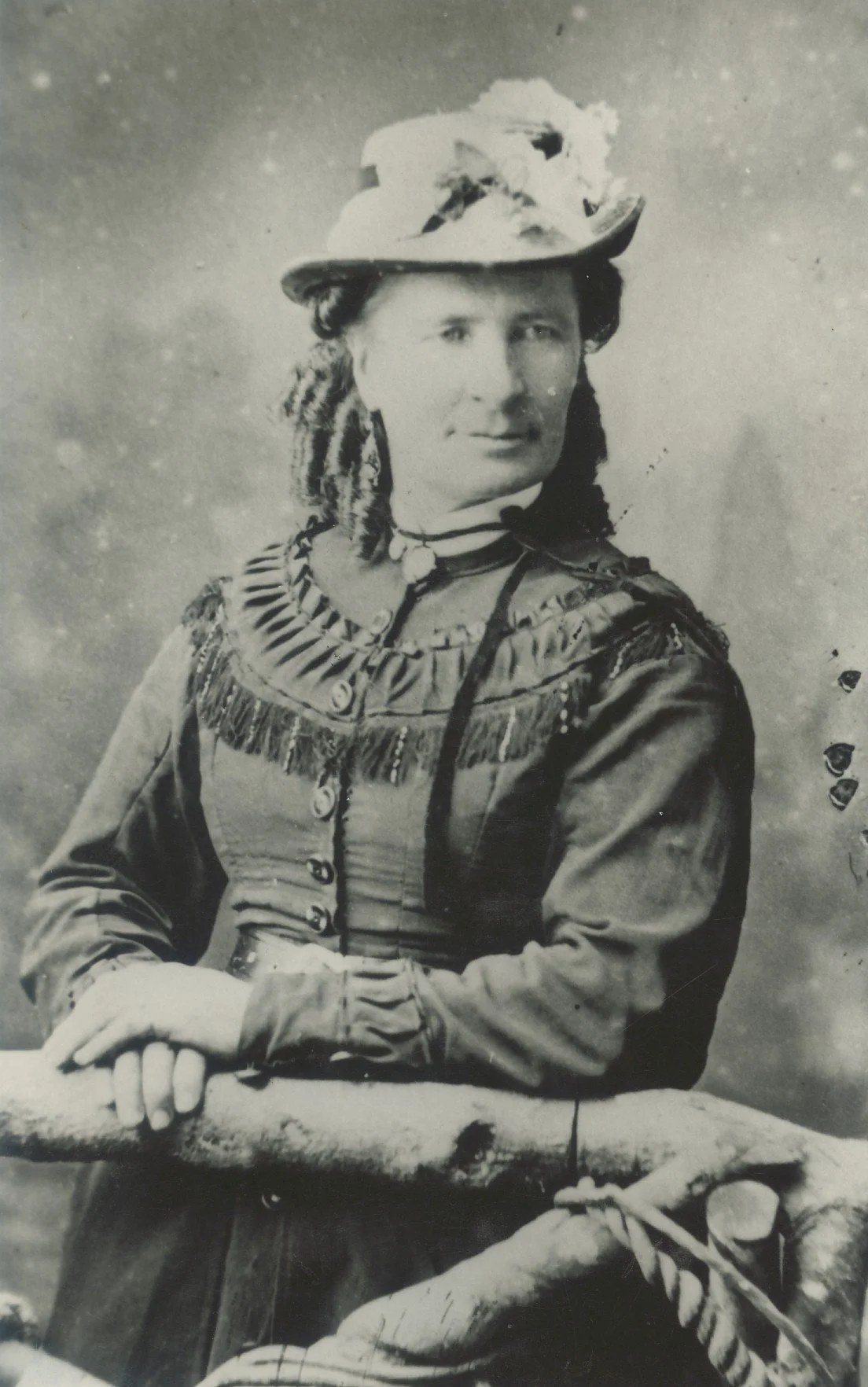
Image: ‘Granny’ Agnes Harrold courtesy of Rakiura Museum
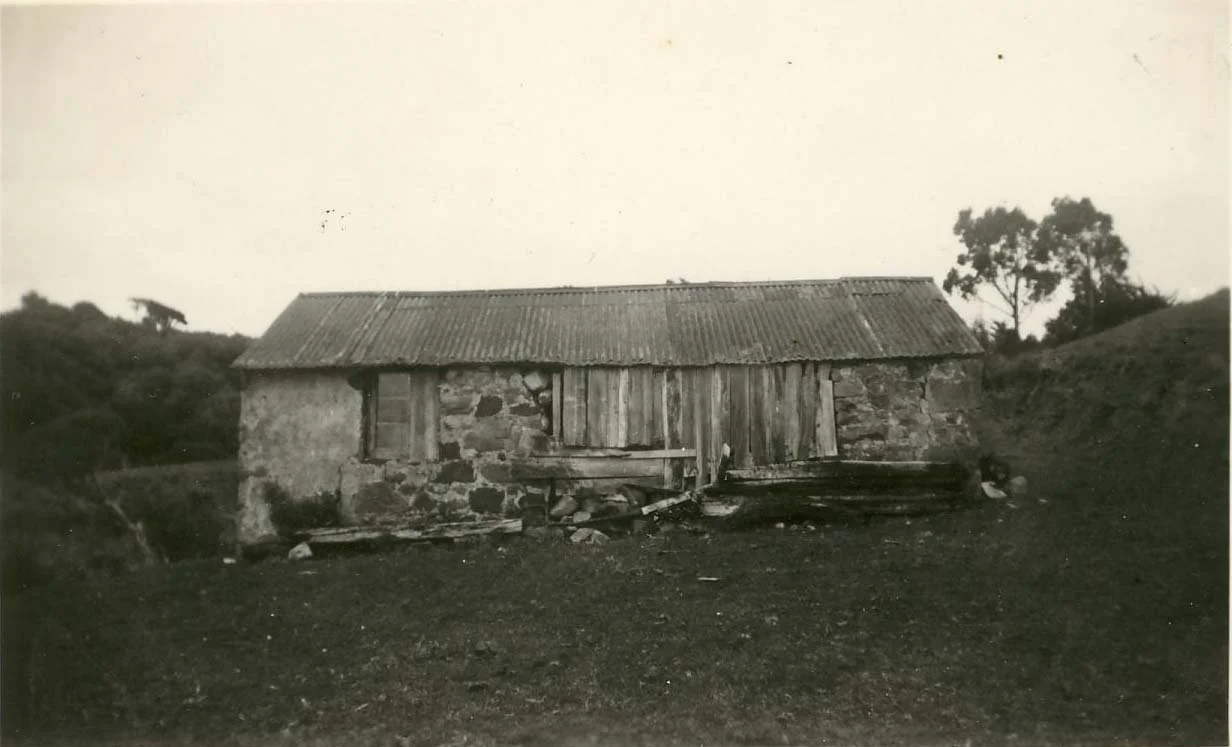
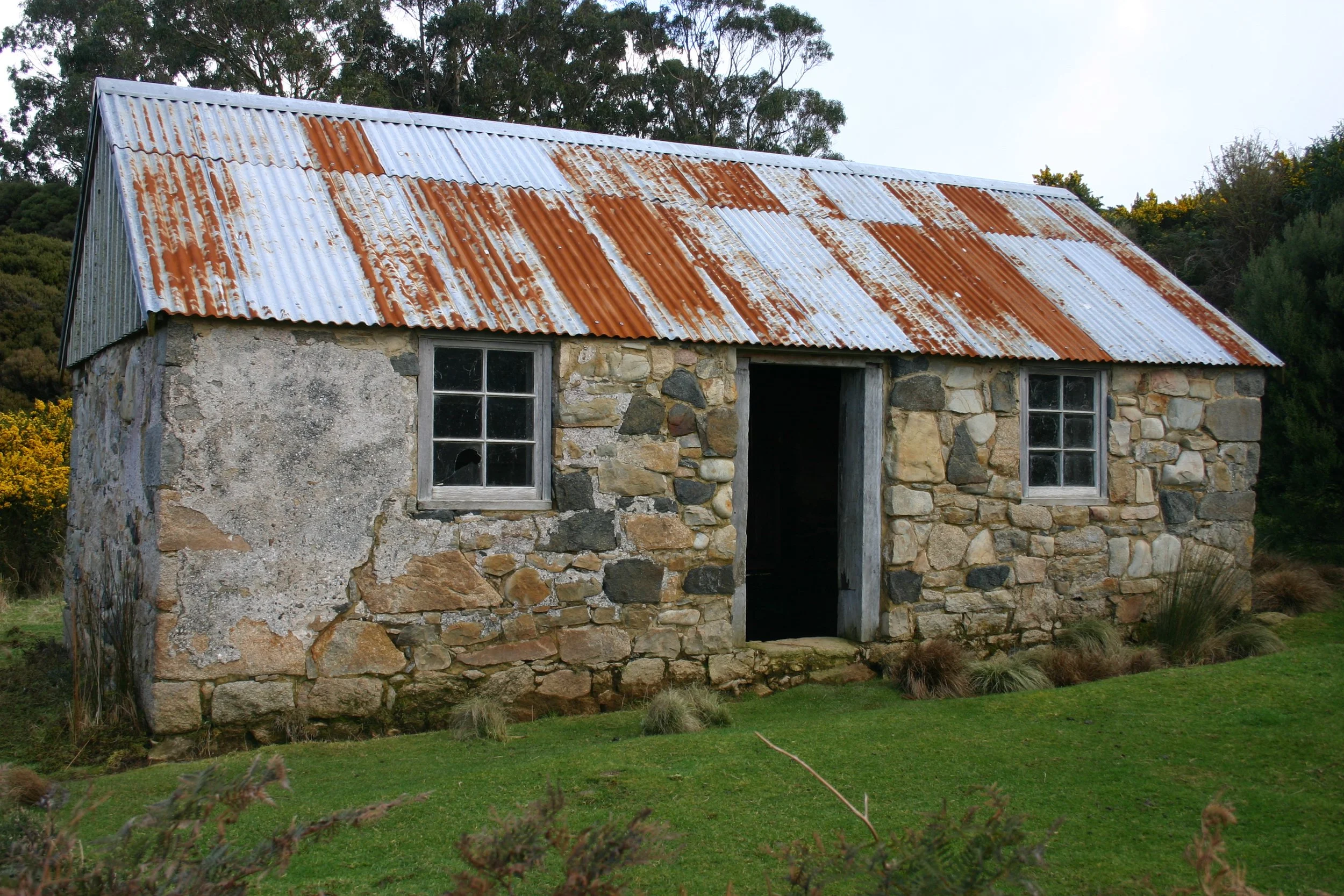
Images of Acker's Stone House courtesy of Rakiura Museum
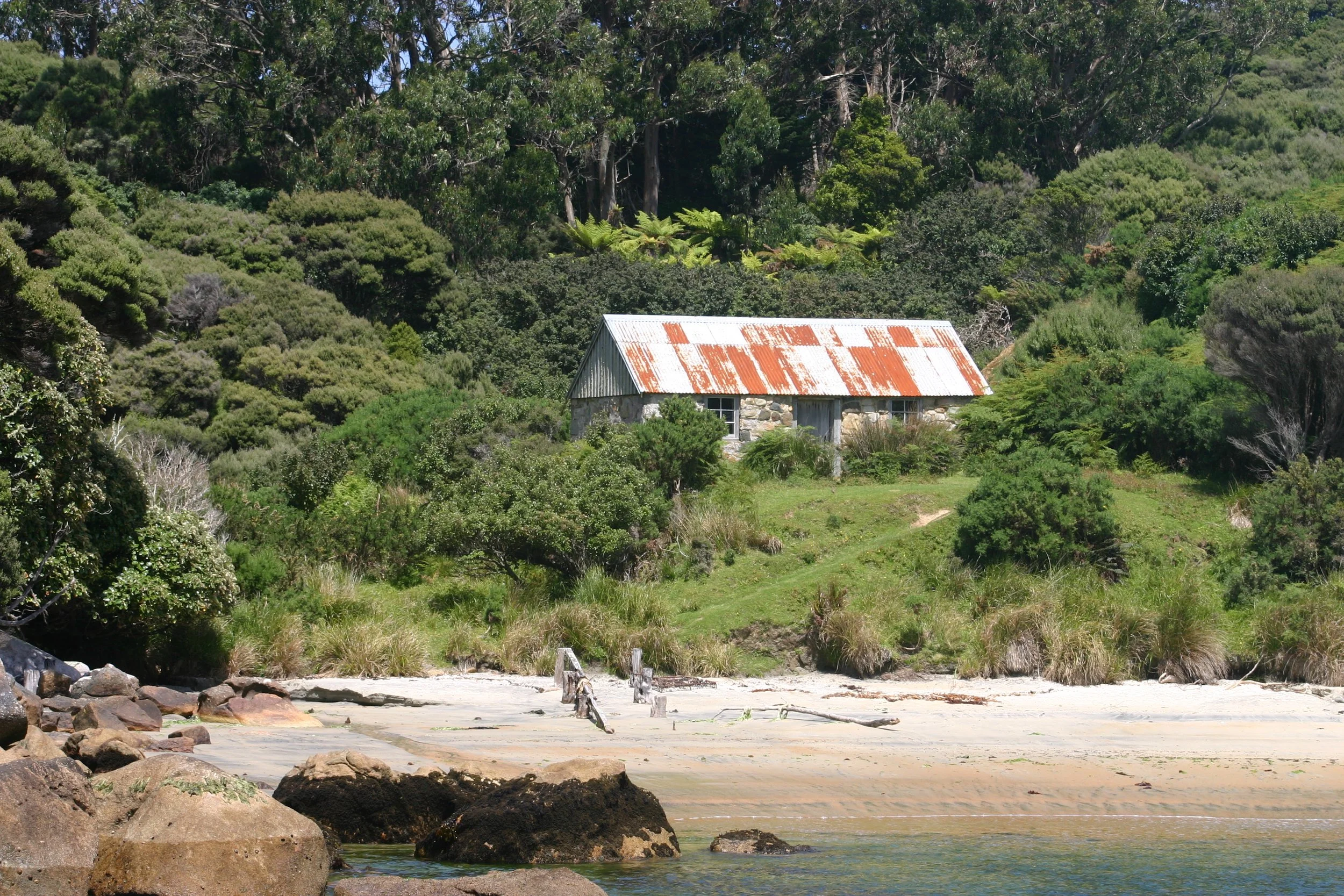
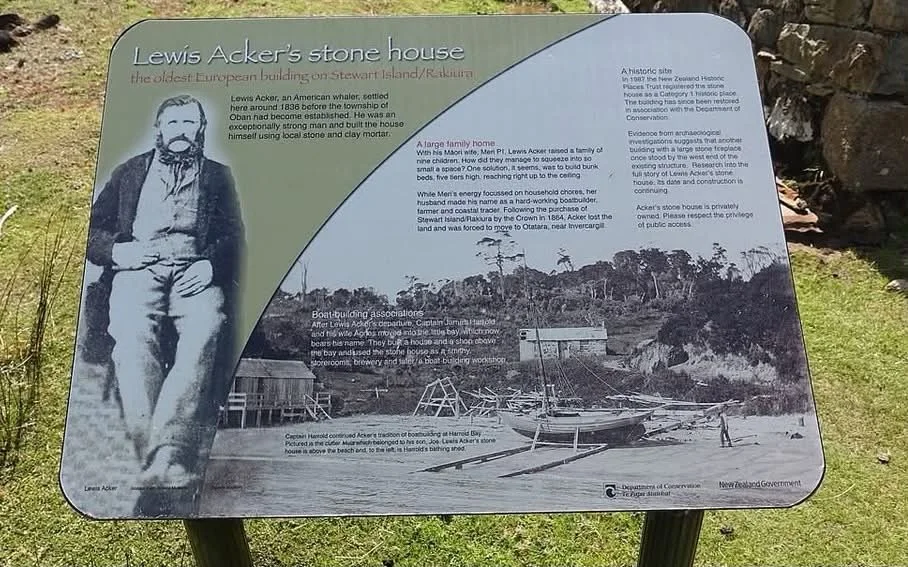
Captain Harrold continued Acker's tradition of boatbuilding at Harrold Bay. Pictured is the cutter Huia which belonged to his son, Joe. Lewis Acker's stone house is above the beach and, to the left, is Harrold's bathing shed.
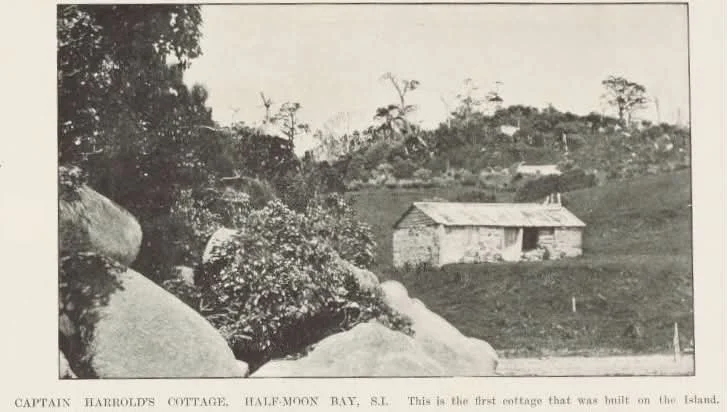
Captain Harrold's cottage, Half Moon Bay, Stewart Island The New Zealand Graphic and Ladies Journal, 23 May 1903, p.1454 Acknowledge Auckland Libraries Heritage Collections NZG-19030523-1454-03
Acker’s Stone House – Early Settlement and the Harrold Connection
Acker’s Stone House is one of the oldest surviving buildings in Southland, built by Lewis Acker in the mid‑1830s on the shoreline of what is now Harrold Bay, Stewart Island/Rakiura. Acker lived and worked on the site for nearly three decades, using the stone cottage as his family home and as the centre of his boat‑building and coastal trading activities. Lewis Acker and his wife Mary Pi raised nine children in this simple cottage. They remained there until 1864, when the Crown purchase of Stewart Island resulted in Lewis losing his claim to the land. Acker subsequently moved to Ōtātara, Invercargill, where he farmed until his death in 1884.
Following Acker’s departure, the cottage and surrounding bay were taken over by Captain James Harrold and his wife Agnes, becoming the second long‑term occupants of the site. The Harrolds continued the maritime traditions established by Acker, using the stone house and its outbuildings as a smithy, storerooms, a small brewery, and later a boat‑building workshop. Their long association with the bay gave rise to the name Harrold Bay, and one of the vessels linked to the family’s boat‑building activities was the cutter Huia. Through their occupation, the Harrolds ensured that Acker’s Stone House remained an active part of Stewart Island’s early working waterfront and preserved its strong connection to the island’s maritime history.
From 1912, Newton Julius Jensen and Mary Elizabeth Leask owned the cottage. The building was extensively restored in late 1988 and is today clearly signposted on the walking track from the end of Leask Bay Road.
Useful links
With thanks to Rakiura Museum / Te Puka o Te Waka for generously sharing images and historical material that helped shape the Traveller’s Rest story on this website.