
Rockhaven
Lot 3 DP 8776 (RT SL4A/1161), Southland Land District
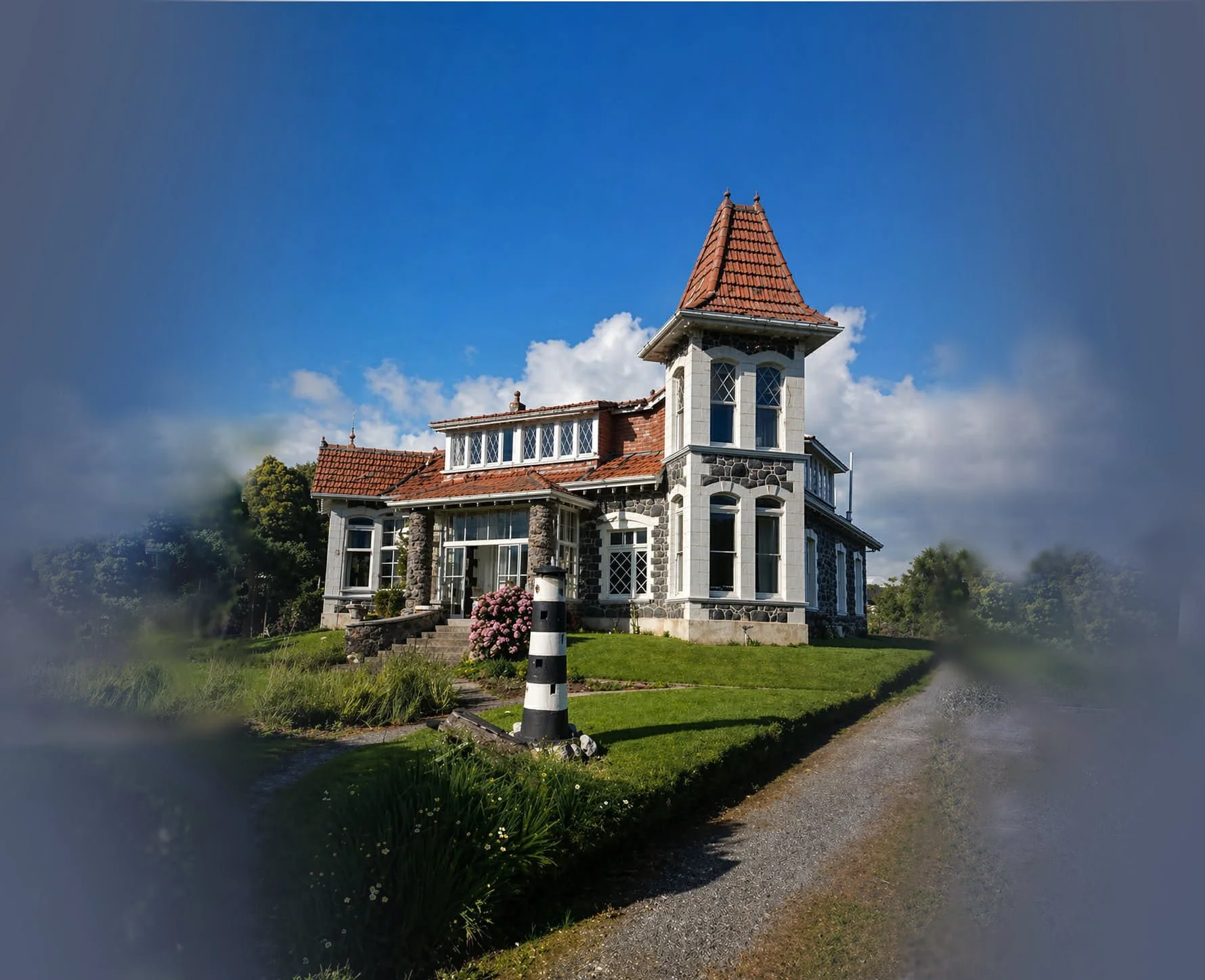
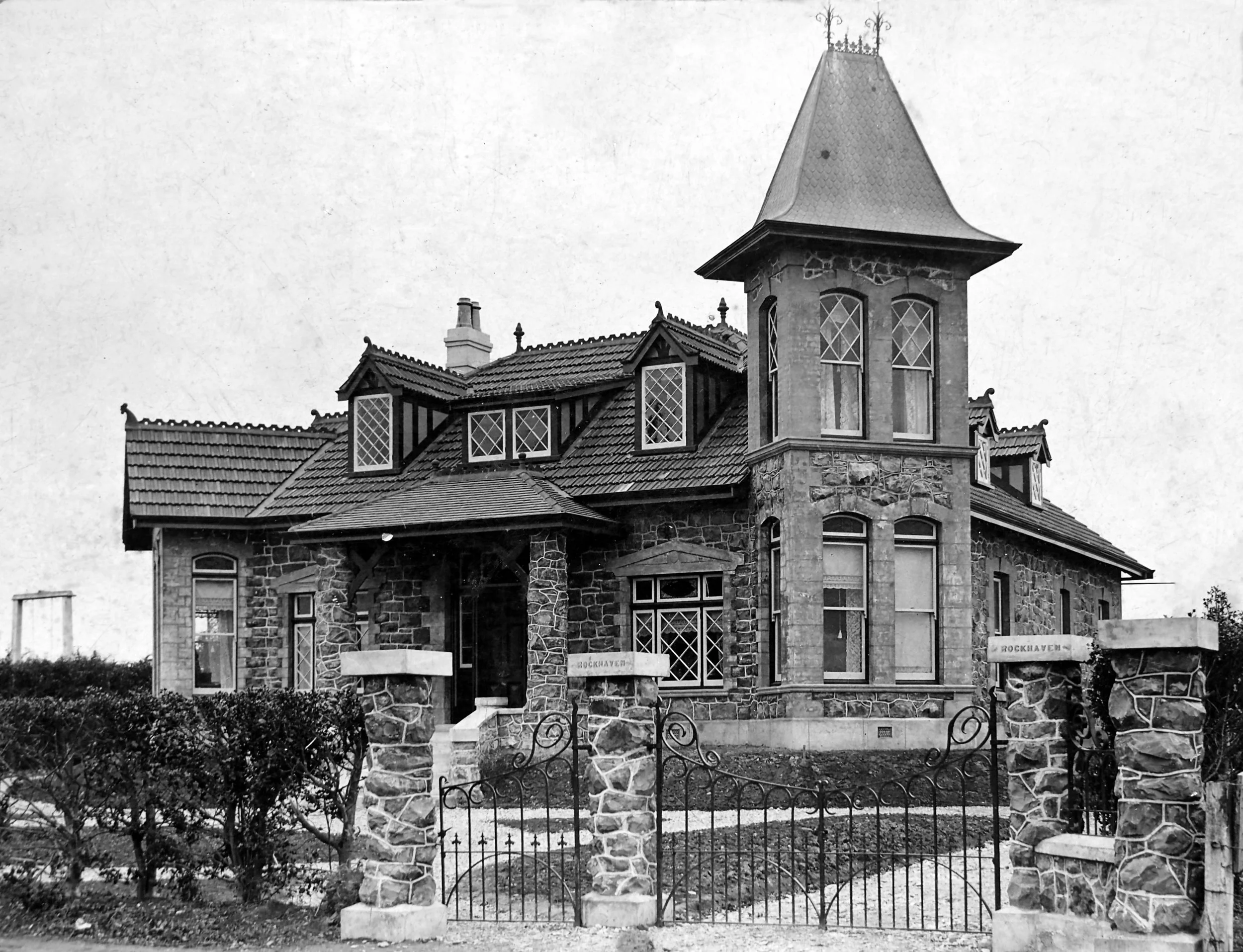
Rockhaven, situated on Queens Drive in Invercargill, was built between 1905 and 1908 for inventor and engineer Ernest Godward. Designed by architect Peter Walker, the residence is a fine example of Queen Anne-style architecture, showcasing the craftsmanship and design influences of the early 20th century.
Constructed using timber framing with, the house features solid bluestone foundations, providing both strength and longevity. The roof was originally finished with distinctive Marseilles tiles, a popular choice of the era that contributed to both the durability and visual appeal of the home. Decorative timber detailing further enhances its architectural character.
Following Ernest Godward’s death in 1936, his wife, Marguerita Estella Godward, continued to reside at Rockhaven until 1946. In that same year, the property was purchased by Invercargill farmer Harold Smith, and it remained in the Smith family until 1977. Today, Rockhaven continues to serve as a private residence and we ask everyone to respect the privacy of those who live there.
-
397 Queens Drive, Windsor, INVERCARGILL
Note: The home is privately owned and not open to the public.
-
Built date: 1905–1908
Architect: Peter Walker
Materials: Timber framing with, bluestone foundations, Marseilles tile roof, decorative timber detailing
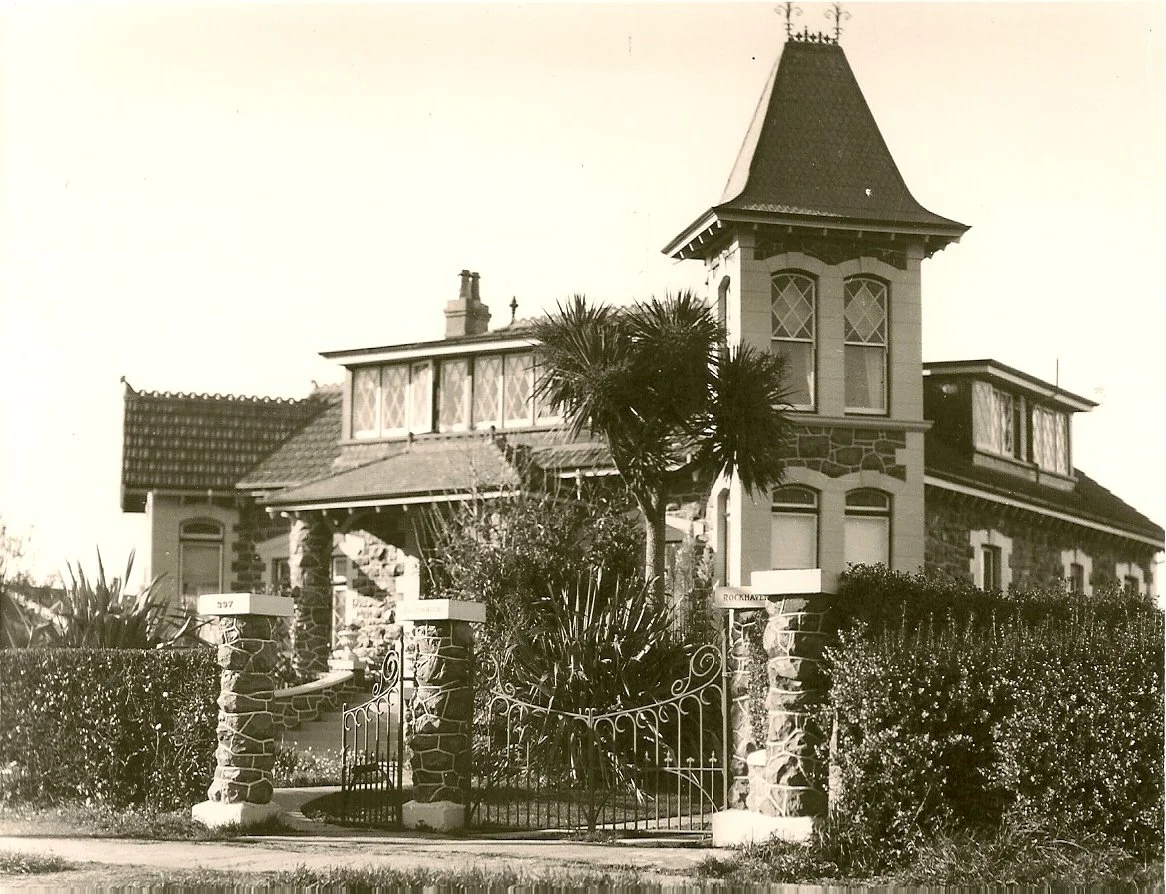
Rockhaven after windows extended in the 1920's.
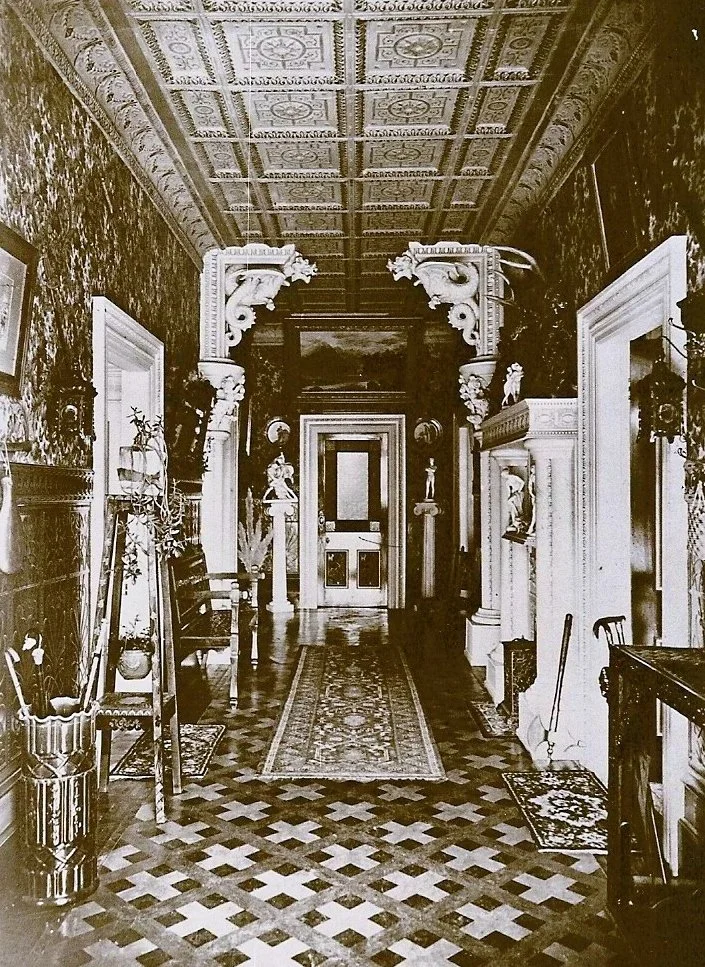
Front hall ~ the dragons originated from Sloans Theatre.
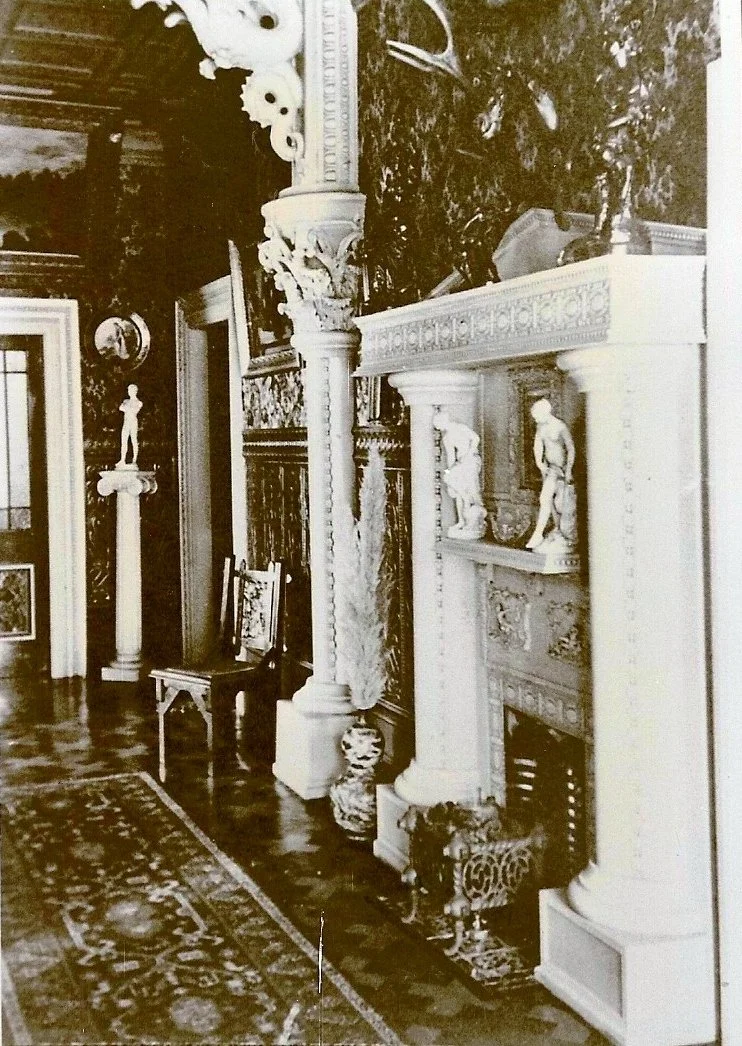
Front hall fireplace c. 1920.
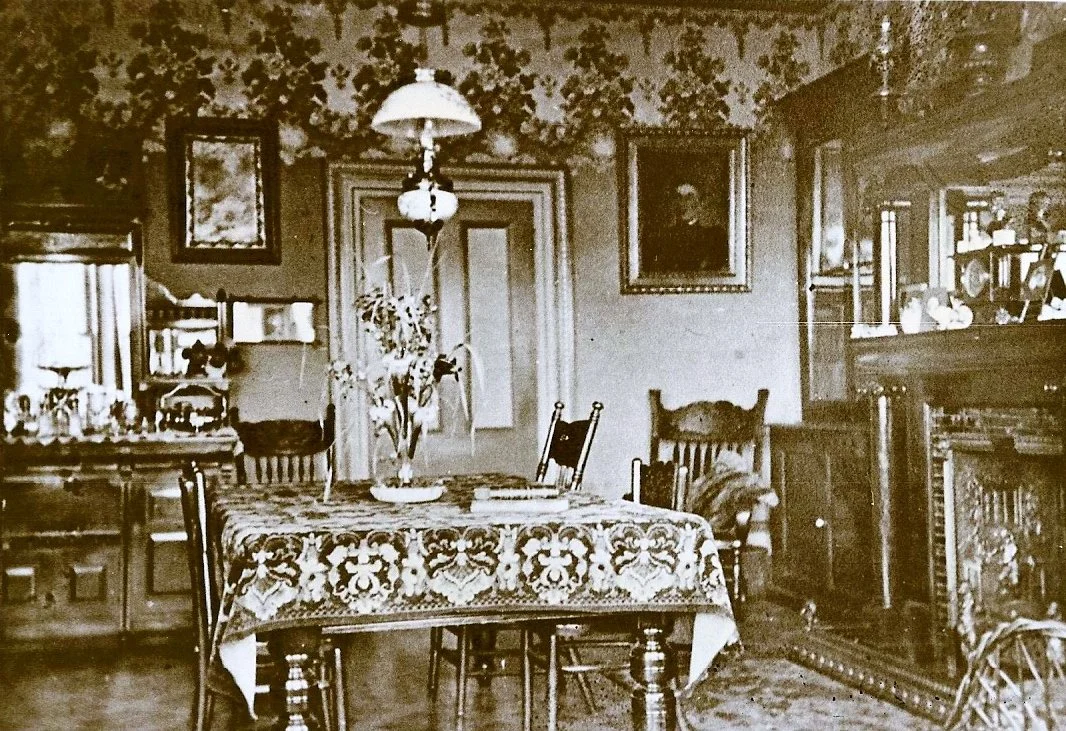
Dining room c. 1916. The ceiling lamp is gas and the portrait at right is of Ernest's mother Sarah.
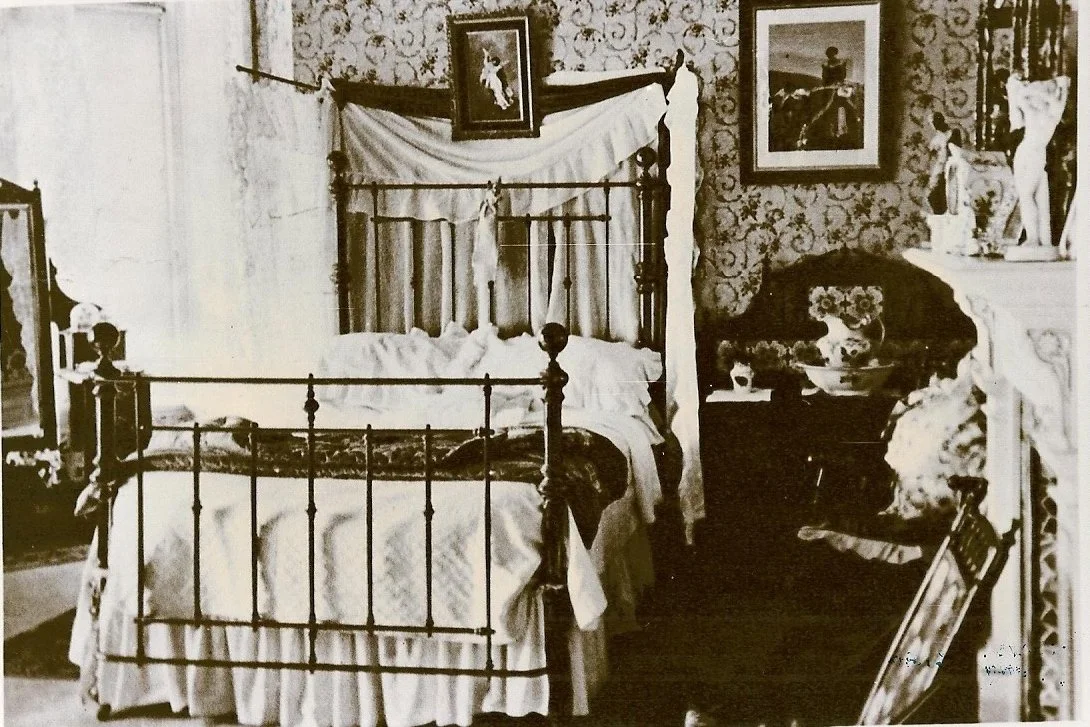
Main bedroom ~ this was downstairs to the left of the front door, c1908. All of Godward babies were born in this room, attended by local midwife.
Brief History of the Rockhaven ~ as told by Lesley Treweek
“Rockhaven” at 397 Queens Drive Invercargill is a unique structure. The house was originally home to inventor Ernest Robert Godward (1869-1936), and his family.
Born in Marylebone London Ernest arrived in New Zealand in 1886. He married in Invercargill in 1896 Marguerita Florence Celina Treweek, the granddaughter of Cornish immigrants to New Plymouth in 1842.
💡 Ernest Godward — The Inventive Mind
More than an ideas man, Ernest Godward had the skills and acumen to turn concepts into products, to patent those products and to vigorously market them internationally.
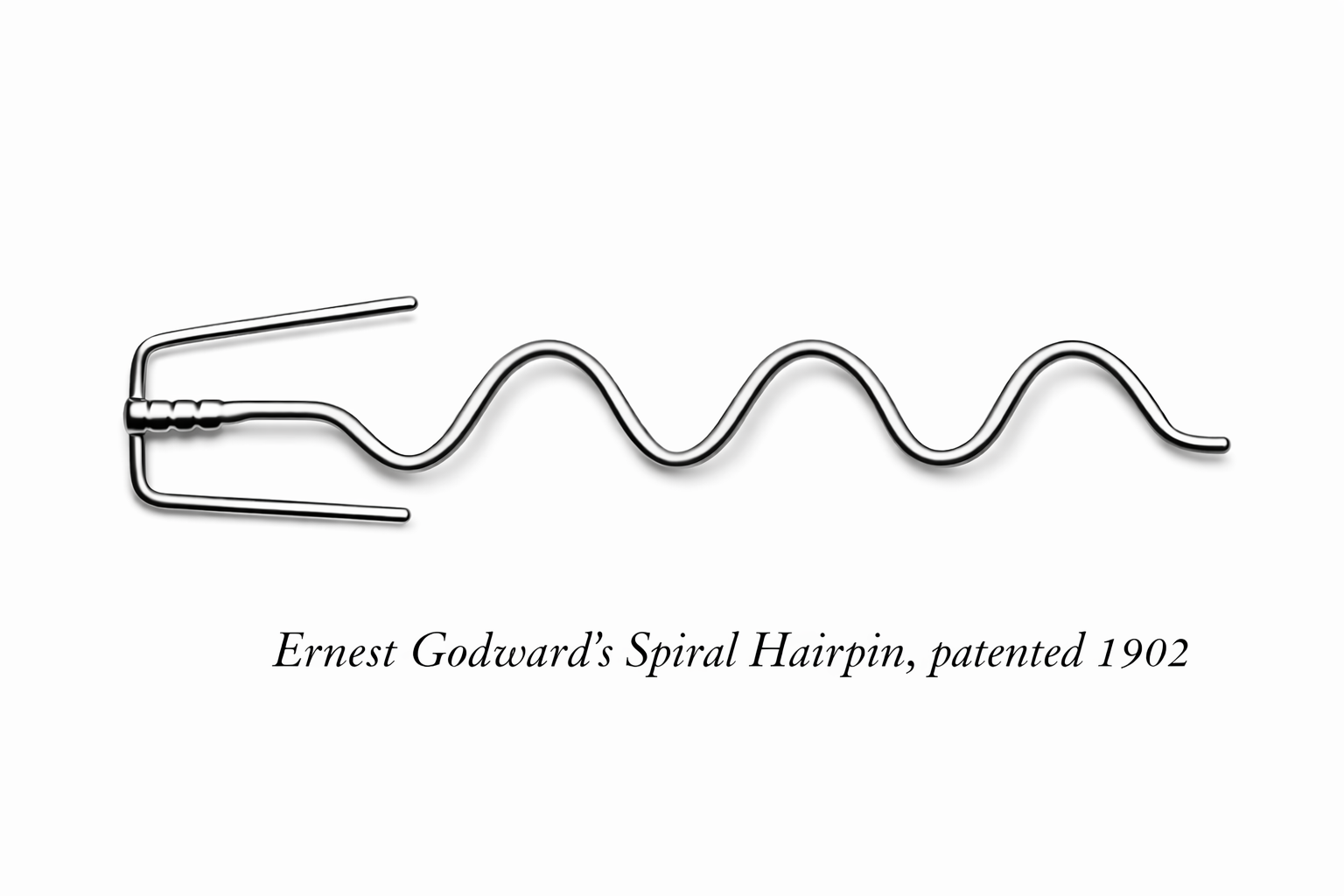
Early success came in 1902 with the creation of the Godward Spiral hairpin. Building on the positive reception for the pin in Australasia, Ernest made promotional trips to England, the Continent and USA where the American rights to the hairpin sold for €2500 plus royalties. This was the beginning of an expanding and profitable career. A succession of inspired inventions followed, some 30 of which Ernest patented. Significant achievements were the Godward Gas Generator and the Eclipse Petrol Economiser.
🏠 Designing & Building Rockhaven
While overseas Ernest conceived plans for a grand residence. The house would be designed in the Queen Anne style much in vogue from 1890s up until the First World War. Such homes featured asymmetrical facades, steeply pitched roofs, towers & turrets. Architect Peter Walker was assigned to oversee the build which was completed in 1908.
The two storey house with sixteen rooms and tower was built of Bluestone quarried from Green Island and Ocean Beach near Bluff. Broad entrance steps were bordered by stone urns. Metal ceilings were imported from America and the mantelpieces were of American golden grain oak. Dragons atop pillars stood on either side of the tessellated hallway. These Ernest had purchased from the former Sloan’s Theatre in Dee Street, Invercargill.
👨👩👧👦 Life Inside Rockhaven
Grand Rockhaven certainly was, but it was also a functional home for a large family. Seven of the couple’s ten children had been born by the time Rockhaven was furnished and finished. The large upstairs sunroom was requisitioned by the children as a play & rumpus room. In addition to the Godward children Marguerita’s younger sisters Emma and Annie Treweek lived in to help run the household.
A highlight for the family was when Ernie returned from overseas bearing presents for them all. Gifts for the children included the latest craze in toys from America. His nephew James Treweek remembered receiving a pogo-stick and a new-fangled pocket phonograph that today is still in working order.
⚓ Final Years & Legacy
Ernest Godward spent much of his married life out of New Zealand extending his business empire. He died unexpectedly on board the vessel “Magnolia” on a trip home to New Zealand in 1936. His body was buried at sea.
The financial legacy of Ernest Robert Godward enabled his widow and family to continue to live comfortably. Rockhaven passed from family hands in 1946. Rockhaven stands as a reminder of this astute, innovative man.
Image of Rockhaven (left) c.1908
History.
Stories.
Ernest Godward ~ The Inventor
Ernest Robert Godward was born in London on 7 April 1869 to Henry Robert Godward and Sarah Ann Pattison. Family accounts record that he ran away to sea at age 12, reaching East Asia before being returned home by British consular authorities. He later apprenticed for 3½ years to Shand, Mason & Co., manufacturers of steam fire engines, where he received formal mechanical training.
After a further period at sea, Godward emigrated to New Zealand in 1886, arriving at Port Chalmers. He learned the cycle trade in Dunedin under S. R. Stedman, a prominent wheelman, before moving to Invercargill in 1893 to become a partner in the Southland Cycle Works on Dee Street, which manufactured Sparrowhawk bicycles and imported British models.
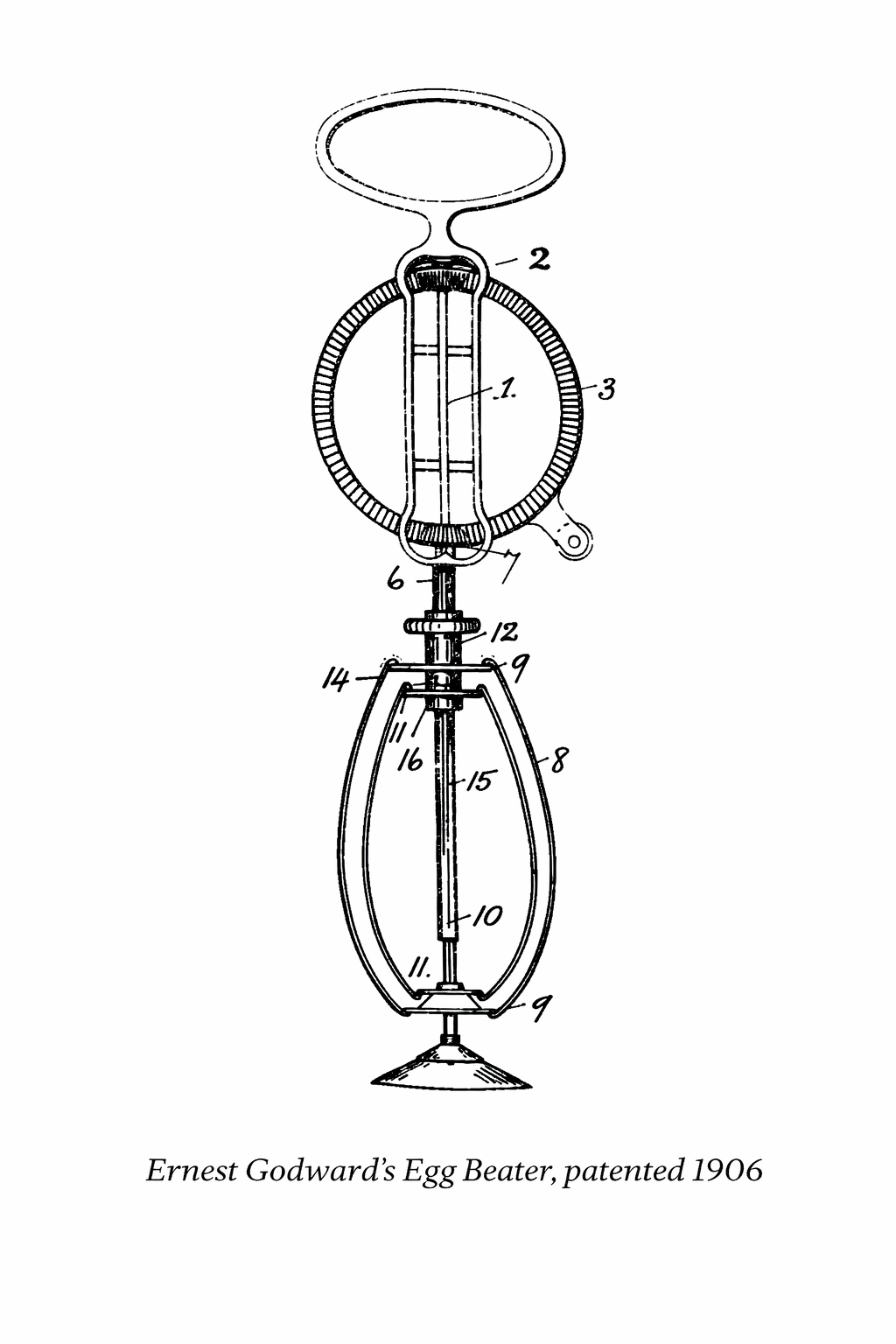
In 1900, Godward left the cycle partnership to focus on inventing. His domestic inventions included a spiral hairpin (patented worldwide), a burglar‑proof window, a rubber hair‑curler, a mechanical hedge‑clipper, a non‑slip egg‑beater, a kerosene pump–siphon, a tank filter, and a lid for cans. The spiral hairpin, patented in 1899 and commercially successful by 1901, brought him significant wealth; he sold the American rights for £20,000.
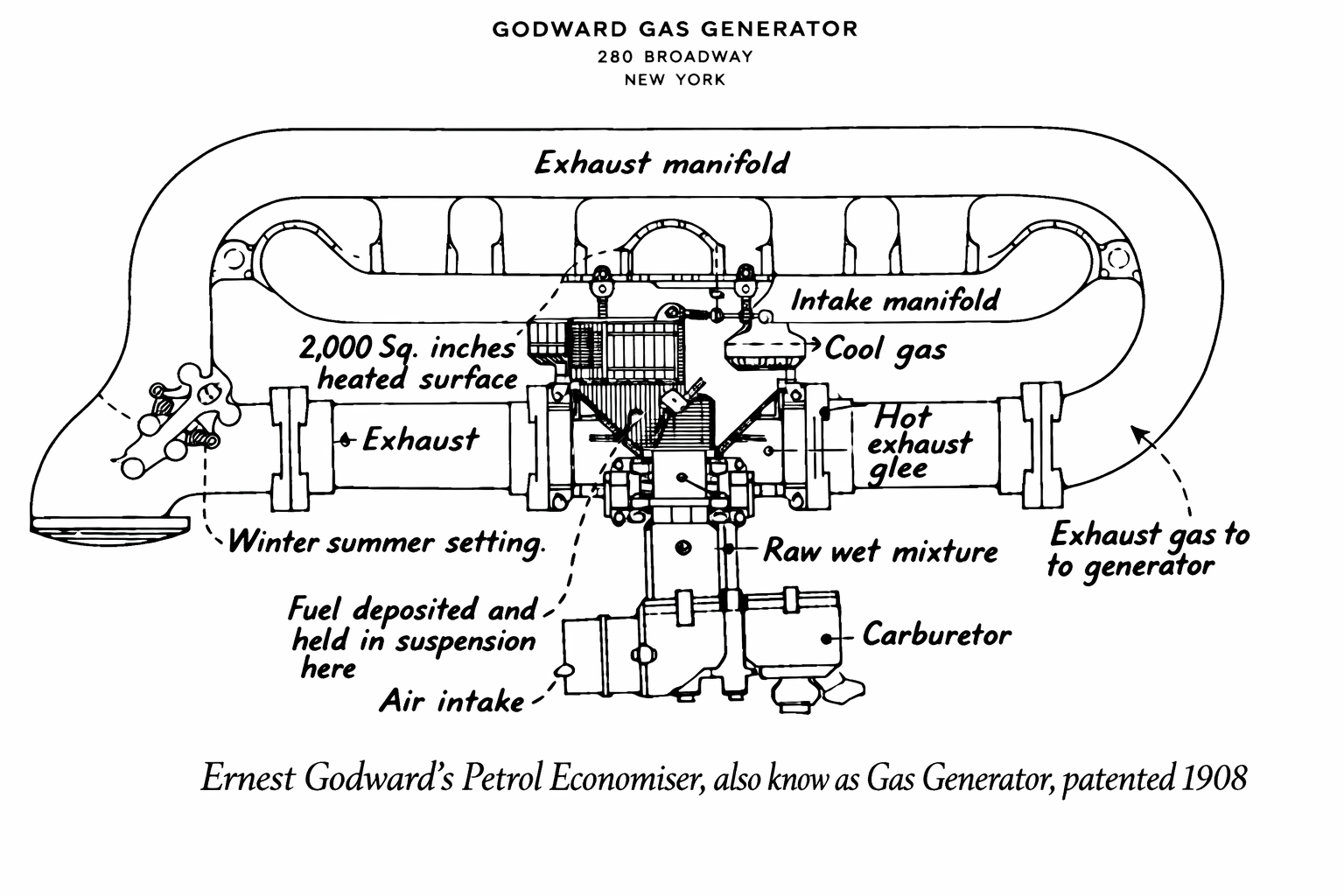
Godward travelled repeatedly to the United States between 1901 and 1905 to promote his patents. He later developed fuel‑saving devices, including a petrol economiser (a type of carburettor), which increased engine performance and reduced fuel consumption. He also served on the North Invercargill Borough Council from 1903 to 1906 and was widely recognised for his mechanical skill and sporting ability.
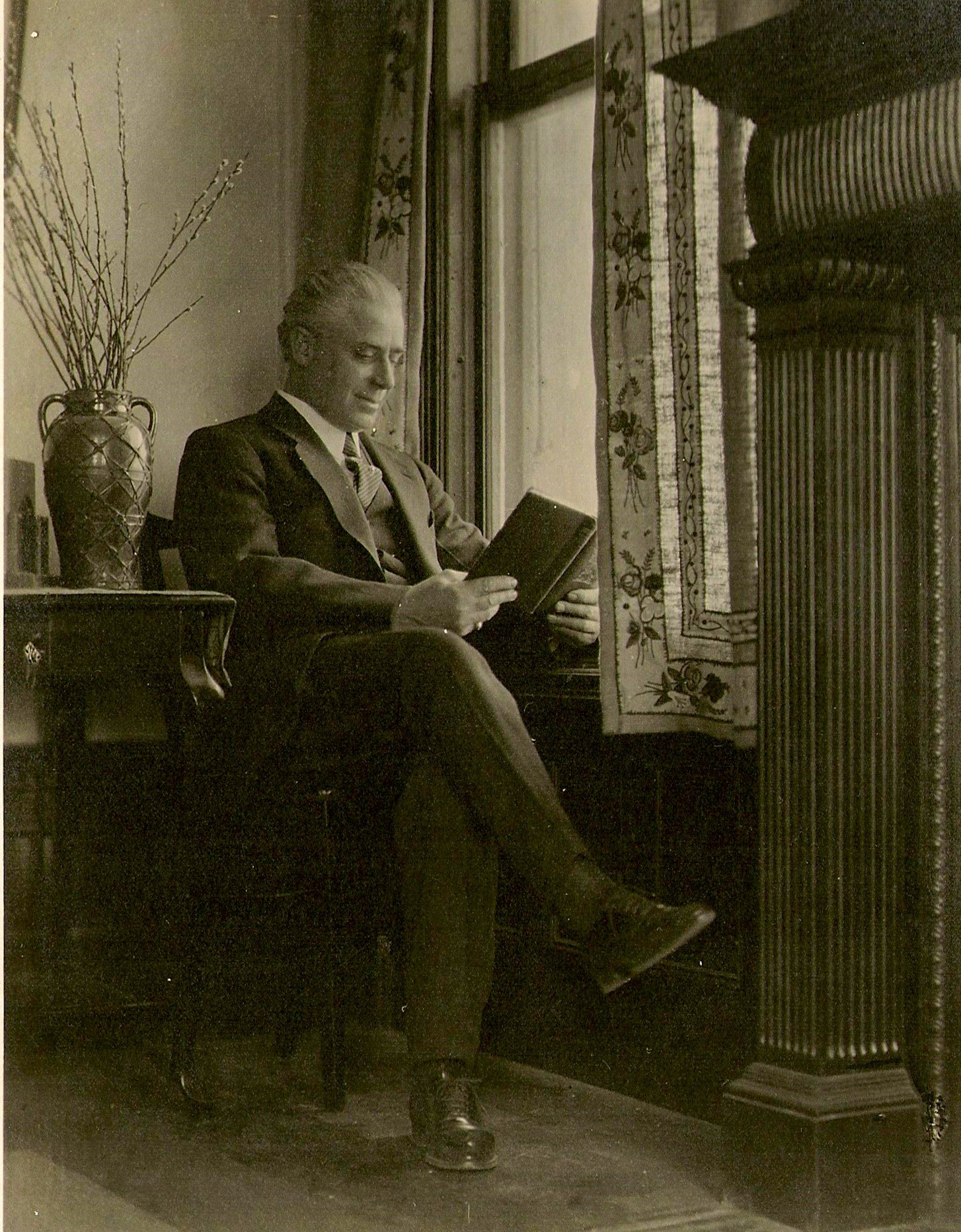
Ernest R Godward, c1920's
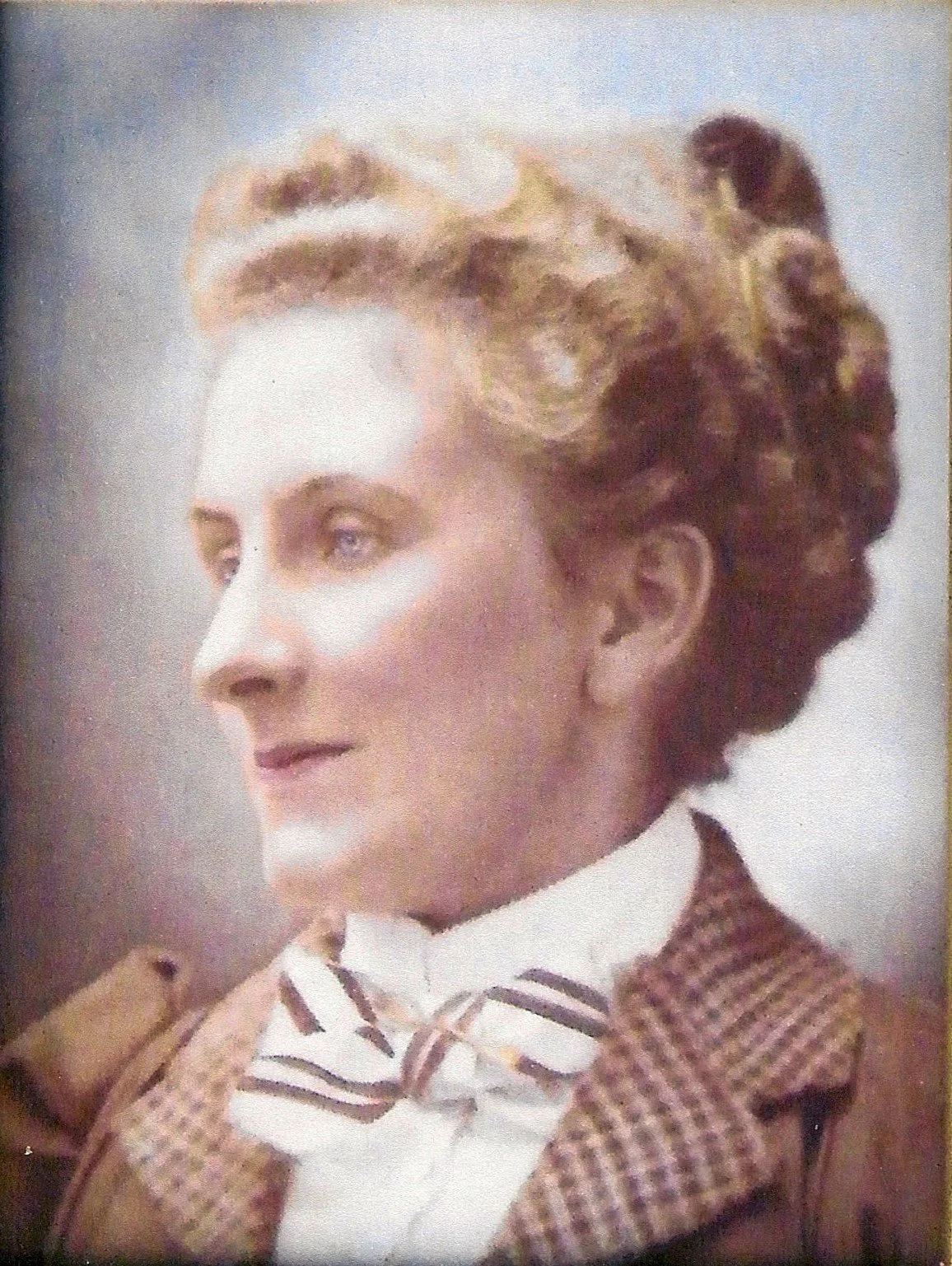
Madge Godward (nee Treweek)
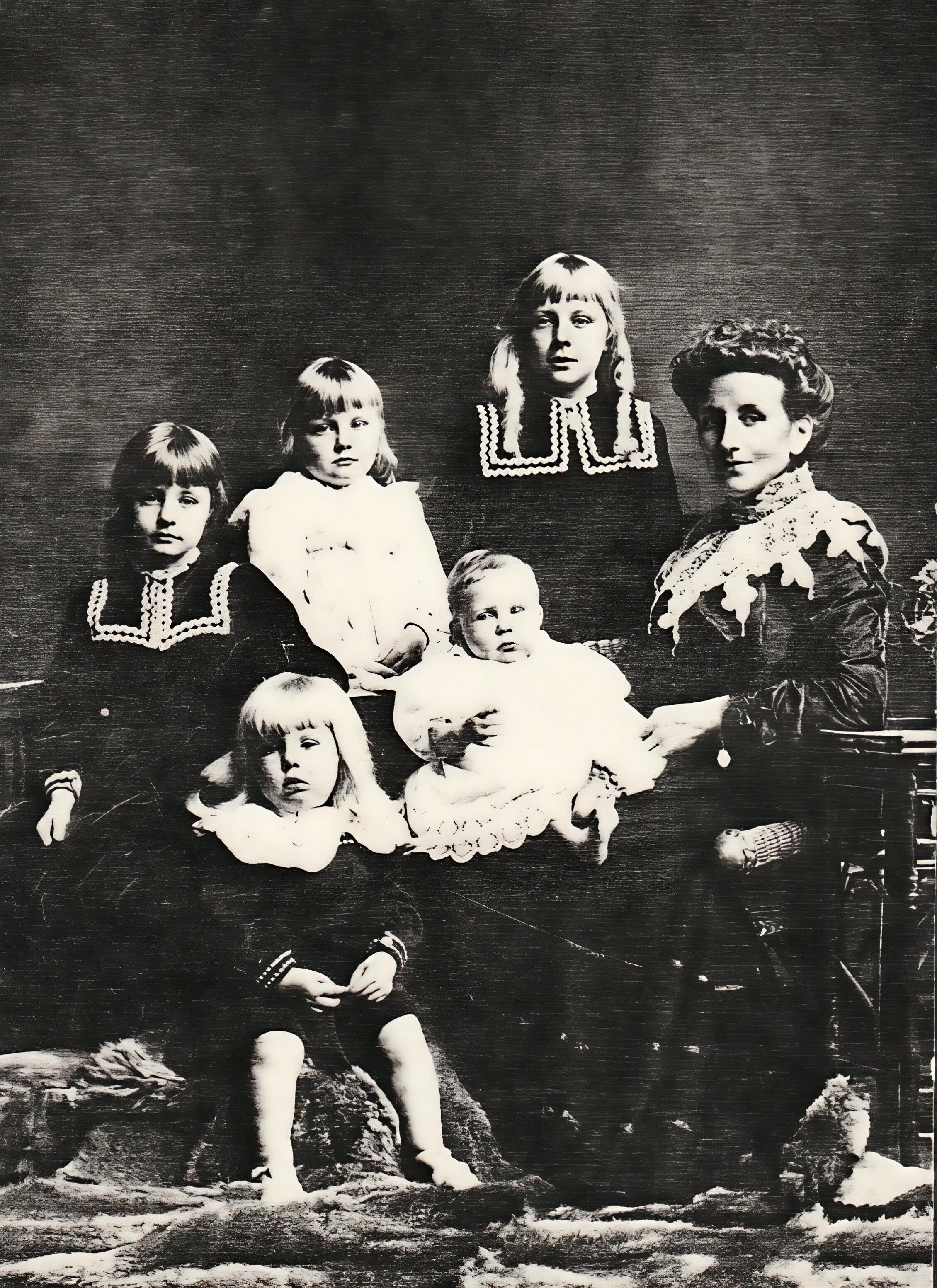
Madge and children, c1903,
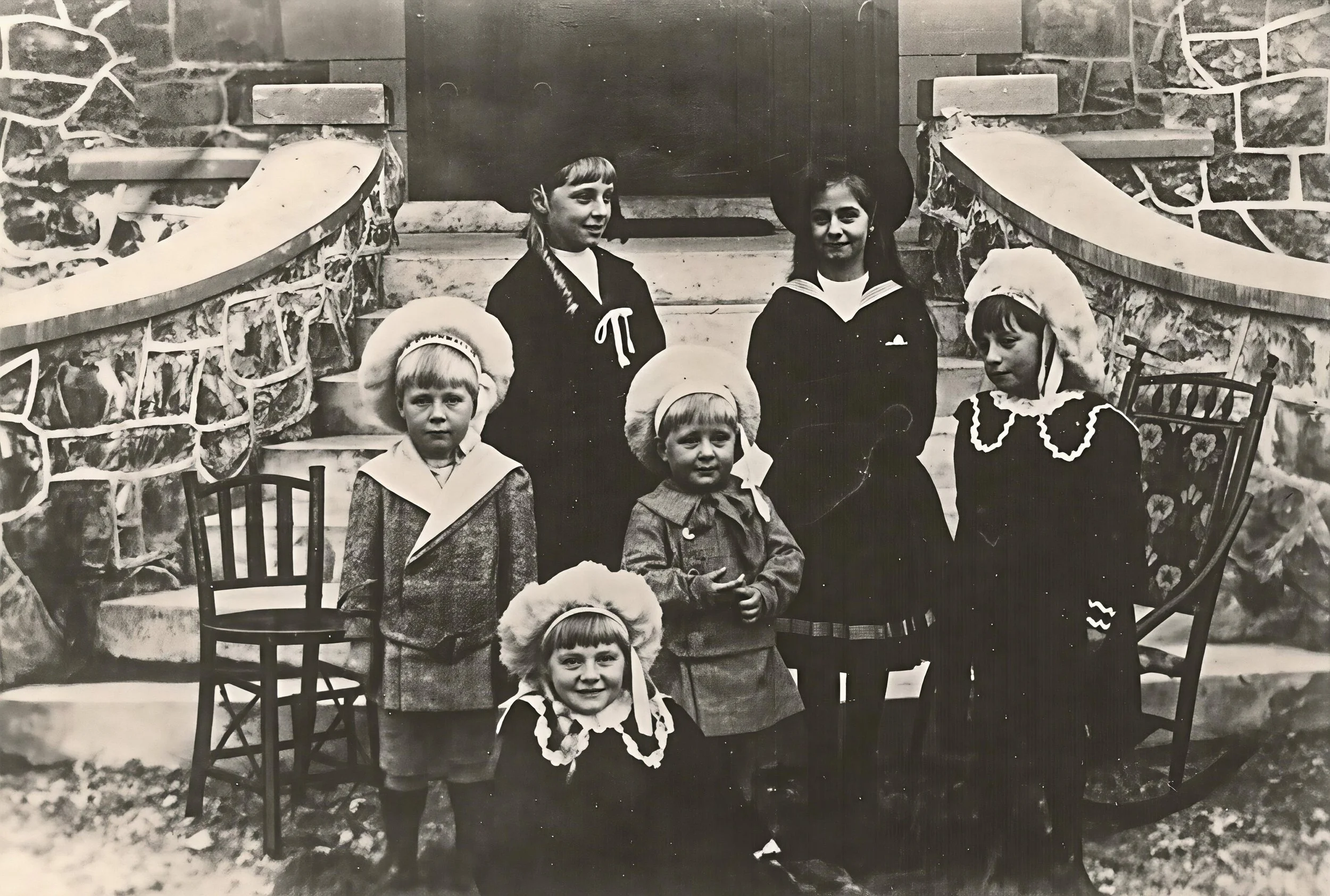
The eldest five of the ten Godward children c.1908. From left back: Rene, Dulcie, Douglas, Bert, Phyllis, with Kathy at front.
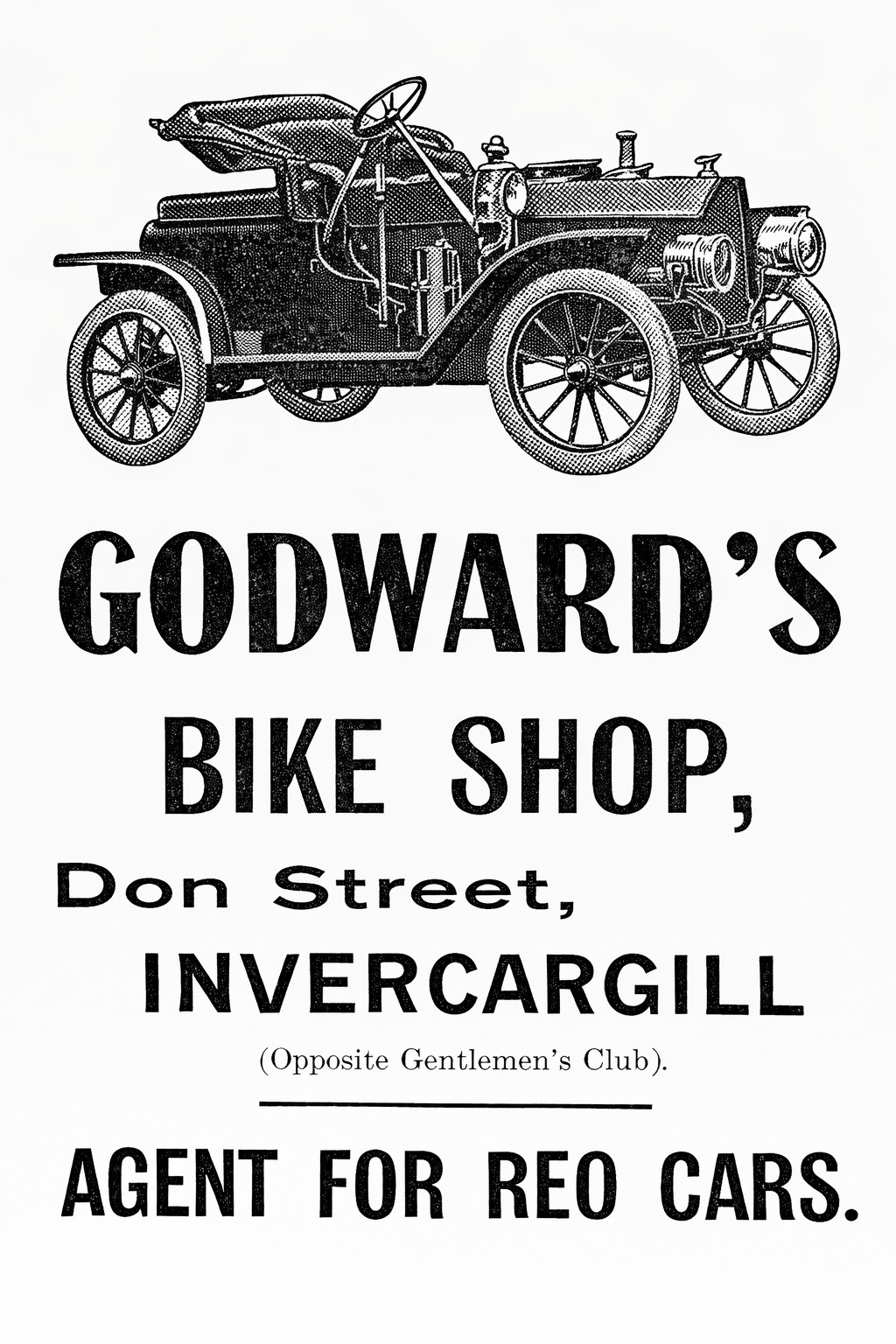
Stone's Otago & Southland Directory, p246. Hocken Collections, Uare Taoka o Hakena, University of Otago
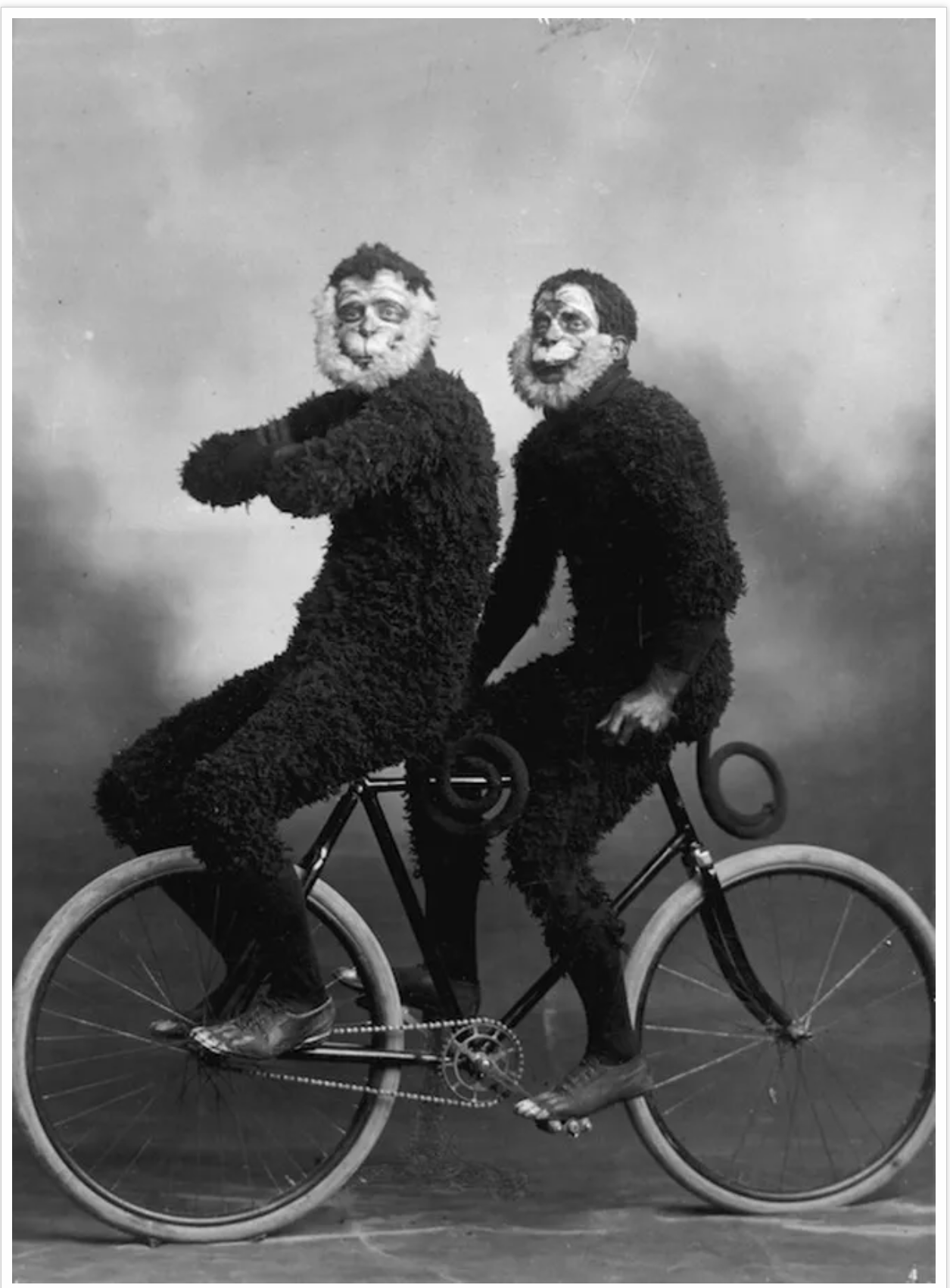
Members of the Invercargill Cycling Club riding a bicycle in monkey costume. Greig, J :Photographs of two men in a monkey suit on a bicycle and of a parade dragon. Ref: 1/2-062601-F. Alexander Turnbull Library, Wellington, New Zealand. /records/22769783. Ernest Godward (front) & Bob Murie (rear)
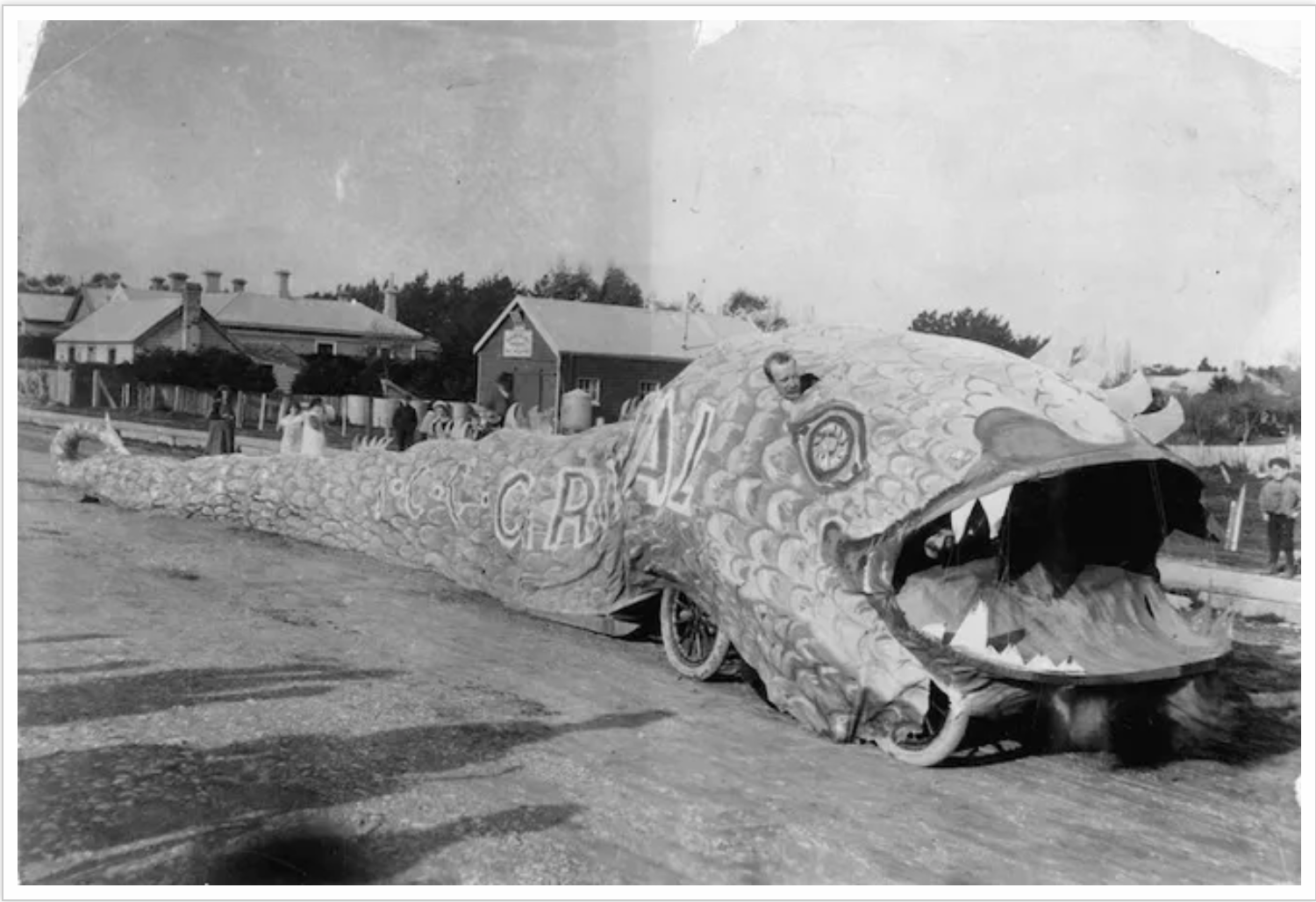
Dragon float from the Invercargill Cycling Club parade. Greig, J :Photographs of two men in a monkey suit on a bicycle and of a parade dragon. Ref: 1/2-062600-F. Alexander Turnbull Library, Wellington, New Zealand. /records/22730422. Promotional vehicle for the Oriental-themed Invercargill Cycling Club Carnival in 1904. Ernest Godward (in the mouth of the dragon) drove the decorated car down Invercargill's main street while Bob Murie (above the eye) acted as navigator.
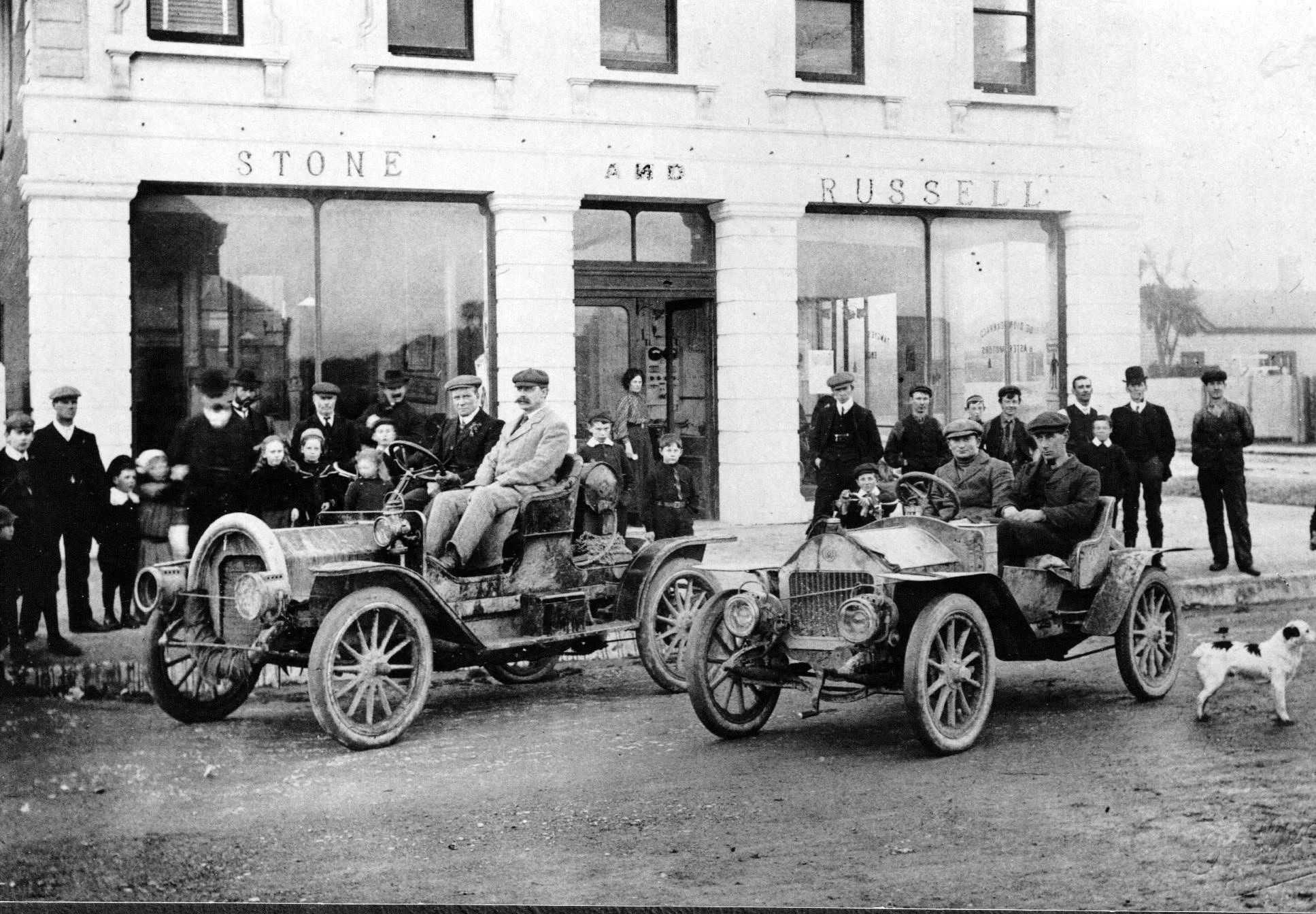
A motor race from Invercargill to Dunedin and back was held in 1909 between Messrs W. and T. Stone, driving a 10–12 hp Darracq, and Messrs R. Murie and F. R. Godward in a 16–18 hp Reo. Image: Robert Murie and Ernest Godward (pictured in the left‑hand car) preparing for the race. Acknowledgement: The Southland Times
Ernest Godward – Father, Local Business Owner, and Engaged Member of the Invercargill Community
Ernest Godward married Marguerita Florence Celena Treweek in Invercargill on 28 January 1896. The couple had ten children: nine biological children and one niece of Marguerita’s who was raised in the household. Their children were: Ernest, Florence, Celina, Ruby, Daisy, Ivy, Olive, Violet, Myrtle, and William.
After settling in Invercargill, Godward became a partner in the Southland Cycle Works (later Godward & McKenzie), located on Dee Street. The firm manufactured Sparrowhawk bicycles and imported British models during a period when cycling was booming in New Zealand. In 1900 he left the business to pursue inventing full‑time, later establishing the Godward Spiral Pin and New Inventions Co. Ltd, which was listed on the New Zealand stock exchange.
Godward was active in civic and community life. He served on the North Invercargill Borough Council from 1903 to 1906 and participated in a wide range of sports, including cycling, running, swimming, rowing, and boxing. He was one of the founders of the Invercargill Amateur Swimming Club in 1903 and cycled competitively for the Invercargill Cycle Club.
He was also musically inclined, playing several instruments, painting, and performing in local musical productions. In 1909, he and Robert Murie won a motor race from Invercargill to Dunedin and back; in a subsequent race they crashed while avoiding a dray. His later life included periods working in the United States, particularly New York and Philadelphia, where he continued developing and marketing his inventions.
Timeline ~ Ernest Robert Godward
1869: Born in London. Is a sickly child who begins school at 9.
1881: Sent to prep school but fails first examinations and runs away to sea. Found by the British counsel in Japan and sent home. Is apprenticed to a fire engine manufacturer.
1884: Becomes steward on passenger ships.
1886: Jumps ship at Port Chalmers. Works as a painter and photographer's assistant. Becomes competitive cyclist. Finds work in Dunedin cycle shop. Learns to play banjo and forms entertainment group called Star Variety Company.
1894: Moves to Invercargill. Establishes Southland Cycle Works manufacturing and selling Sparrowhawk bicycles and imported brands. Joins Invercargill Cycle Club.
1896: Marries Marguerita (Madge) Treweek. Forms variety concert party.
1899: Patents Godward's Spiral (hair) Pin. Sells overseas rights, makes first million.
1900: Sells out of cycle factory. Sets up engineering workshop in Invercargill to manufacture hairpins and other inventions. Floats Godward Spiral Pin and New Inventions Co Ltd on stock exchange. Travels to America, England and Europe to market hairpins and rubber hair curlers.
1903-05: Invercargill borough councillor. Organises Oriental Carnival, builds dragon float and frightens horses. Forms Invercargill Banjo Club. Lodges patents for many gadgets including an eggbeater, padded draught protector, mechanical hedge cutter, hermetic tin lid, posthole borer, burglar-proof window, telescopic nozzle for a garden hose, water tank filter, fire alarm, door handle and an animal trap.
1906: Builds 16-room family home Rockhaven at 397 Queens Dr, Invercargill
1908: Involved in first hot-air balloon flights in Southland. Opens cycle shop which also sells motorcycles and Reo cars. Organises first motor car and motorcycle race event in Southland.
1909: Wins first road race from Invercargill to Dunedin and return in a Reo car. Race is rerun a few weeks later. Godward and co-driver swerve to avoid dray, run up bank and flip car. They spend a night in hospital with minor injuries. Races criticised by police, Automobile Association and borough councils for bringing motoring into disrepute.
1912: Develops Eclipse Petrol Economiser - an important forerunner of the modern carburettor - for motorcycles, then for cars, motorcycles, buses, tractors and aeroplanes.
1914: Patents economiser device. Sets up Godward Carburettor Company in London. Spends next 20 years mostly living abroad manufacturing, refining and marketing the product. By the end of his life has invented 72 different models of petrol economisers and one gas generator.
1929: Carburettor adopted by US Army transport system. Moves to New York and makes second million. Loses much of his fortune in the stock market crash.
1936: Heads home to Invercargill by ship. Wins skipping competition but dies next day aged 68. Is buried at sea.
Mr E. R. Godward — A Remarkable Man
For one who left his school for the sea at such an early age he was gifted with extraordinary talents, and by his many friends in Invercargill was looked upon as a remarkable man. — Southland Times Obituary, 8 December 1936 —
Useful links
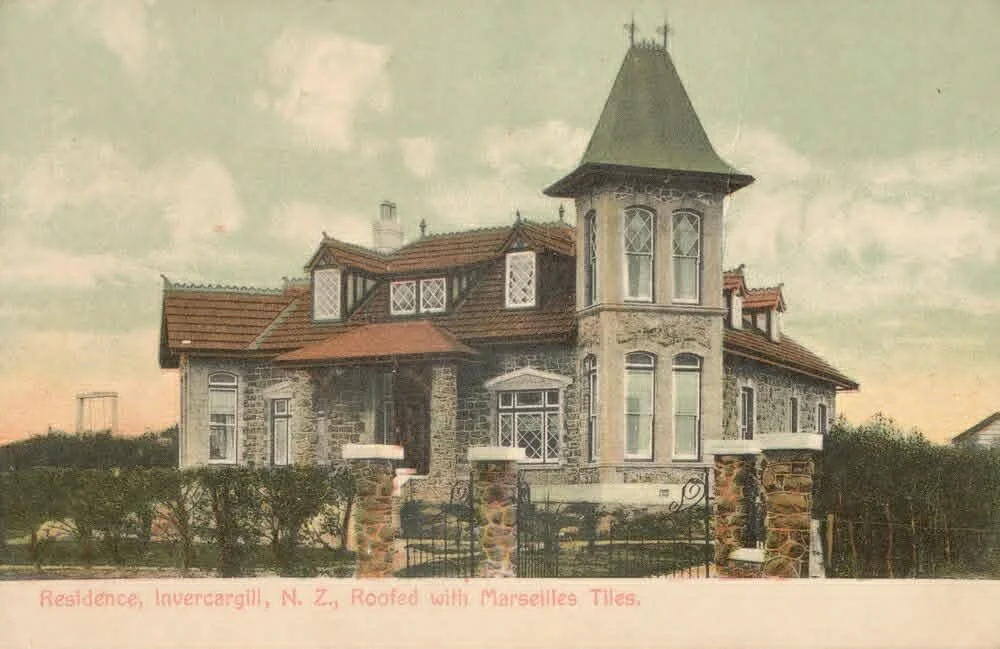
Credit: University of Waikato Reference Number UW_NZP_21_01 Title Residence in Invercargill Description Postcard titled: "Residence, Invercargill, N.Z., Roofed with Marseilles Tiles".
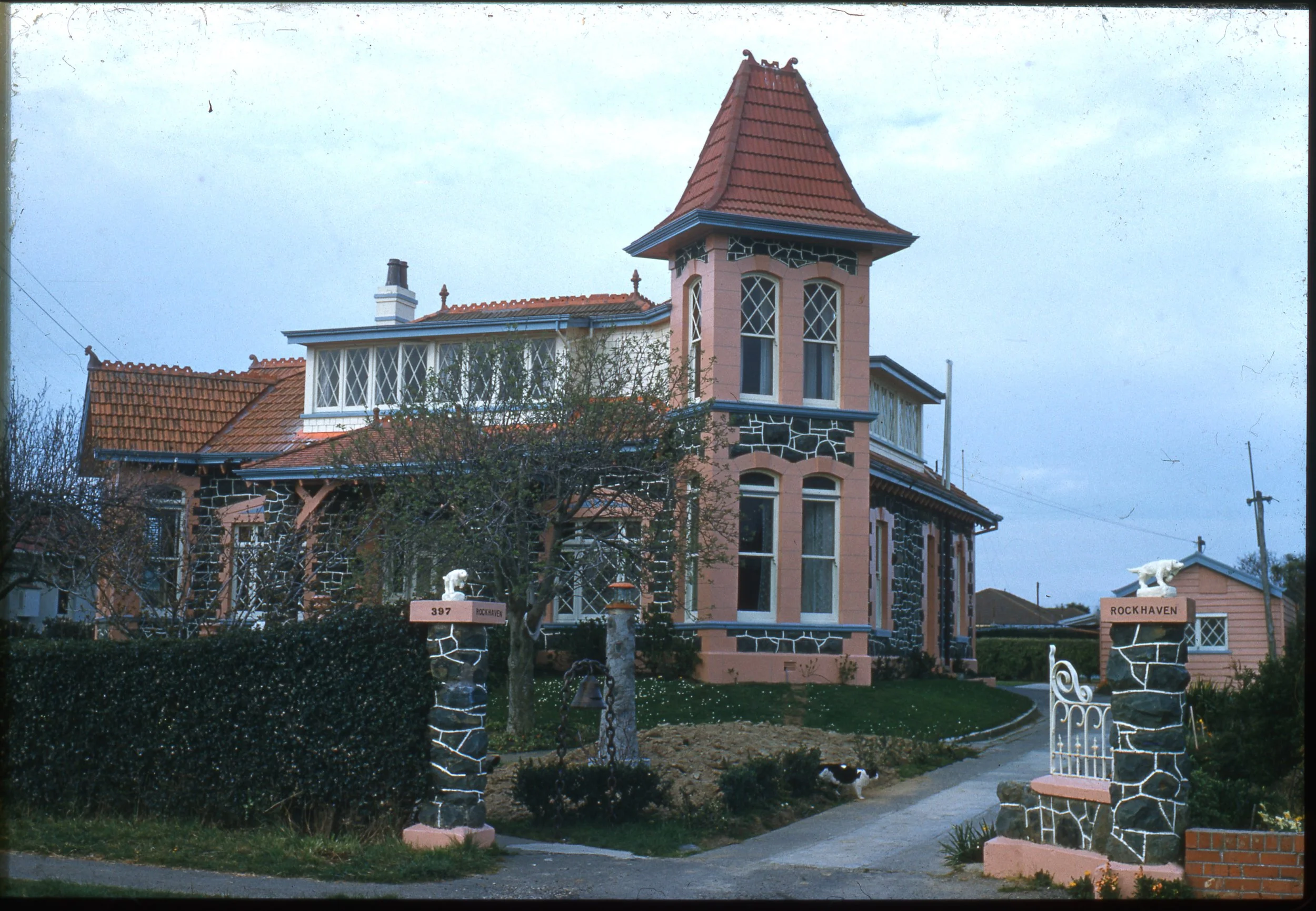
c. 1960 Credits: Photographer; Miss M.T.L. Watson Source; GenFram Image Archive Please note: No commercial usage is allowed on this image, it have been provided free solely for educational and non-profit usage
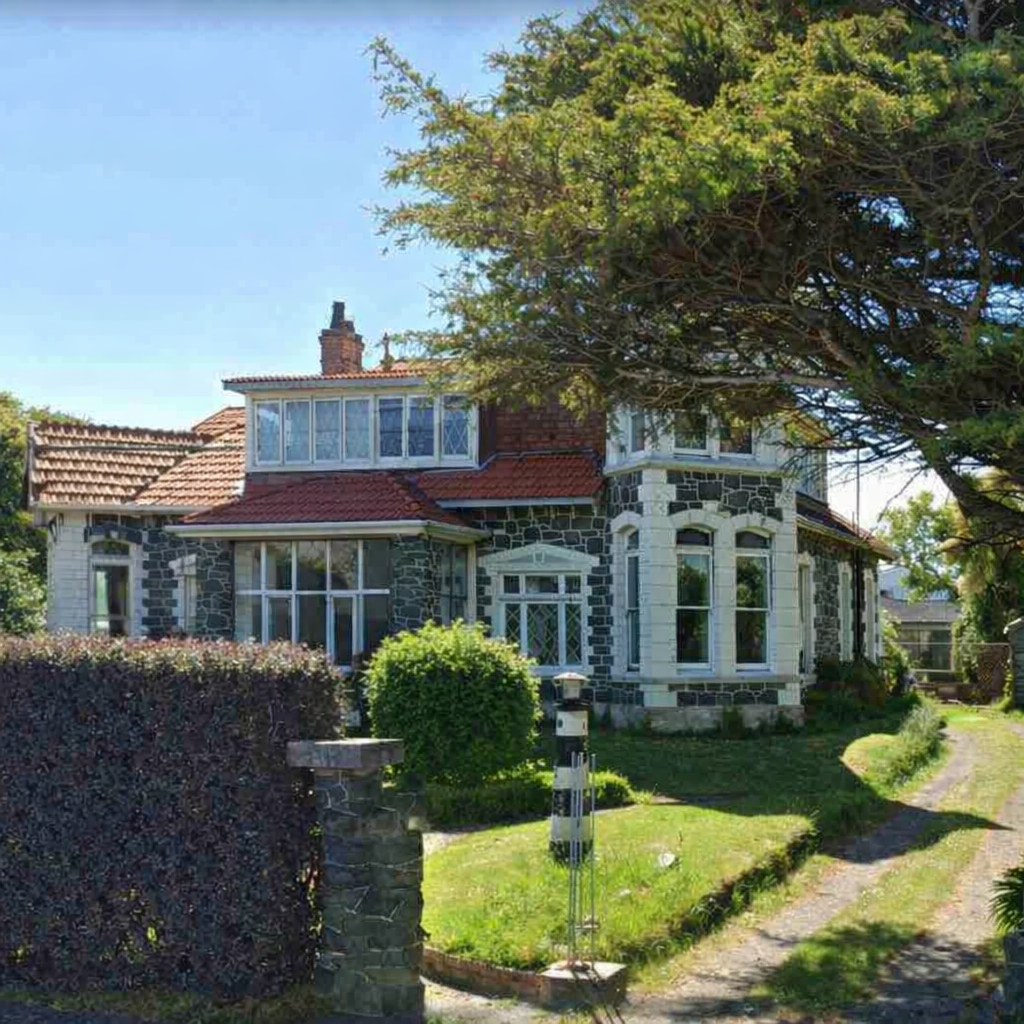
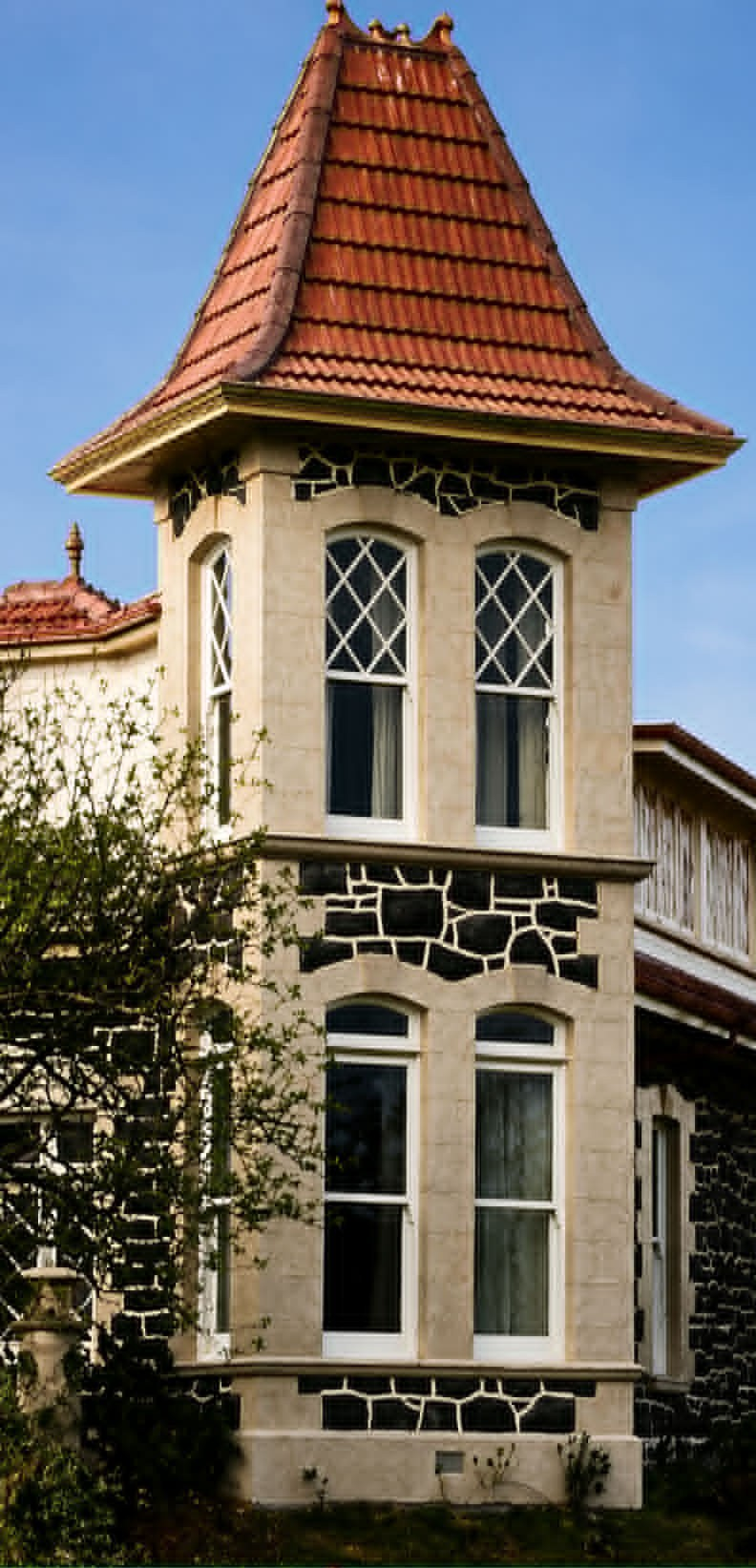
We extend our thanks to Lesley Treweek for providing wording as noted above, along with the images showing the exterior and interior of Rockhaven, as well as the photographs of Ernest, Madge, and their family members.