
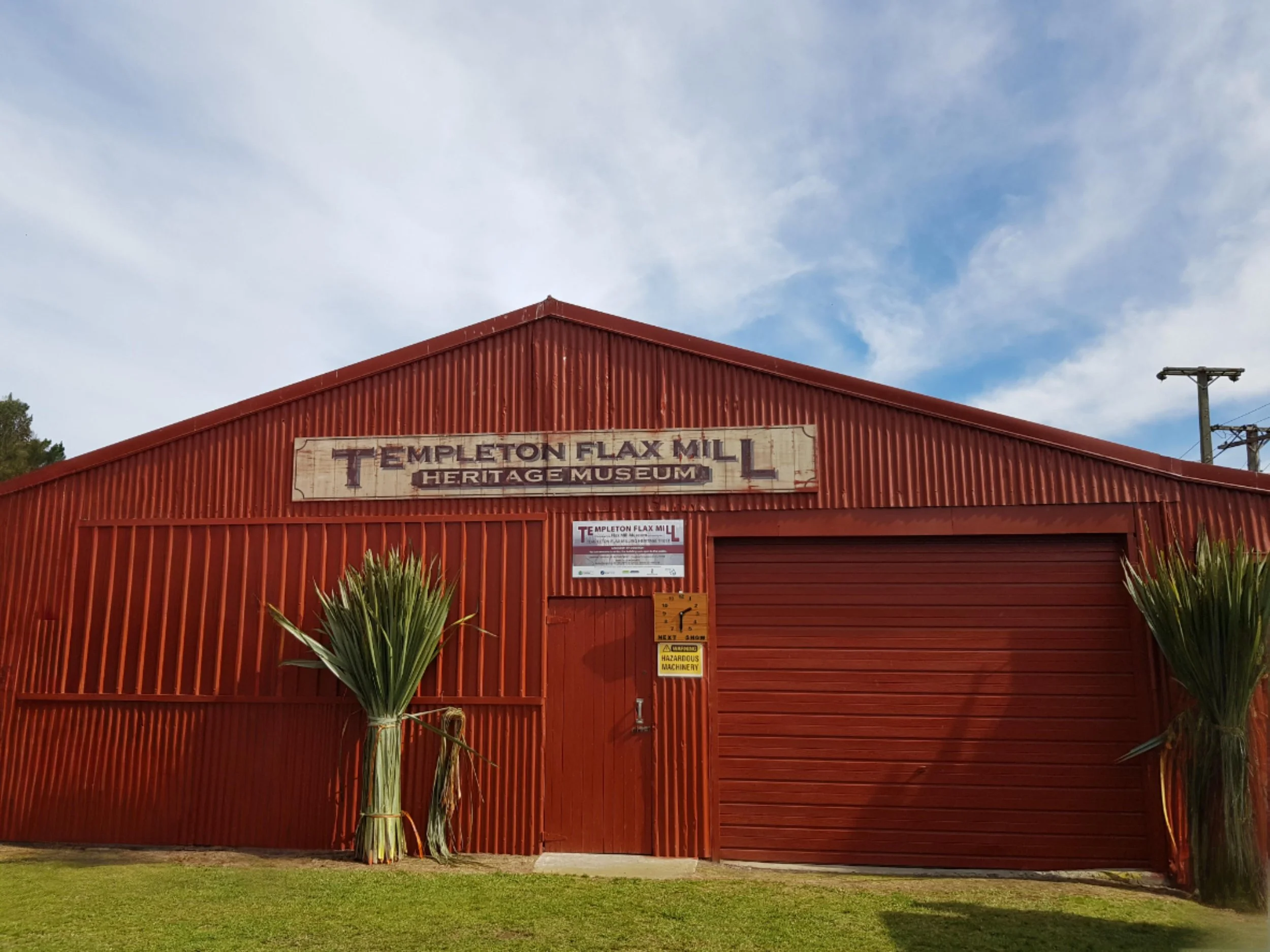
Templeton Flax Mill Complex
Sec 56 Blk VI Jacobs River Hundred (RTs SL194/135, 90253), Southland Land District
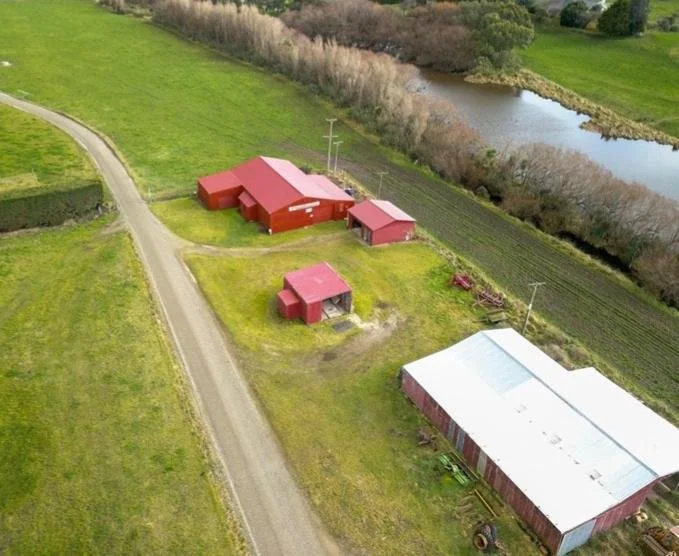
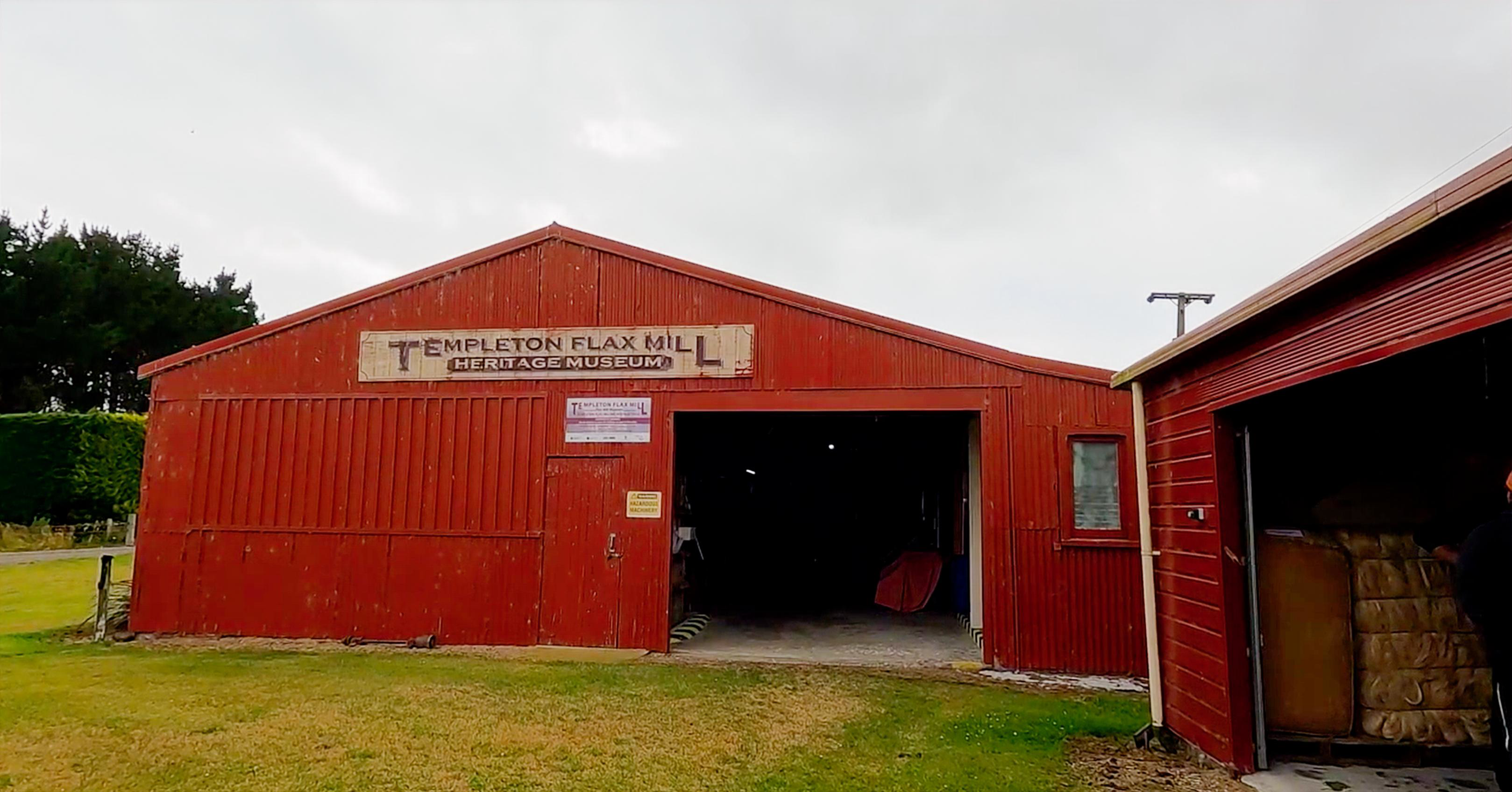
The Templeton Flax Mill Complex at Otaitai Bush is one of Southland’s most significant surviving industrial heritage sites. The registered extent includes part of Section 56, Block VI Jacobs River Hundred, and the original mill buildings—the Stripper Shed, Weighbridge Building, and Scutching Shed—along with their historic fittings and machinery, including the Stripper and Automatic Scutcher. The complex sits between the western fence line, the lagoon edge to the north, a five‑metre curtilage to the east, and the gravel road to the south.
Located at the end of Templeton Road, the mill is reached by turning off State Highway 99 onto Otaitai Bush Road and following the gravel farm road along the southern edge of the lagoon. Signposted since 2006 as part of the Riverton Heritage Trail, the site offers visitors an authentic glimpse into Southland’s once‑thriving flax industry.
Today, the Templeton Flax Mill Museum welcomes visitors to explore the restored buildings, view original plant, interpretation panels, and historic photographs, and—by appointment—experience working demonstrations of flax fibre processing. Established through the Templeton Flax Milling Heritage Trust in 2000 and opened to the public in 2004, the museum preserves the story of a mill first established by William Templeton in 1911 and closed in 1971, honouring more than a century of family and community connection to the site.
-
Templeton Road, OTAITAI BUSH
-
1911 – William Templeton purchases a flax mill at Waimatuku and relocates it to Otaitai Bush, installing plant sourced from Bennett Bros. at Orepuki.
1933 – The mill is converted from steam power to electricity.
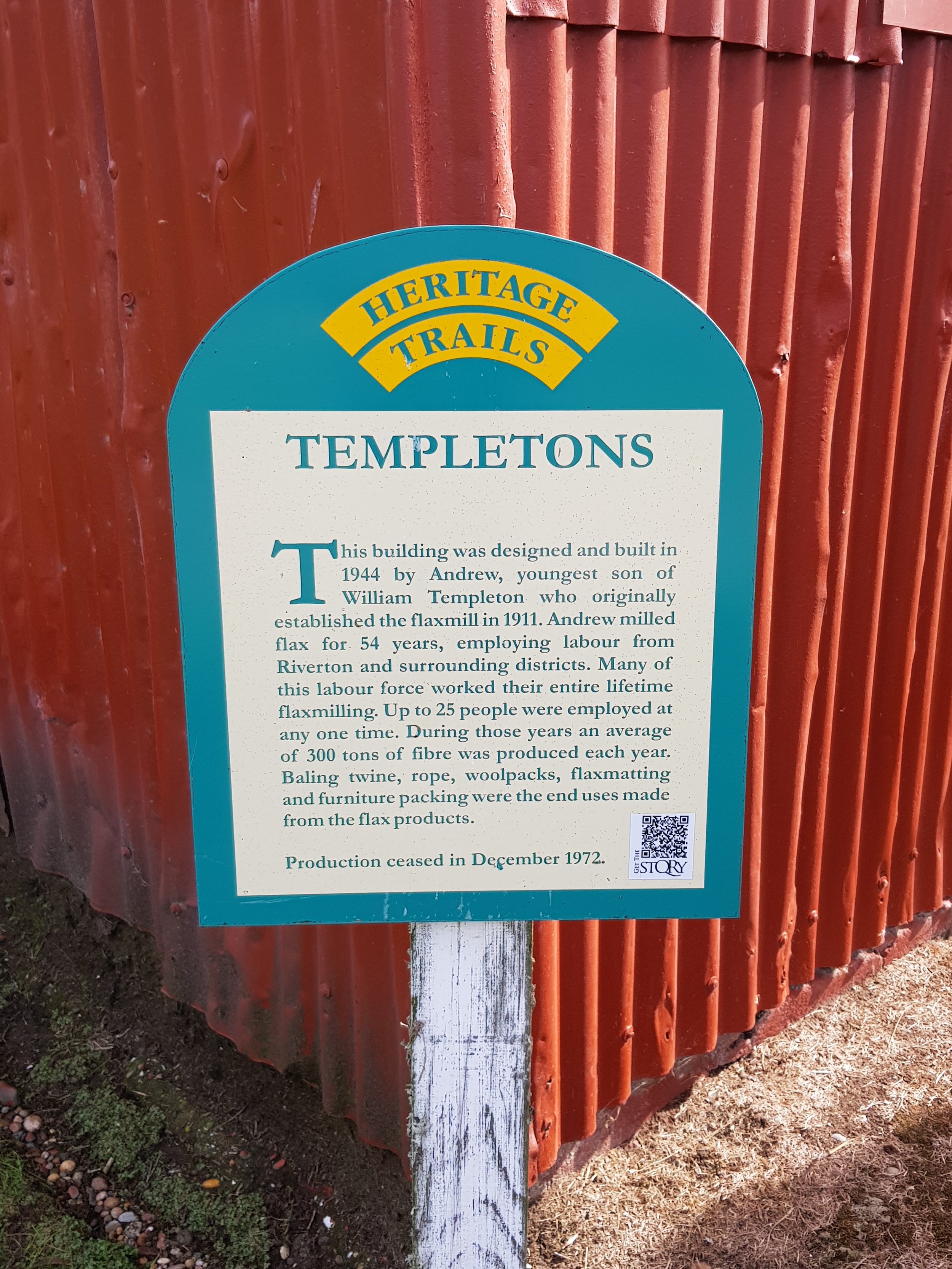
1940 – Andrew and Muir Templeton build the first automatic scutcher in Southland.
1943–1944 – After a fire destroys the original scutching shed, new stripper and scutching sheds are constructed on the current site.
1971 – The Templeton Flax Mill ceases operation in December.
2001 – Restoration begins under the Templeton Flax Milling Heritage Trust, including reinstating machinery and preparing interpretation.
2004 – The Templeton Flax Mill Museum opens to the public; a Versatile garage is added for machinery storage and office use.Construction materials: Timber framing with corrugated iron and colour‑steel cladding.

Drying flax; McKesch, Henry John; 1910-1920; RI.P39.93.524 William Templeton (senior) with his daughter Peggy on a horse drawn gig inspecting the fibre drying paddocks at Otaitai Bush. Acknowledgement to: Te Hikoi Museum for photo Templeton Flax Mill for additional wording
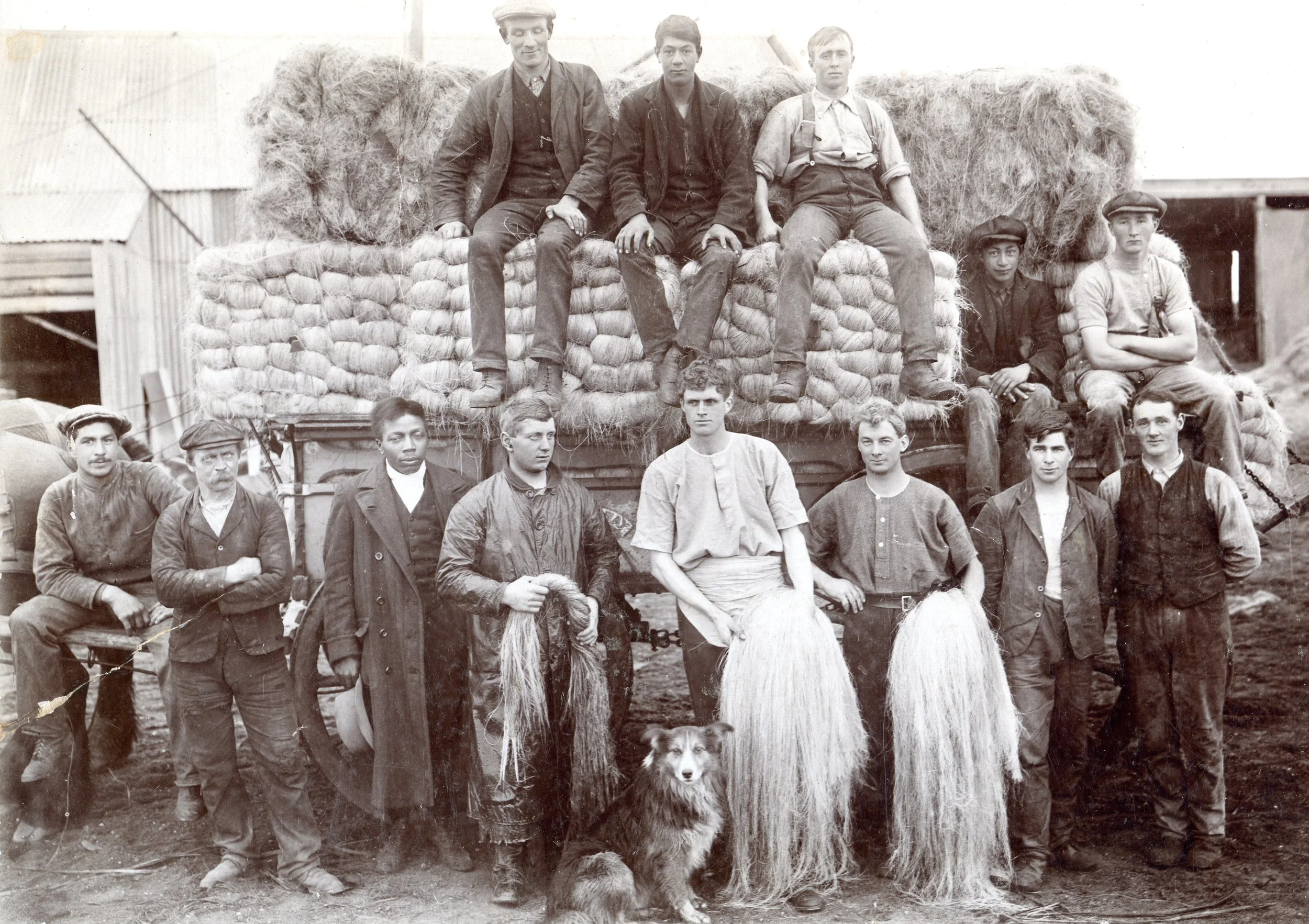
Men of the Templeton Flaxmill; McKesch, Henry John; 1910-1920; RI.P32.93.432 Processed flax hemp ready for sale and use. Left to Right: Jack Templeton (rear, 2nd from left), William Templeton (extreme right), Alex Oag (front, 4th from left), Muir Templeton (extreme right) This was taken just prior to WW1 when 4 of the 5 Templeton brothers enlisted in 1914 and 1915 or later called up in 1917. Acknowledgement to: Te Hikoi Museum for photo Templeton Flax Mill for additional wording

1912-1913 ~ William and Jack Templeton on a wagon loading a bale of tow onto bales of fibre to be sent off to the Otaitai Bush rail platform for shipping north. Image supplied by Templeton Flax Mill

Templeton's flax mill; McKesch, Henry John; 1910-1920; RI.P39.93.522 William Templeton (senior) standing in front of the original 1911 Stripper Shed with cut bundles of flax ready to be graded and stripped, with stripped fibre on poles waiting to be hung out in the fibre drying paddocks. Acknowledgement to: Te Hikoi Museum for photo Templeton Flax Mill for additional wording
Brief History of the Templeton Flax Mill
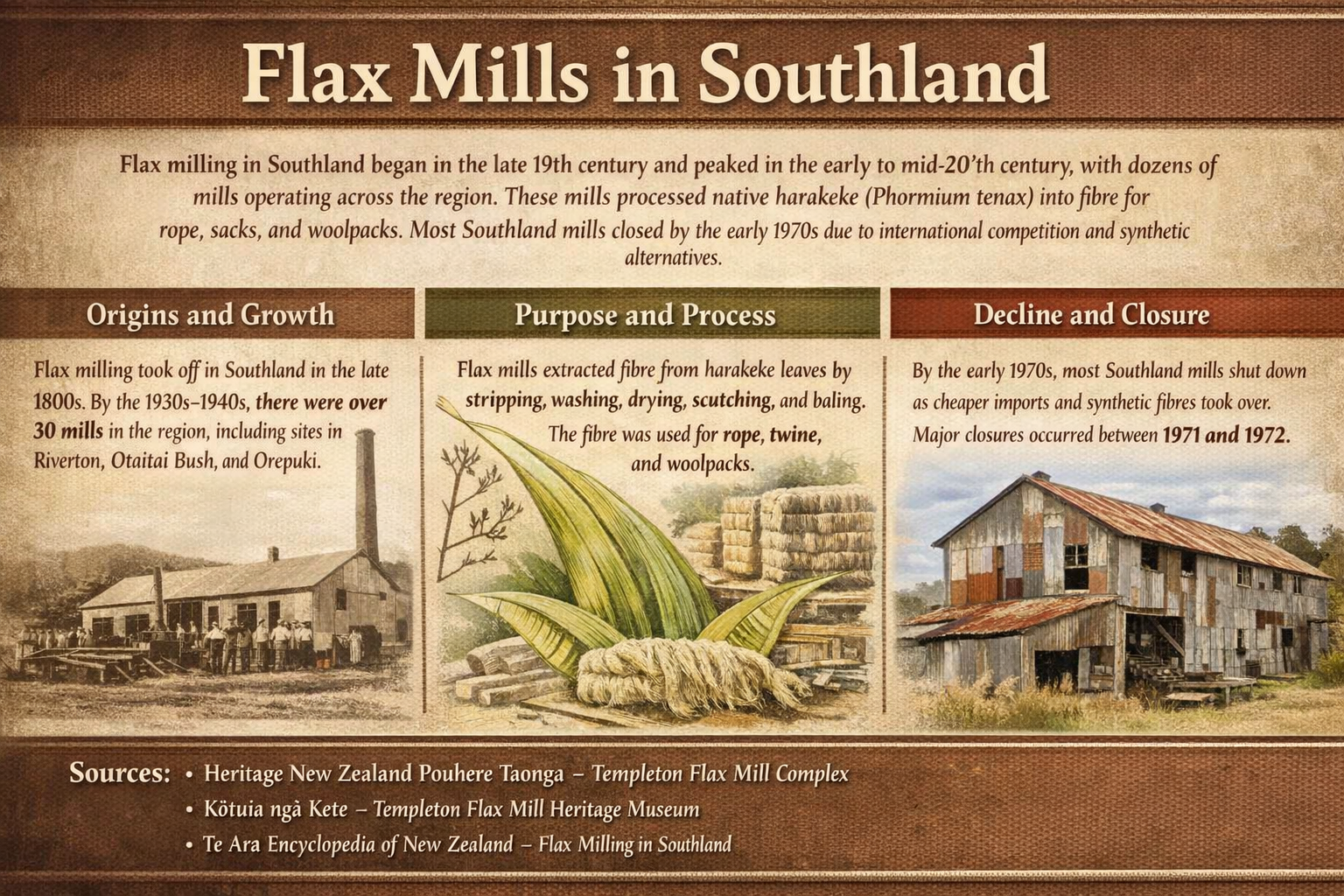
Flax milling at Otaitai Bush began in the early twentieth century when the Templeton family established a processing operation on their rural property near Riverton. Over several decades, the mill developed into a well‑known local enterprise, with each generation contributing practical innovations and improvements to the machinery and workflow. Their work supported the wider flax industry in Southland and helped maintain production through changing economic conditions.
After operating for sixty years, the mill closed in 1971, leaving behind a remarkably intact collection of buildings and equipment. Recognising the importance of preserving this rare industrial landscape, family members and supporters later formed a trust to restore the site. Their efforts brought the machinery back into working order and laid the foundation for a museum that now interprets the region’s flax‑milling heritage. In 2010, the New Zealand Historic Places Trust (now Heritage New Zealand Pouhere Taonga) recognised the site’s national significance by granting it Category 1 status. The mill has also been acknowledged locally for its contribution to Southland’s cultural and industrial history.
Today, the Templeton Flax Mill remains one of the most complete surviving flax‑milling complexes in the country, offering insight into the ingenuity, labour, and community connections that shaped this once‑important industry.
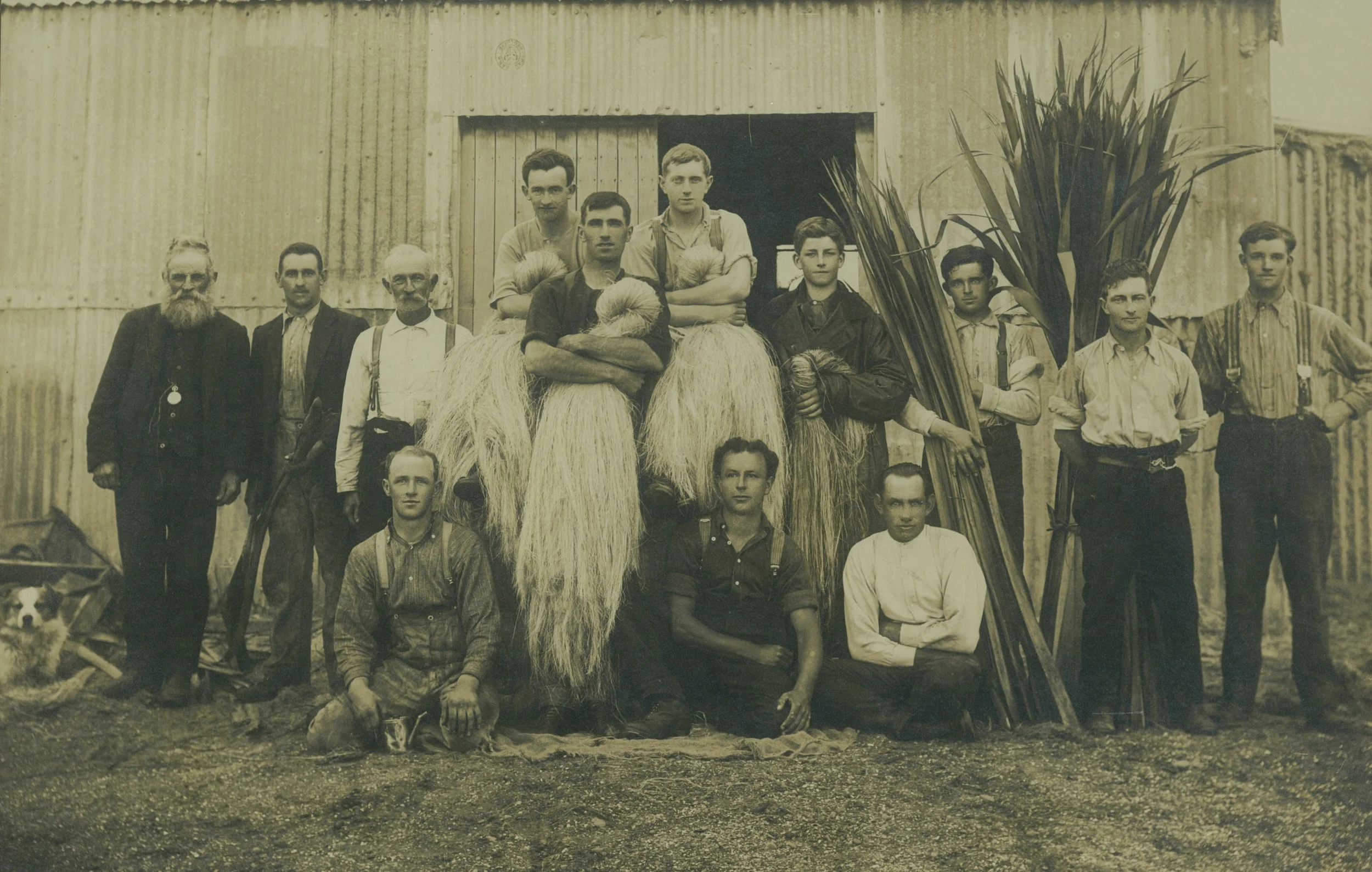
Image - left ~ Otaitai Bush mill staff in 1917. Pictured are about half of the staff.
Back row from left: M Hayder, Jack Gyder, Thomas Howell (son of Captain Howell), Jack Pearson, Dick Walker, Alex Cag, Bill Lockett, Jack Moore, G Smith and Jim Keen.
Front row: Andrew Templeton, Sydney Green and Sydney Stirling.
Image kindly shared by Templeton Flax Mill
History.
Stories.
🌿 Five Generations – The Templeton Flax Milling Legacy 🌿
A True Southland Family Story - With appreciation to Stephen Logie for his editorial contributions.
The story of the Templeton family is one of hard work, innovation, and dedication — a remarkable five-generation connection to flax milling at Otaitai Bush, near Riverton. For 60 years, the family operated the Templeton Flax Mill, a three-shed mill complex on their 2,000-acre coastal farm, producing flax fibre for the rope and twine industry that was once vital to New Zealand’s rural and national economy.
📜 The Early Years
In 1911, William Templeton sold his farm near Thornbury and moved his large family to a 2,000-acre beach property at Otaitai Bush, where he erected a flax mill. Together with his wife Jessie, they raised a large family of five sons and five daughters — a family that would become deeply woven into the Southland flax milling industry.
⚙️ War Years & Hard Work
When World War I began in August 1914, flax milling was declared an essential industry. Fibre from flax was critical for domestic rope and twine production and was exported to both the USA and Britain to replace alternative rope and twine fibre sources cut off by the war.
Four of the Templeton sons went off to serve overseas in the Middle East, Turkey, and the Western European theatres of war, leaving the youngest, Andrew Templeton, to help his father. Initially too young for military service, Andrew left school at just 14 to work full-time at the mill, where he became accomplished at every aspect of milling.
His days were long and demanding — starting at 4:30am to light and stoke the stationary steam engine boiler so the mill could begin operating by 7:30am. He continued this gruelling routine six days a week for 18 years, becoming highly skilled at maintaining machinery, especially the stripper. This continued until electricity finally arrived in 1933, easing some of the physical demands.
🛠️ Innovation & Expansion
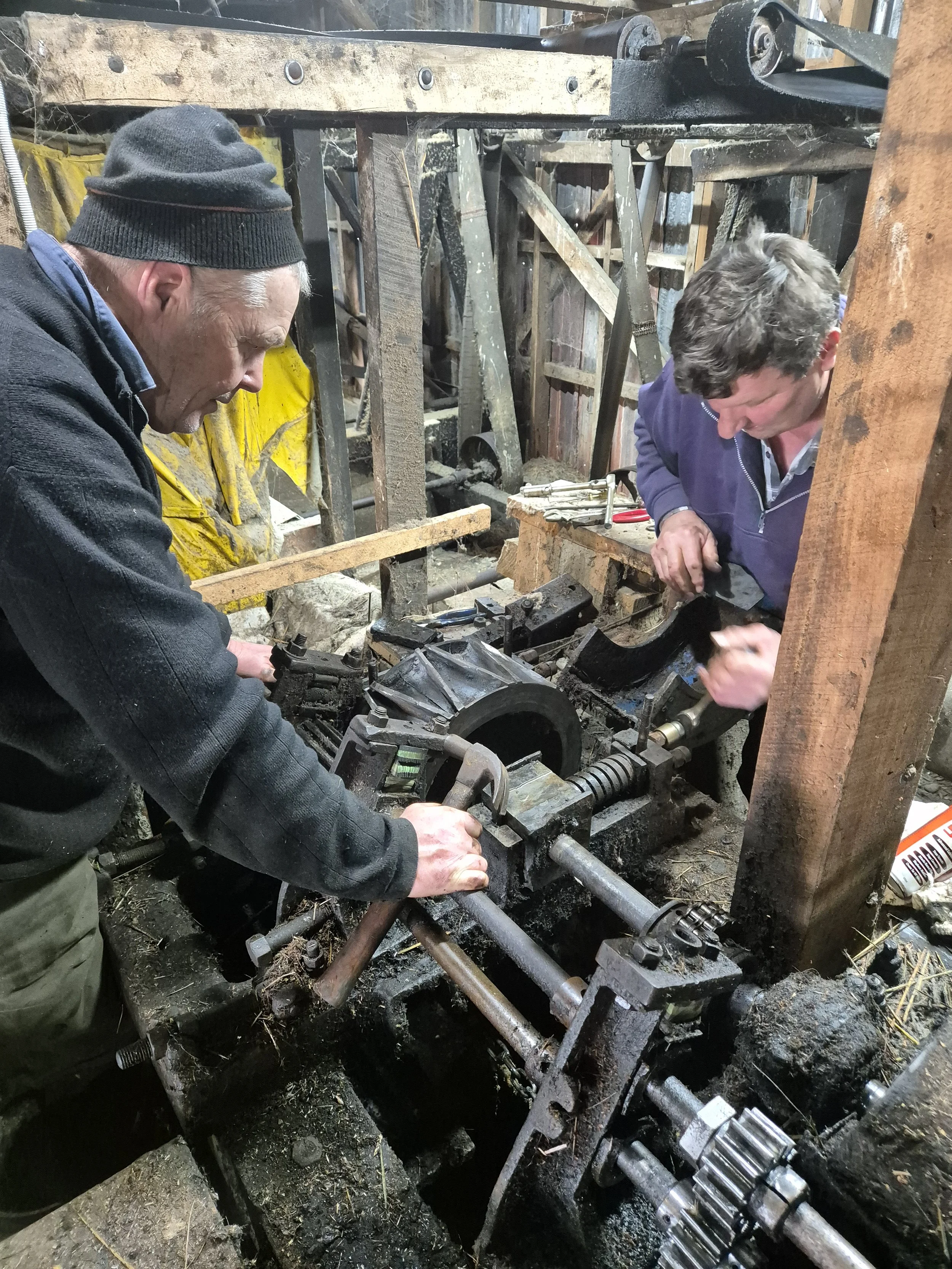
By 1924, Andrew Templeton had taken over the mill’s management following his father William’s retirement. At the time, the second-stage process called ‘hand scutching’, which cleaned and combed out the unstripped leaf tips and short fibres, was both labour-intensive and hazardous. It required the operator to hold one end of the dried fibre hank as it was flailed and combed inside the belt-driven, revolving scutcher drum. In turn, both ends of the hank were fed into the flailing scutcher drum, while the operator held on grimly to prevent losing the hank, or worse still, losing an arm.
In a major step forward, with the advent of electricity, Andrew and his older brother Muir designed and built the first automatic two-stage scutcher in the region, which other mills quickly adopted, modernising production and improving efficiency and worker safety.
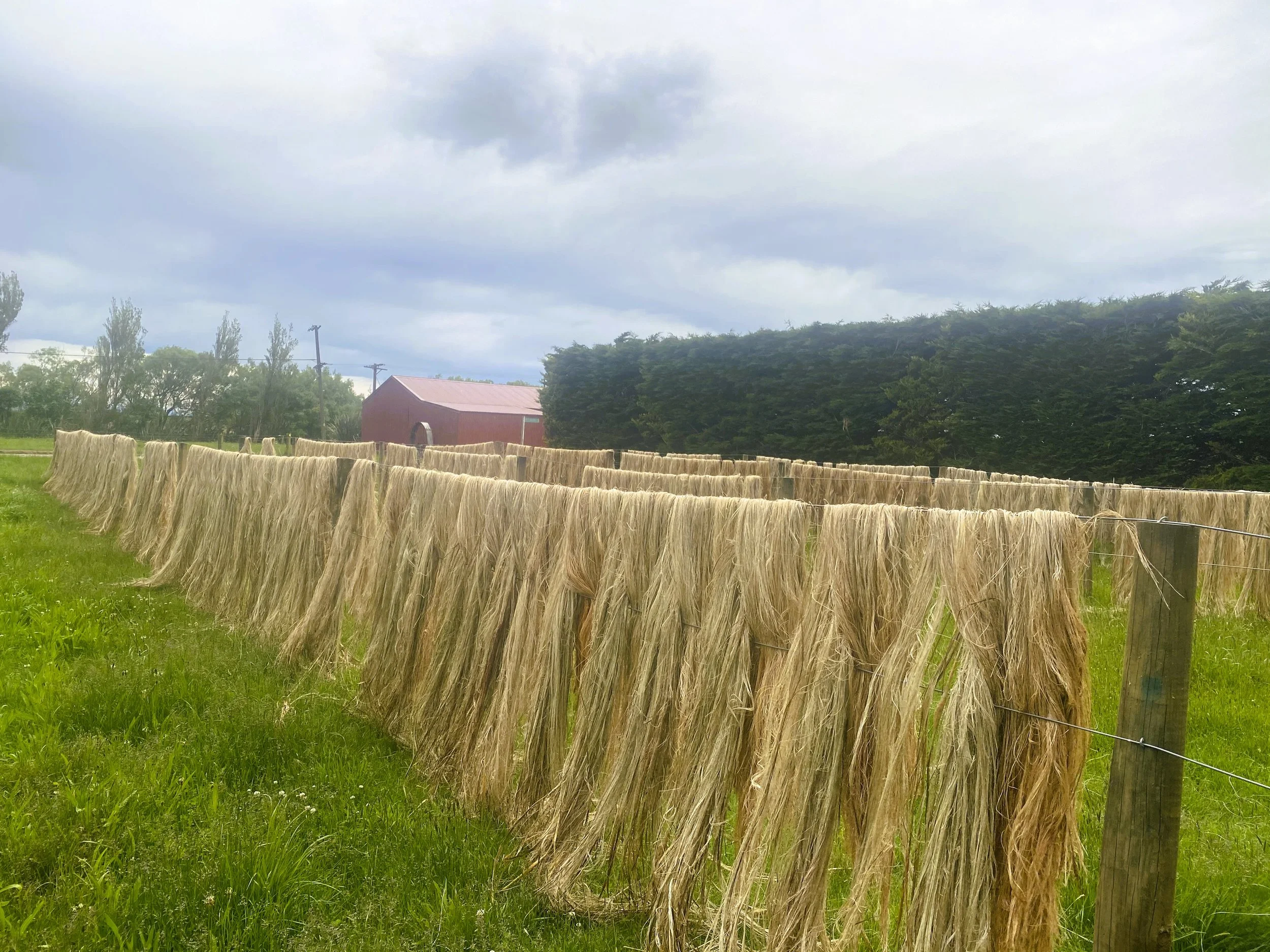
However, progress was not without setbacks. On several occasions, the mill burned down from engine sparks — a constant threat in the dry, dusty scutching shed. In 1944, a devastating fire caused by an electrical fault destroyed the scutcher shed, forcing the family to rebuild the entire mill complex at its present site upstream on Otaitai Creek. Fresh water is drawn from the creek to wash the stripped fibre before it is hung out on fences for drying and bleaching.
Around the same time, Andrew was approached by Donaghy’s Industries to set up and run another flax mill at Otanomomo, near Balclutha in South Otago, to increase fibre production in support of the war effort. Andrew’s brother Muir stepped in at Otaitai, while Andrew travelled to and from Balclutha each week, retaining management oversight of both Templeton mills. The Otaitai mill supplied fibre to Donaghy’s twine works at Waikuku, North Canterbury, while Otanomomo fibre went to Donaghy’s South Dunedin rope factory. From the mid-1920s, the tow by-product from scutching was sent north to the New Zealand Woolpacks Company in Foxton, where it was made into woolpacks, and later to Bonded Felts in Foxton for the manufacture of hardwearing Brusella and Cordella carpet matting.
👨👦 A Family Business Grows
The next generation stepped in during 1947, when Andrew’s son, Desmond Templeton, left school at age 16 to join the operation. Alongside his older brother Andrew (junior), the business became a true family partnership, trading as A J Templeton & Sons.
Des worked in the mill, while Andrew junior managed the farm and bookkeeping. At its peak, the operation employed from 17 up to 25 workers, making it a significant local employer.
Life around the mill also evolved. In earlier years, Jessie Templeton and her five daughters ran a homestead cookshop, supplying up to 25 cooked lunches for the workers on a coal range — a demanding role in itself. In addition to cooking for the large family, a number of men lived in single men’s huts on site during the week, each requiring three meals a day.
For the first three decades, mill workers either walked, cycled, or rode horses along the beach track from North Riverton to the mill each day and back; later, motor cars were used in the 1940s and 50s. In 1955, transport for mill workers was laid on, with Des driving a 3-ton mill truck with a canvas canopy into Riverton and back for a 7:45 a.m. start, repeated again at the end of the day for the 5:00 p.m. finish. Times had changed, with workers bringing their own lunches and using a dedicated smoko room, which featured a hot-water zip for cups of tea at smoko and lunch.
🚪 The End of an Era
An import-licensing regime, removed in 1969, had until then provided price protection for New Zealand flax fibre from imported alternatives such as jute and sisal. With the removal of price controls, Donaghy Industries increased its imports of sisal fibre from East Africa and jute from Bangladesh, where labour costs were low. The advent of nylon (oil-based) ropes and cheap natural-fibre imports, together with a three-fold increase in wages, made it unprofitable for flax millers to continue operating, with the last remaining three flax mills in Southland — and other mills nationally — ceasing operation by 1972.
After six decades of operation, the Otaitai Bush flax mill closed at the end of December 1971, while the sister Otanomomo mill, under the helm of Andrew Templeton (then 75 years old) closed down six months later in June 1972. The flax industry demise marked the end of a significant chapter in the Templeton family and the family’s contribution to the Southland and South Otago rural economy and flax industry history.
🏛️ Preserving the Legacy
The Templeton story didn’t end there.
In 2000, the Templeton Flax Milling Heritage Trust was formed under the vision and leadership of Desmond Templeton, with the goal of restoring the historic mill into a heritage museum. Thanks to hundreds of volunteer hours, the site was brought back to life and officially opened as a working museum in 2004.
Desmond’s dedication to preserving flax milling history was recognised with a Queen’s Service Medal, awarded shortly before his passing in 2011.
In 2010, the mill received Category 1 historic recognition, acknowledging its national significance as the country’s only authentic working flax mill, operating on its original site.
👨👩👦👦 Five Generations Still Involved
Today, the Templeton legacy continues, with family members remaining actively involved in the mill and the land as current Trustees. These include Vaughan Templeton (Chairman), along with his sons Luke and Peter. They are joined by fellow Trustees Euan Templeton, Stephen Logie, and Howard Robertson, who all contribute to the ongoing flax-processing work and hosting of visitors.
Together, they continue cutting harakeke flax and operating the mill — keeping traditional flax craft skills alive for future generations.
Des Templeton’s wife, Janice, also played an important role for two decades from 2004, managing flax fibre orders and supporting the ongoing operation. Euan Templeton’s wife, Linda, has taken over Janice’s role, selling fibre via Trade Me in 3 kg boxes to traditional weavers, artists, film and television prop makers, and research and development innovators.
🌾 A Living Piece of Southland History
From early mornings stoking boilers to maintaining 19th-century-era belt-run machinery, the Templetons survived fires, the Great Depression, the demands of two World Wars, and ongoing industry challenges — from viability and break-even years to modest profits, and finally cheap fibre import competition. This required tenacity and adaptation through five generations of the Templeton family, whose story reflects the hard work, resolve, resilience, and ingenuity of rural New Zealand. Their story is shared by the Bennett family of Orepuki, the Johnston family of Redan, and the Niederers of Gorge Road, among others, and the countless Southland families whose relatives worked in the demanding flax milling industry.
More than just a mill, Otaitai Bush mill complex stands as a living reminder of the people, the industry, and the families who shaped Southland’s past — and who continue to keep that history alive today.
Memories of Working at Templeton’s Flax Mill (1965)
Shared by former employee Errol Densem
With thanks to Errol for generously sharing his story.
I was 15 years old, fresh out of school and into my first job. Every morning, Des Templeton would pick up his workers — myself, the Restall boys, George Smith, the White twins (Gordon and Sidney), my brother Lindsay, Owen “Fish” McKenzie, and others. The twins and Lindsay worked on Andy Templeton Jr.’s farm.
Des drove a Bedford truck, from memory, with a canopy over the back and two rows of wooden seats on both sides. There were no seat belts in those days, and he drove very fast.
Upon arrival, there was usually flax ready to be stripped, or a truckload had been dropped off from the day before by Trevor Beck in the big red 4x4 truck. It was a very hard job picking up big bundles of flax from the flax cutters — Bert Robertson and others.
I worked on most stages of the production except the stripper. That was Des’s job only. From the stripper, the fibre moved along a chain to be washed, made into hanks by Gilbert Robertson, and hung over timber poles ready to be taken out to the paddocks.
In the paddocks, there were rows and rows of fences, but only with two wires, over which the fibre was spread out to dry and bleach in the sun. If the weather was good, we spread them out on the ground and turned them over once.
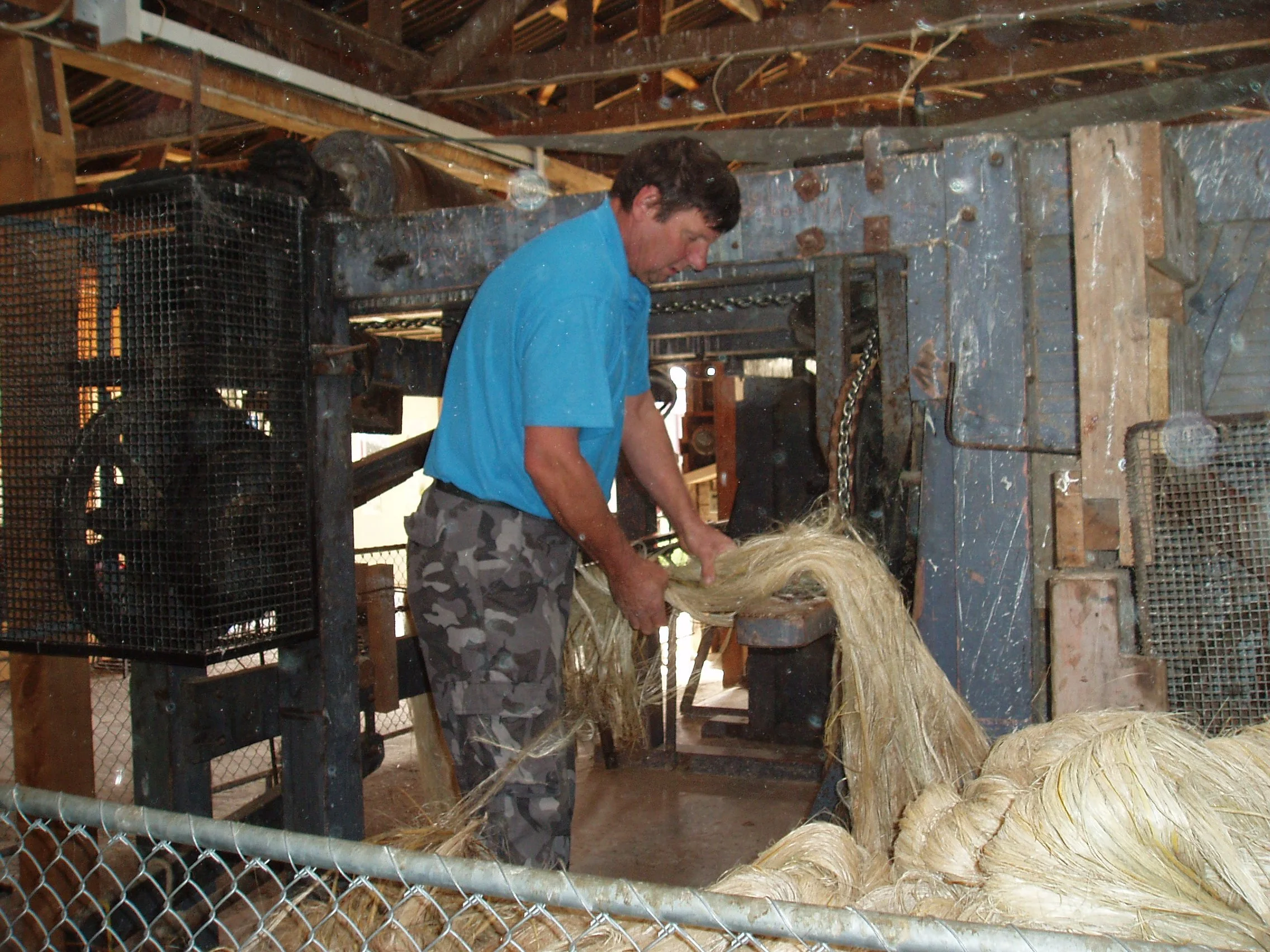
From there, it went to the scutching shed, where Andrew Templeton Sr., George Smith, and I worked. The hanks of dry fibre were put through a scutching machine to beat them clean and make them soft to the touch, then pressed into bales — much like in a wool shed — ready for sale.
It was a very interesting job, but unfortunately the dust from the scutching shed got too much for me, so I moved on to plumbing with Beer and Bailey.
I loved my time in my first job and was very appreciative of the opportunity.
All the best to all,
Errol Densem
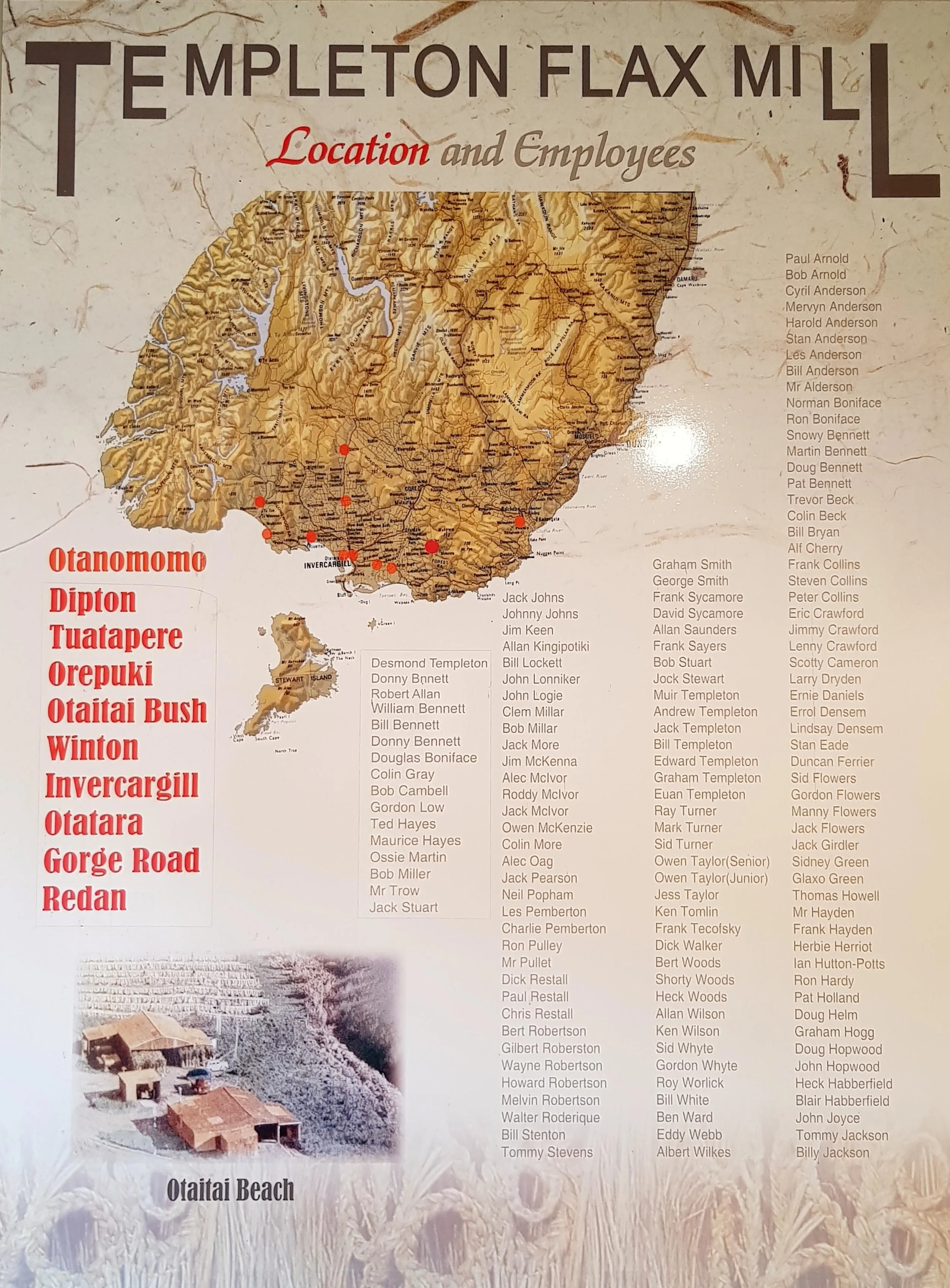
The Employee Board currently on display at the mill (left) is not an exhaustive record of all those who worked at the mill.
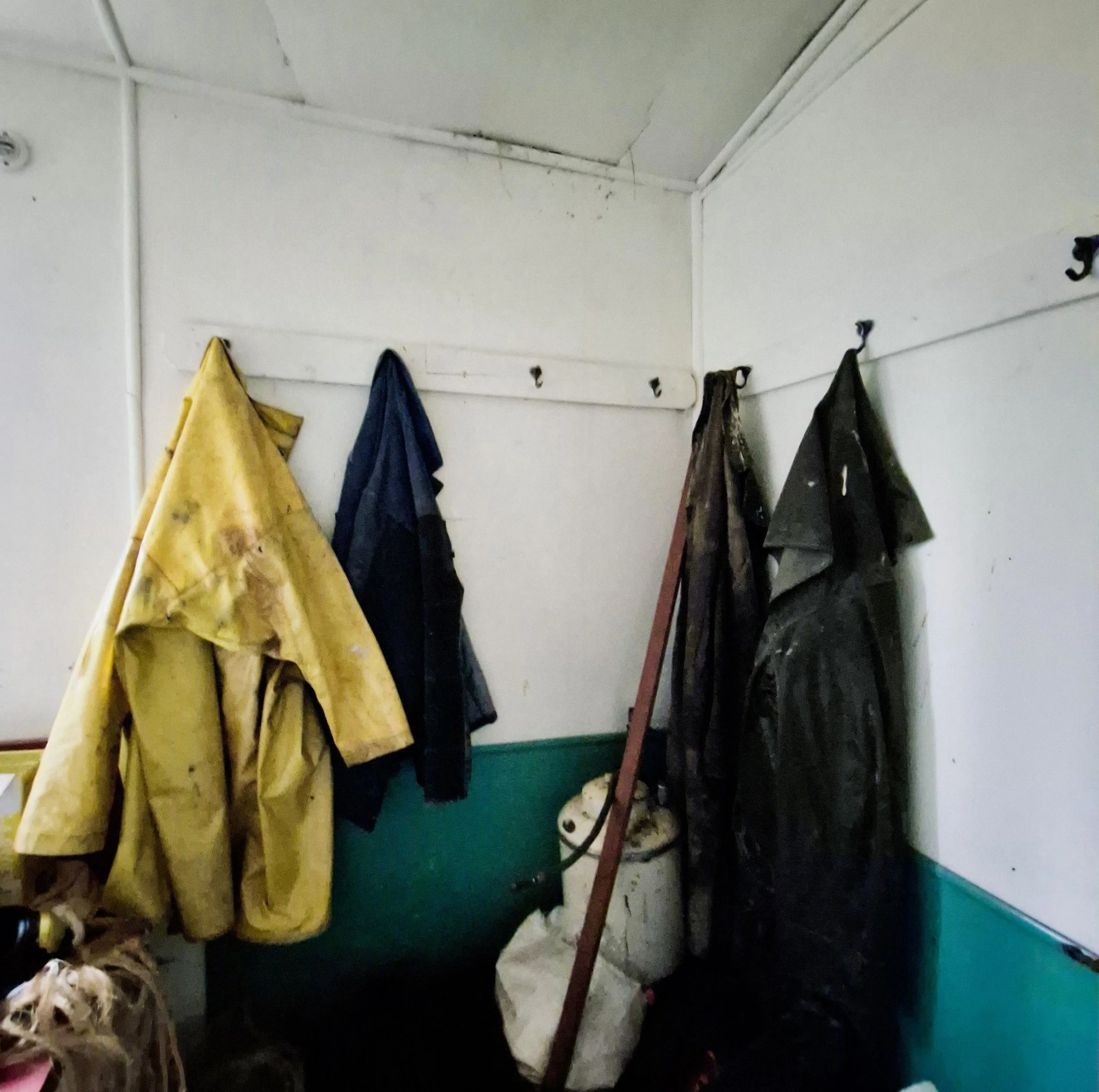
The Stripper Feeder Jacket (second on left) still hangs in the Otaitai Bush Templeton Flaxmill smoko room, from when the mill closed at the end of Dec 1971.
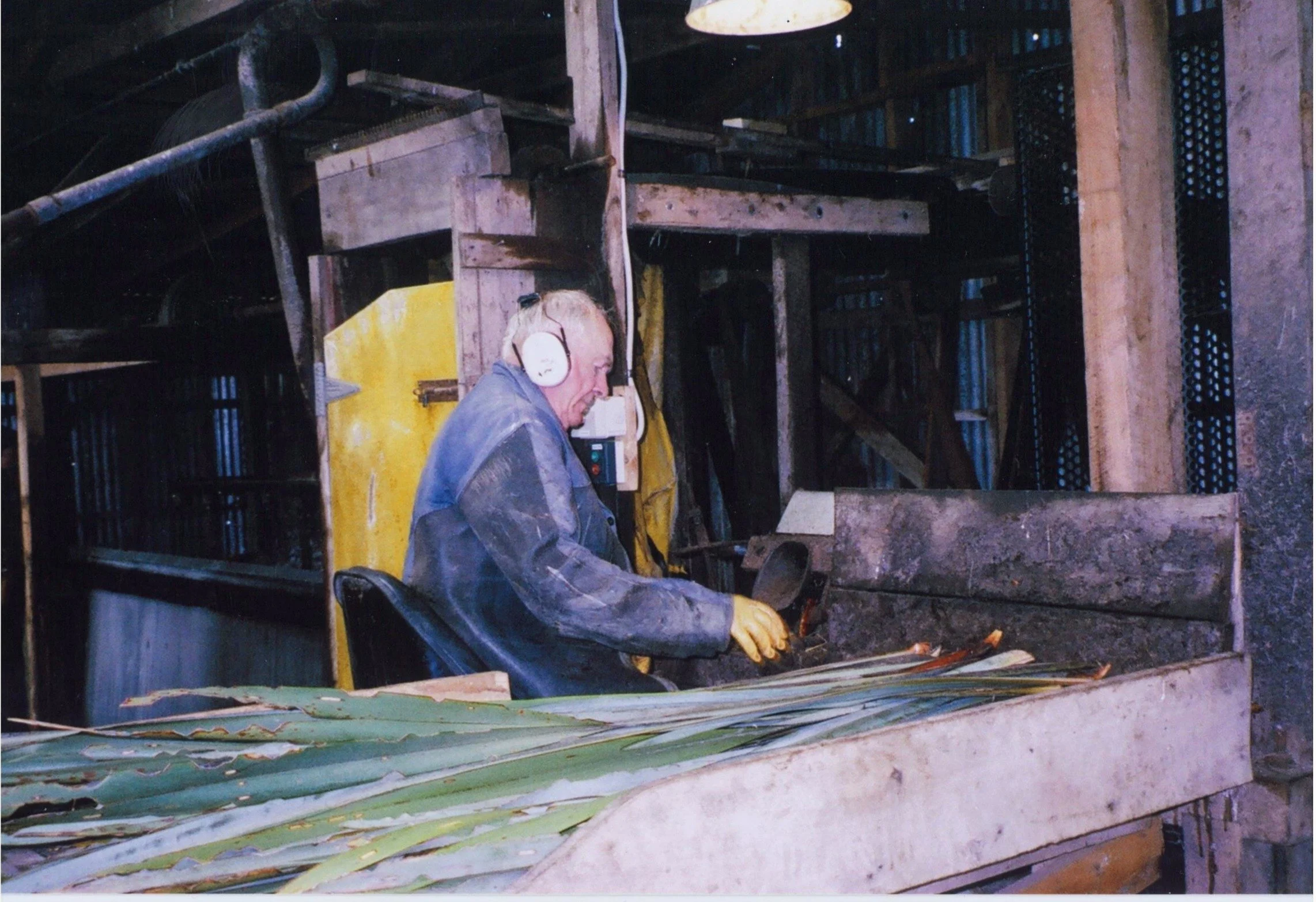
Des Templeton wearing the rubberised jacket feeding the flax mill stripper, circa 2004.
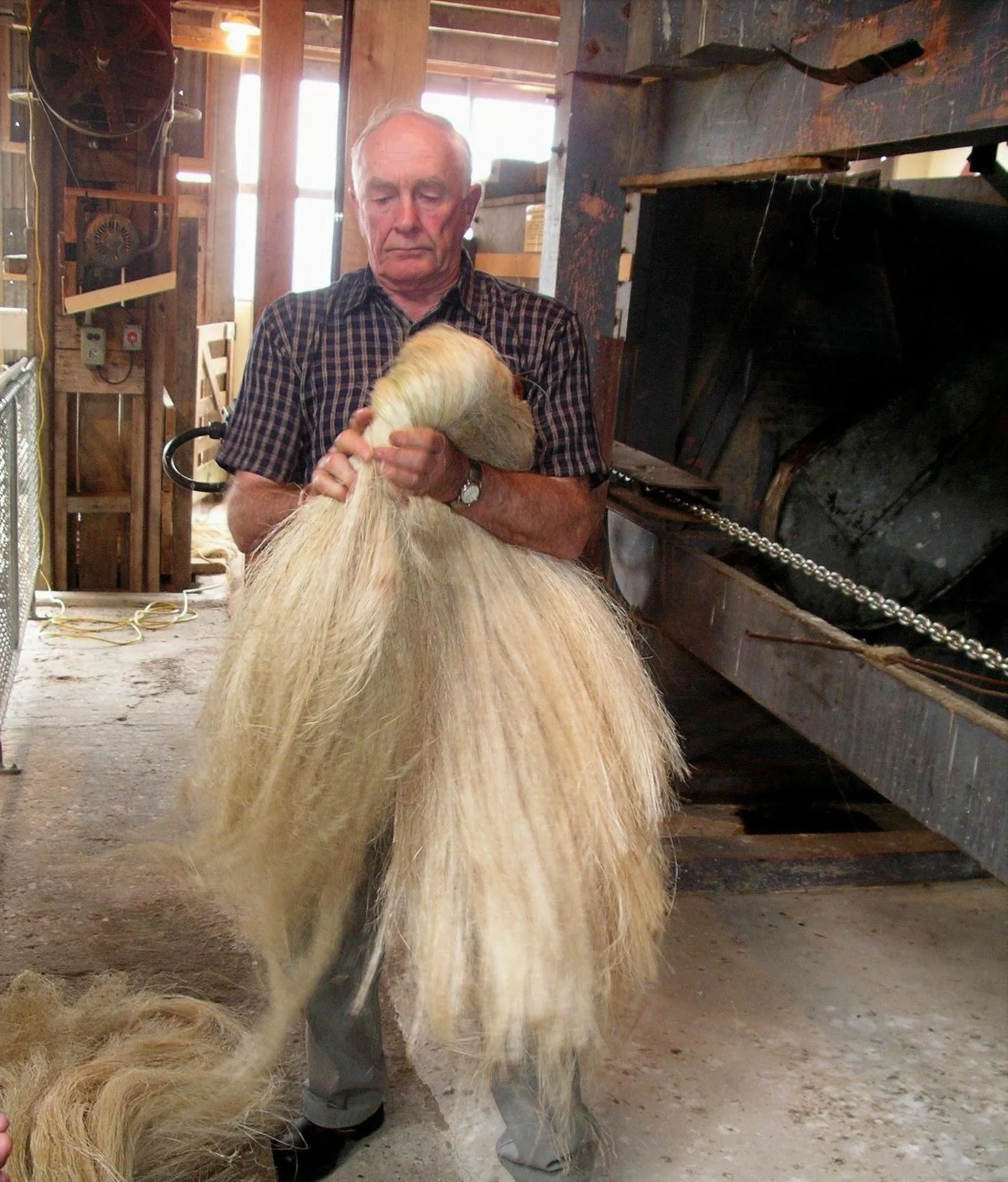
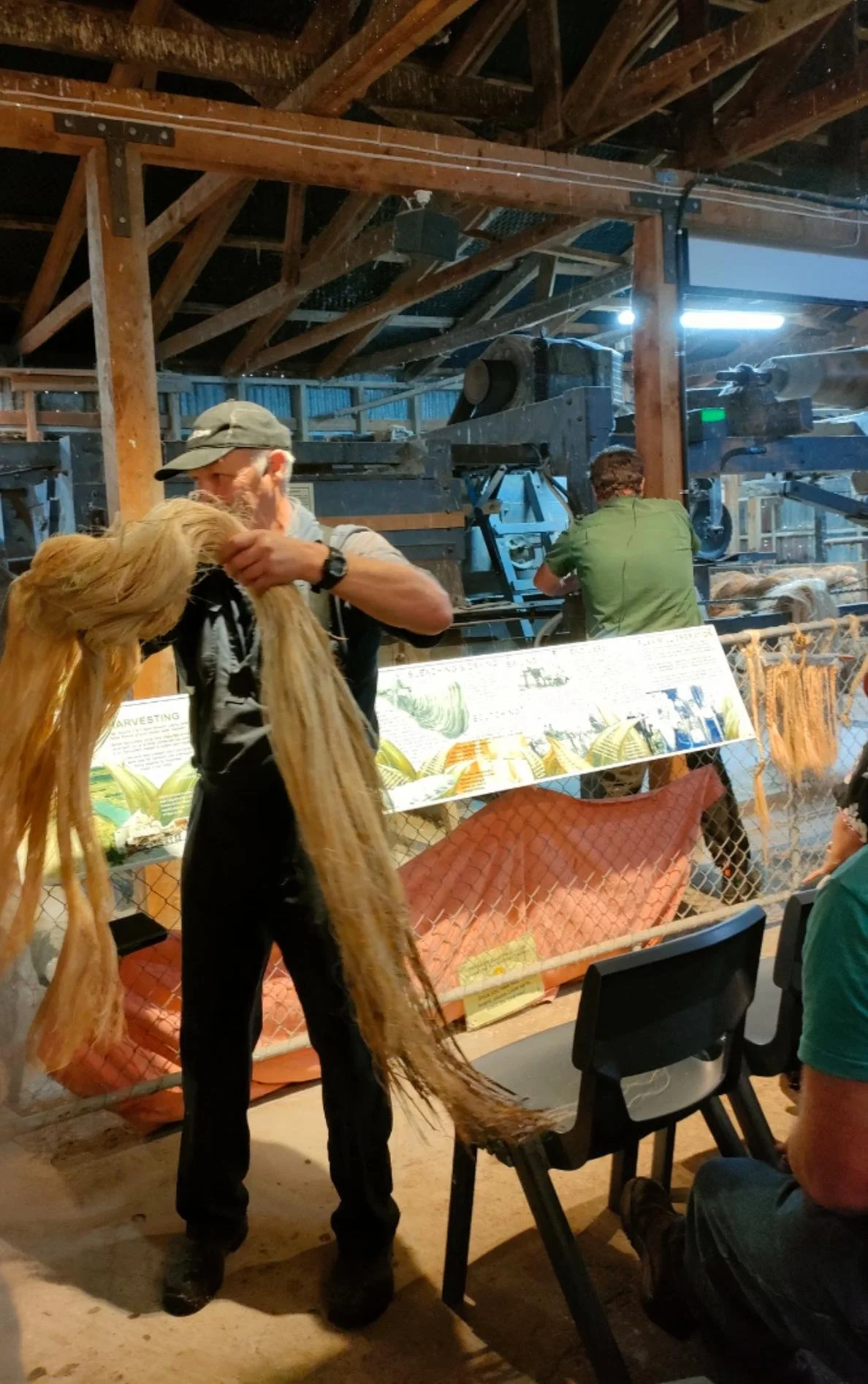
Des Templeton holding a hank of scutched flax fibre.
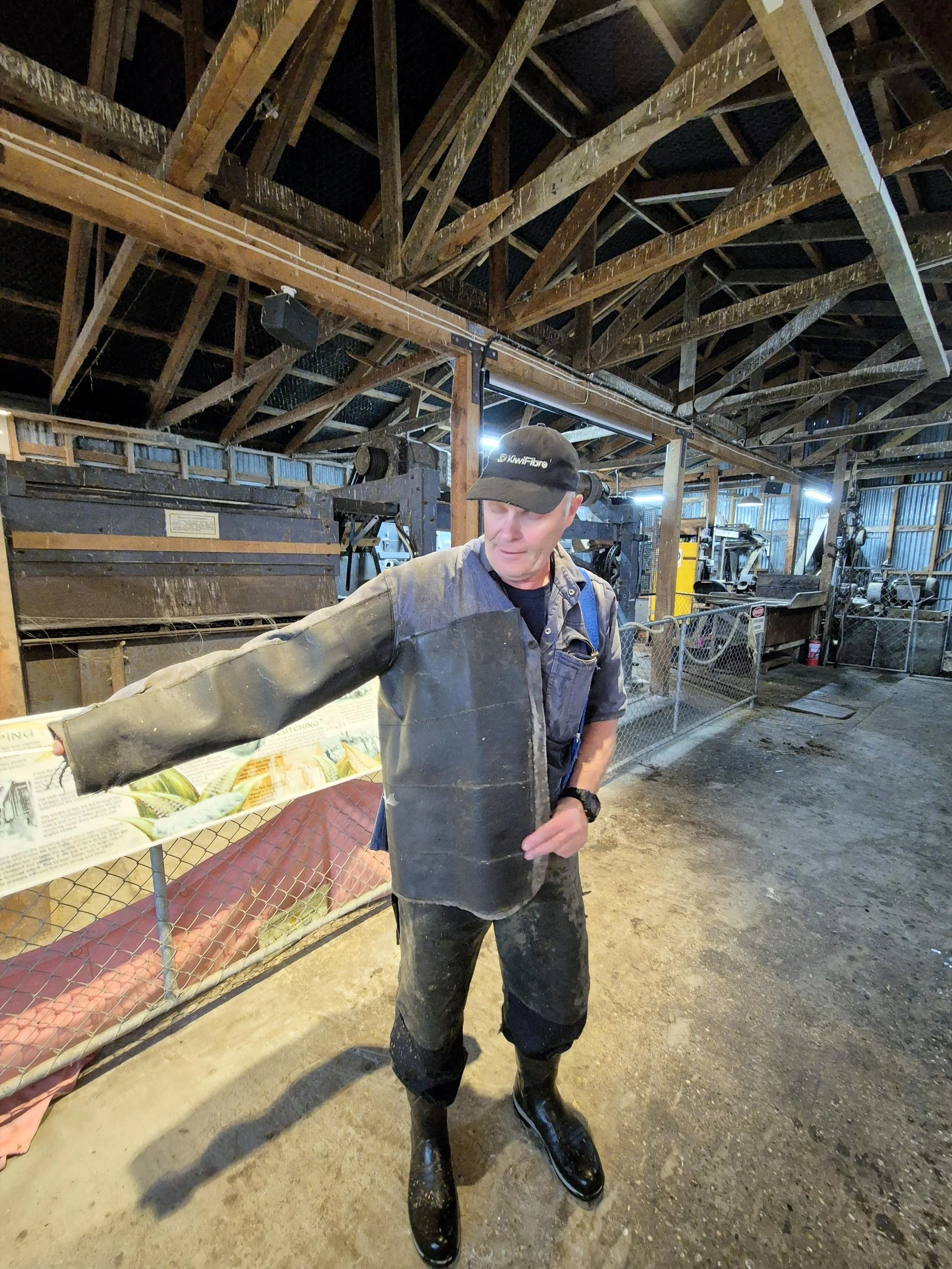
Vaughan Templeton is modelling the jacket.
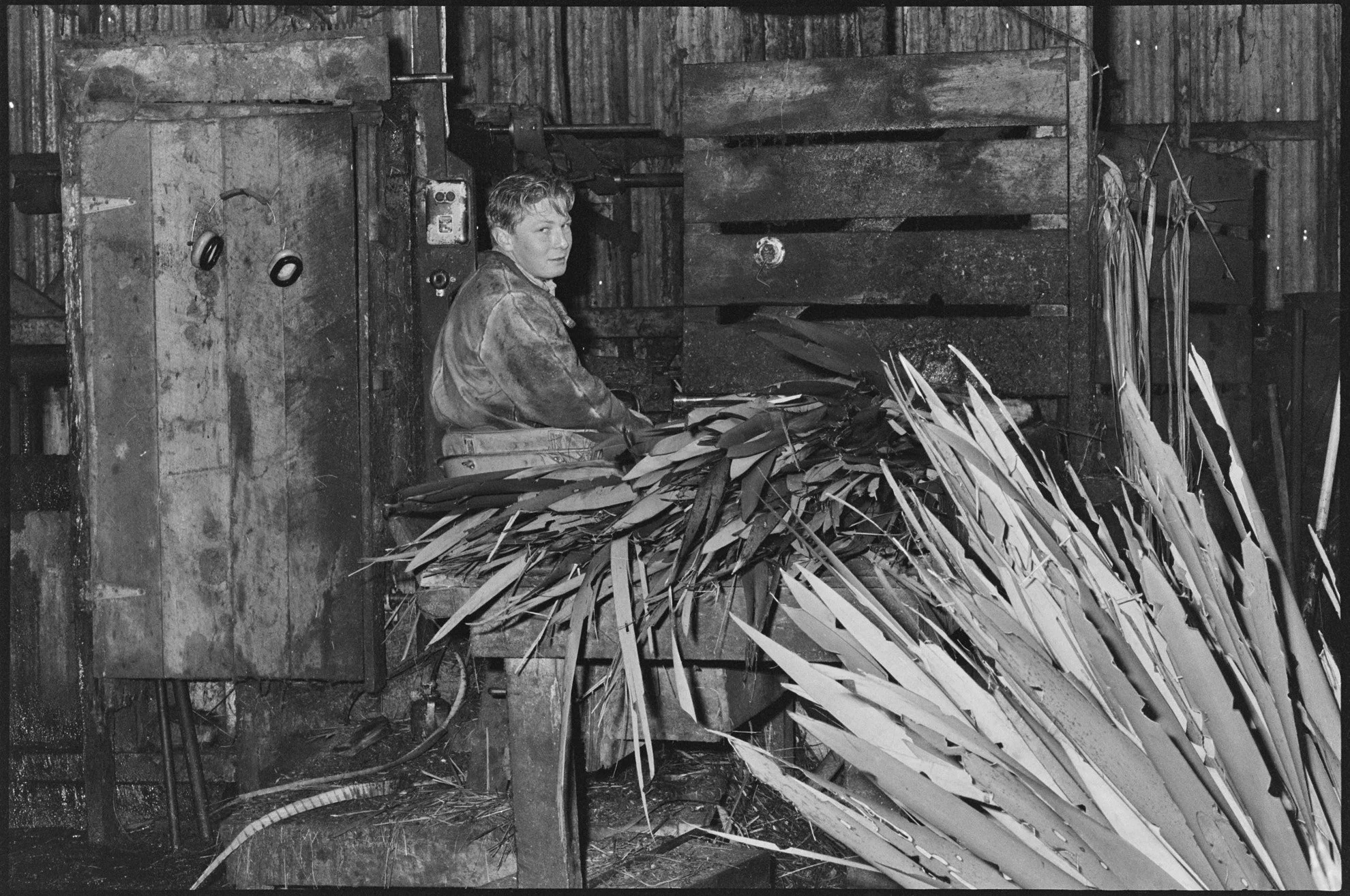
Photo depicts mill worker Johnny Johns feeding the stripper wearing the rubberised denim jacket circa 1967.

Mill manager Des Templeton handling tow byproduct fibre for baling up to send up to Foxton for making into woolpacks and hard-earing carpet matting circa late 1960s.
Left Hanging Since 1971: The Stripper Feeder Jacket
The Templeton Flax Mill’s smoko room still holds a quiet reminder of the final working days of December 1971: a row of jackets left hanging when the mill closed, including the distinctive stripper feeder’s jacket. Made of heavy denim and reinforced with hand‑cut rubber patches, it was a practical solution to a very real problem — the relentless abrasion of flax leaves as they swept past the feeder. Vaughan Templeton recalls asking his father, Des, why the rubber was needed. Des’s answer was simple and matter‑of‑fact: ‘if you didn’t put it on, the jacket would be worn out in one day because the flax is such an abrasive product as it goes past you feeding the stripper’.
Among the photos in the mill’s archive is an image of Des Templeton wearing that same rubberised jacket while feeding the stripper, taken around 2004 during the early years of restoration work. Another shows him holding a hank of freshly scutched fibre, a reminder of the skill and rhythm behind the process. Vaughan has since modelled the jacket for new photographs, and he also speaks about it in the video Five Generations of Templeton Family Linked to the Flax Mill Industry, where the garment becomes more than workwear — it becomes a thread connecting the people, the place, and the long continuity of flax milling at Otaitai Bush.
Templeton Flax Mill - Heritage Month
Flax Mill Open Weekends
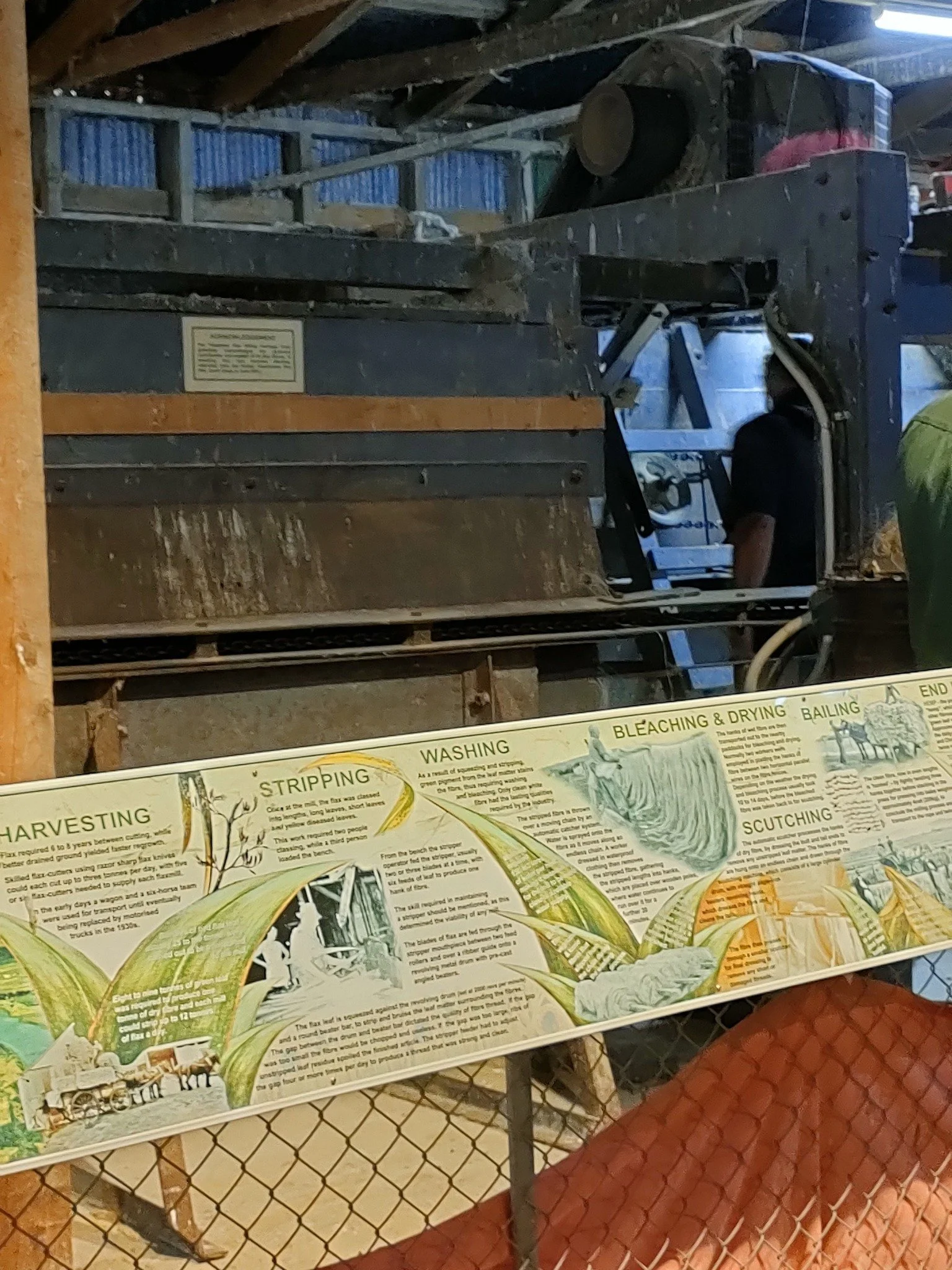
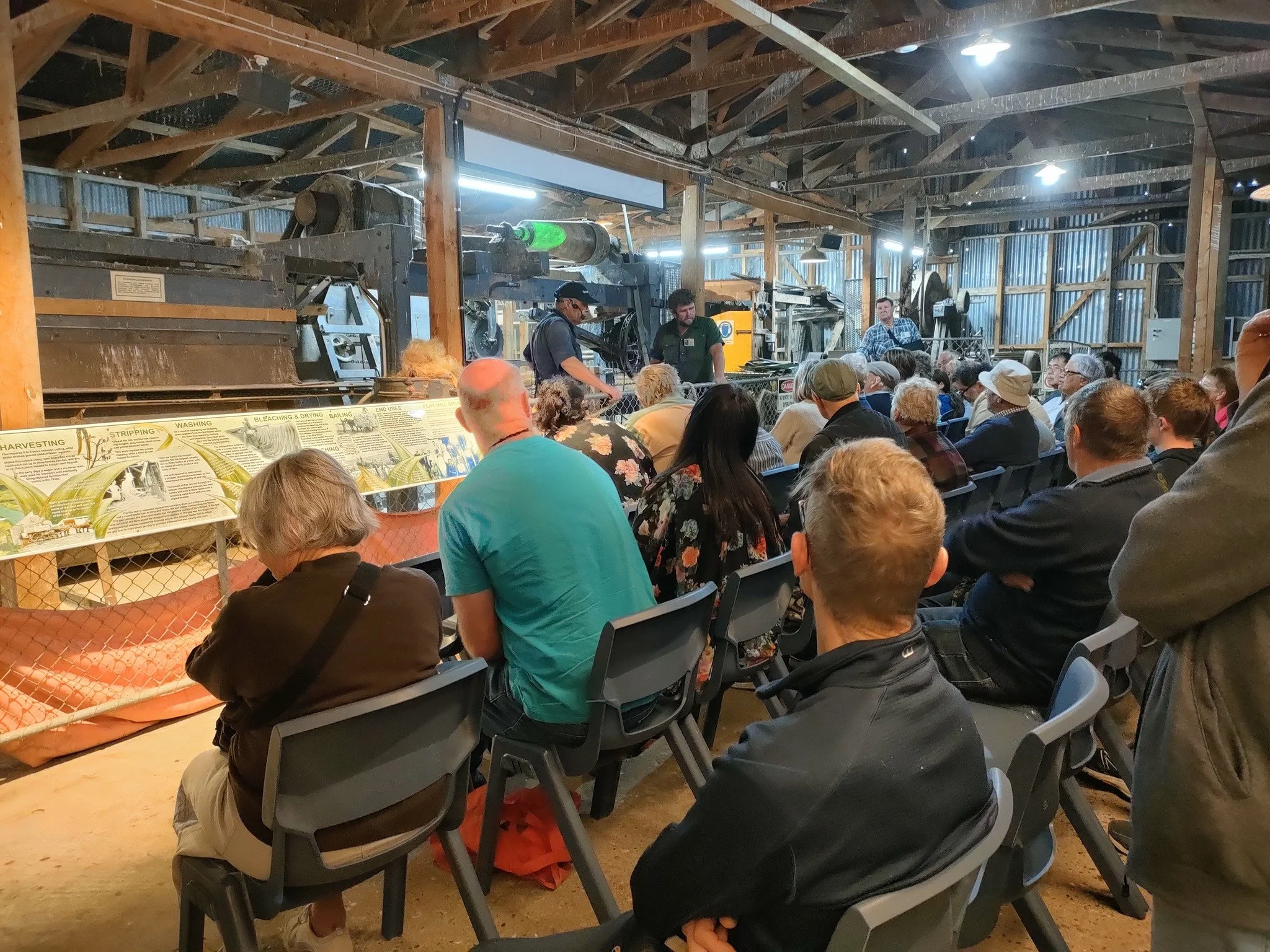
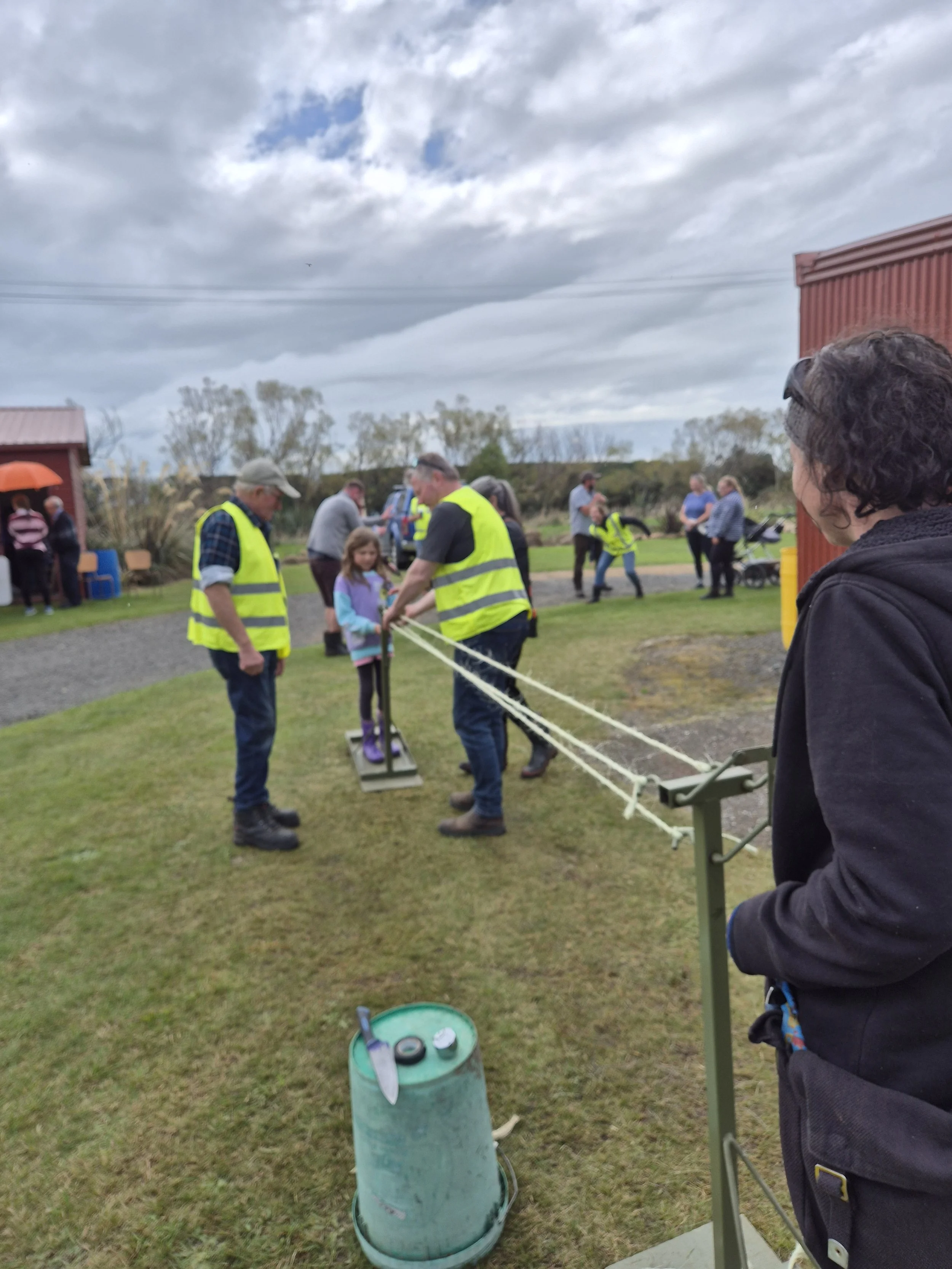
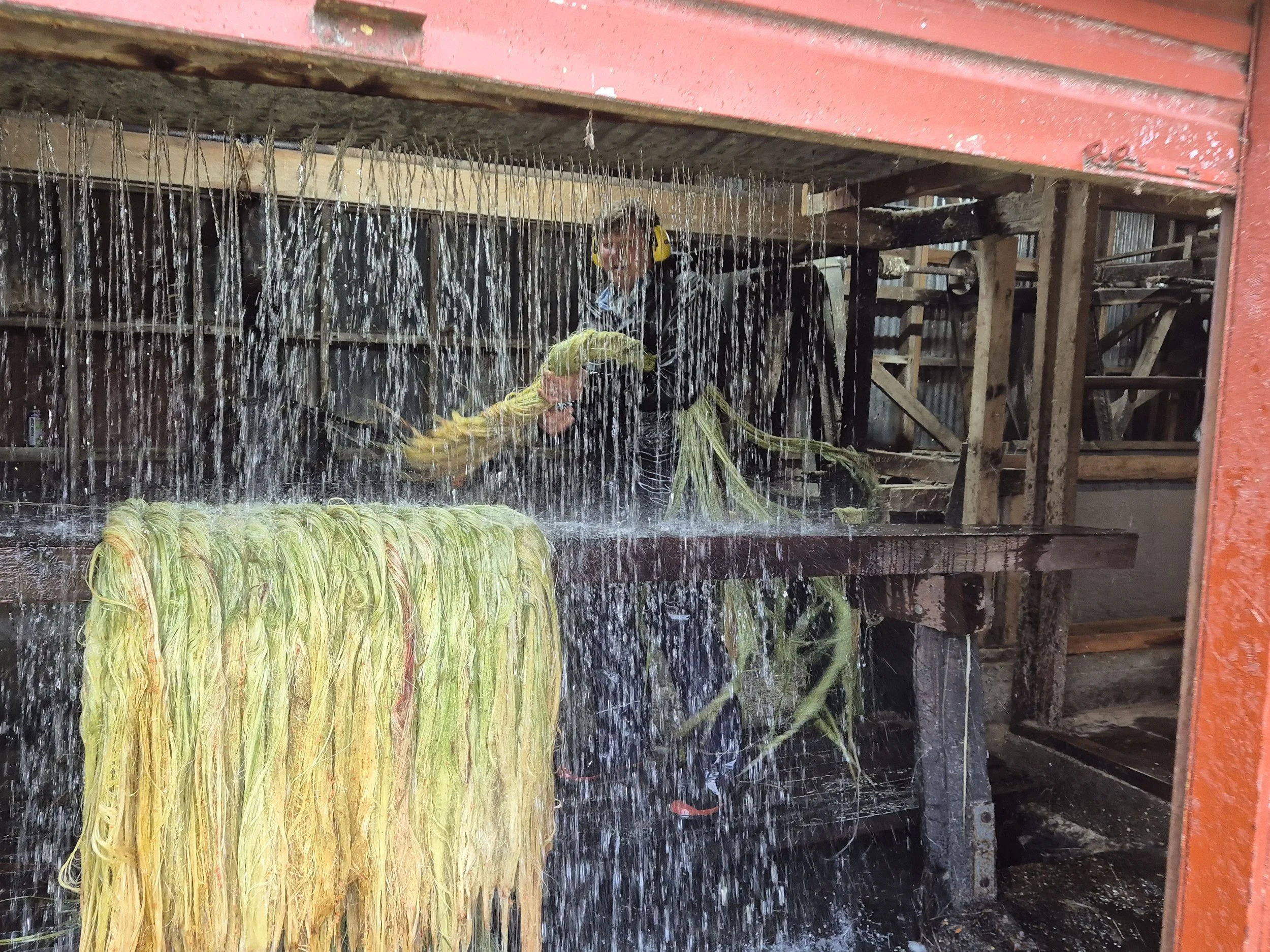
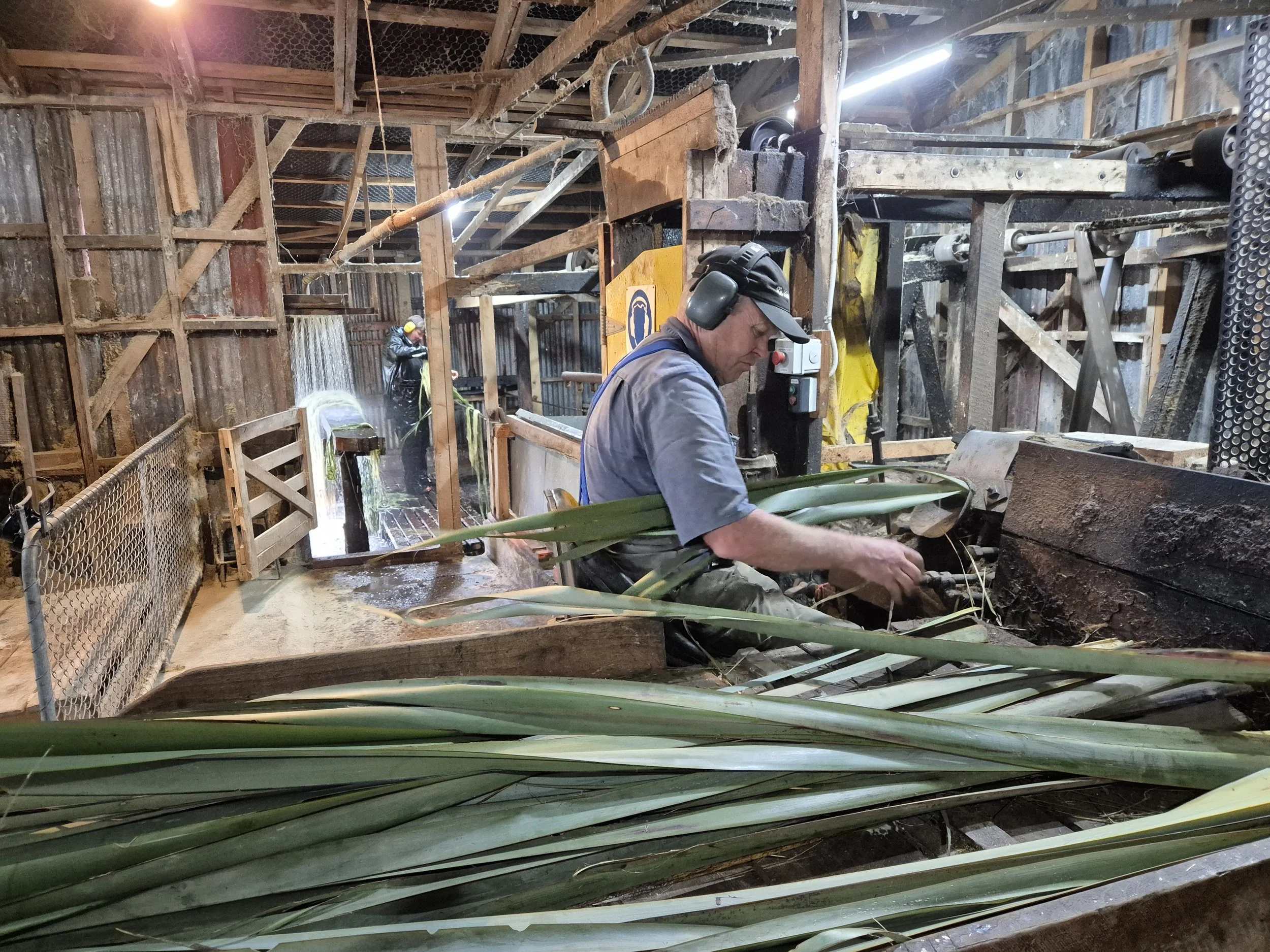
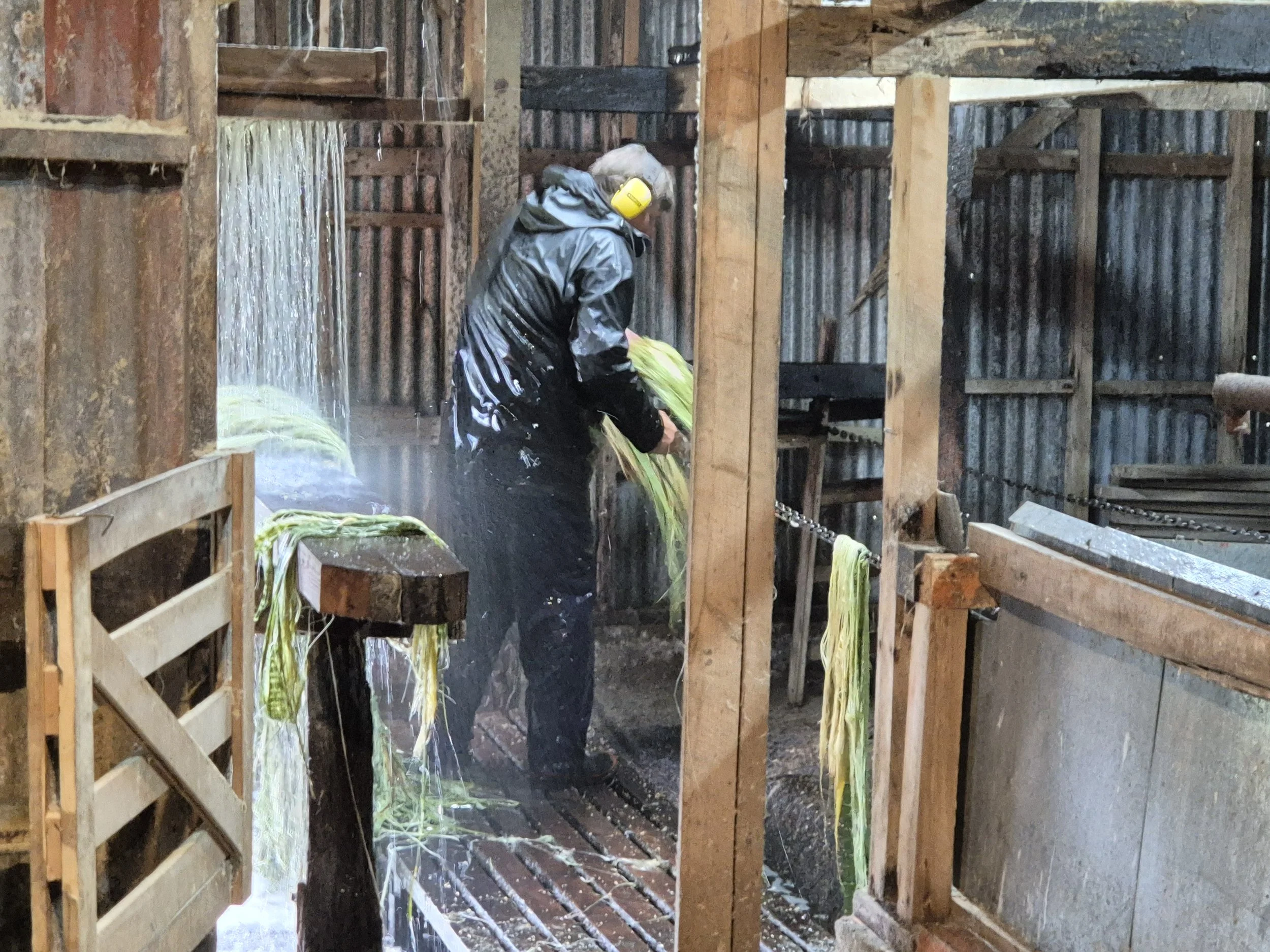
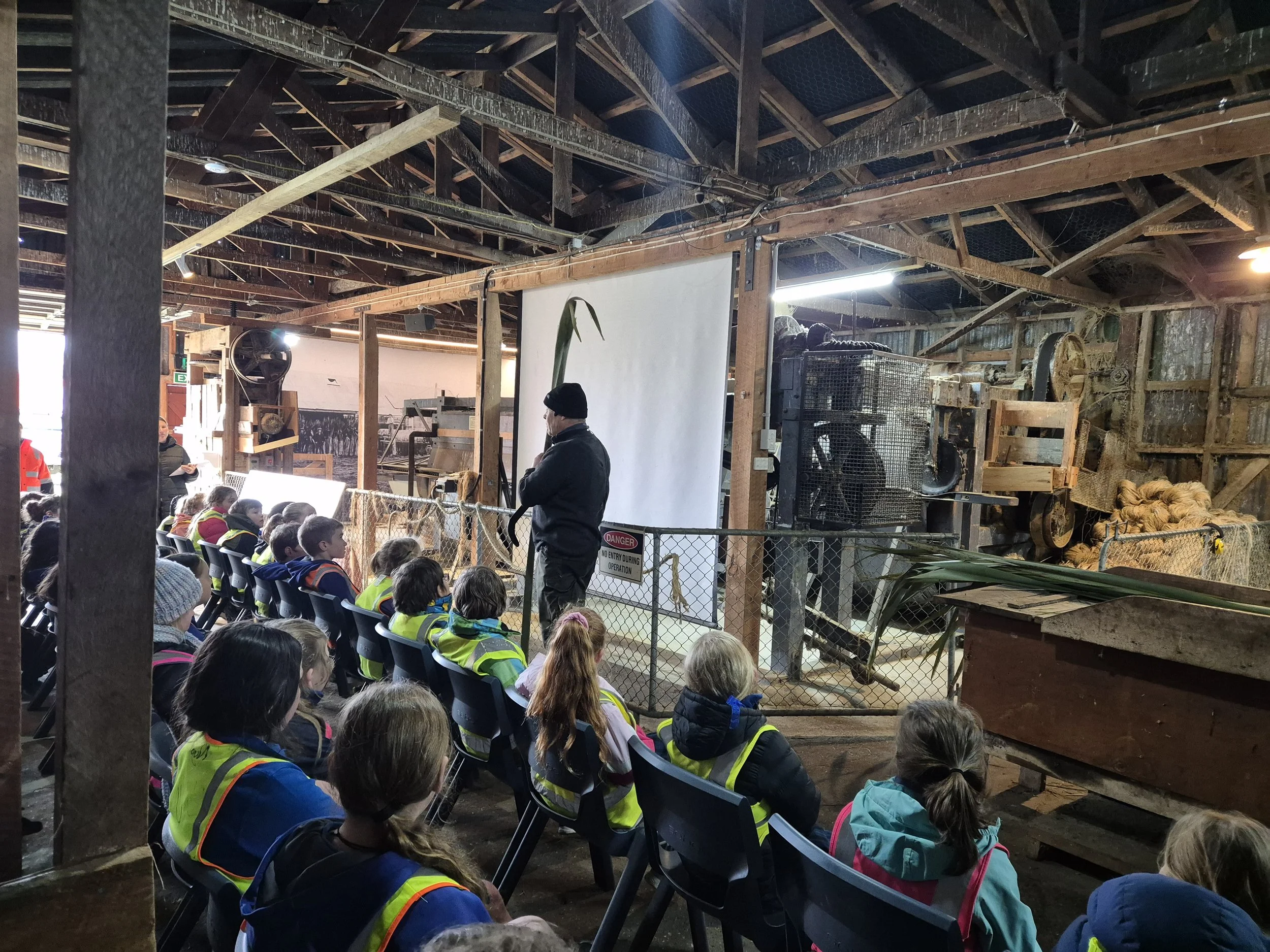
Annual open days at the Templeton Flax Mill have become a much‑anticipated fixture on the Southland calendar, offering the public the rare chance to see live demonstrations of traditional flax‑fibre processing. Held each March, these events form a key part of Southland Heritage Month, where the mill has been a regular and popular feature for several years. The demonstrations bring the machinery to life, showcasing skills and processes that were once central to Southland’s rural industry.
These open days typically attract between 300 and 400 visitors, reflecting the strong community interest in the region’s industrial heritage. Although the event was cancelled in 2022, the mill’s involvement in Heritage Month continues to highlight its importance as one of Southland’s most authentic and engaging heritage sites.
Demonstrations run every 40 minutes, giving visitors the chance to see the full flax‑processing sequence in action. The Templeton Flax Mill is the only remaining working flax mill in New Zealand still operating on its original site. At the height of the industry in the 1890s, flax fibre was the country’s largest export, with around 600 mills operating nationwide.
During open days, visitors are shown a short DVD presentation by Des Templeton, the mill’s last manager, before the machinery is started up. The full process is demonstrated—from a fresh green harakeke blade through to clean, combed fibre ready for use in rope, twine, and other traditional products. Check out Des in action in the YouTube video below, filmed in 2009
We’ve included a video clip kindly shared by Michael Sly of a recent demonstration. You can find it under the ‘Useful Links’ section below. This recording was a particularly popular Facebook post, attracting plenty of likes and comments — it’s a fantastic capture of the mill in action. Thank you, Michael!

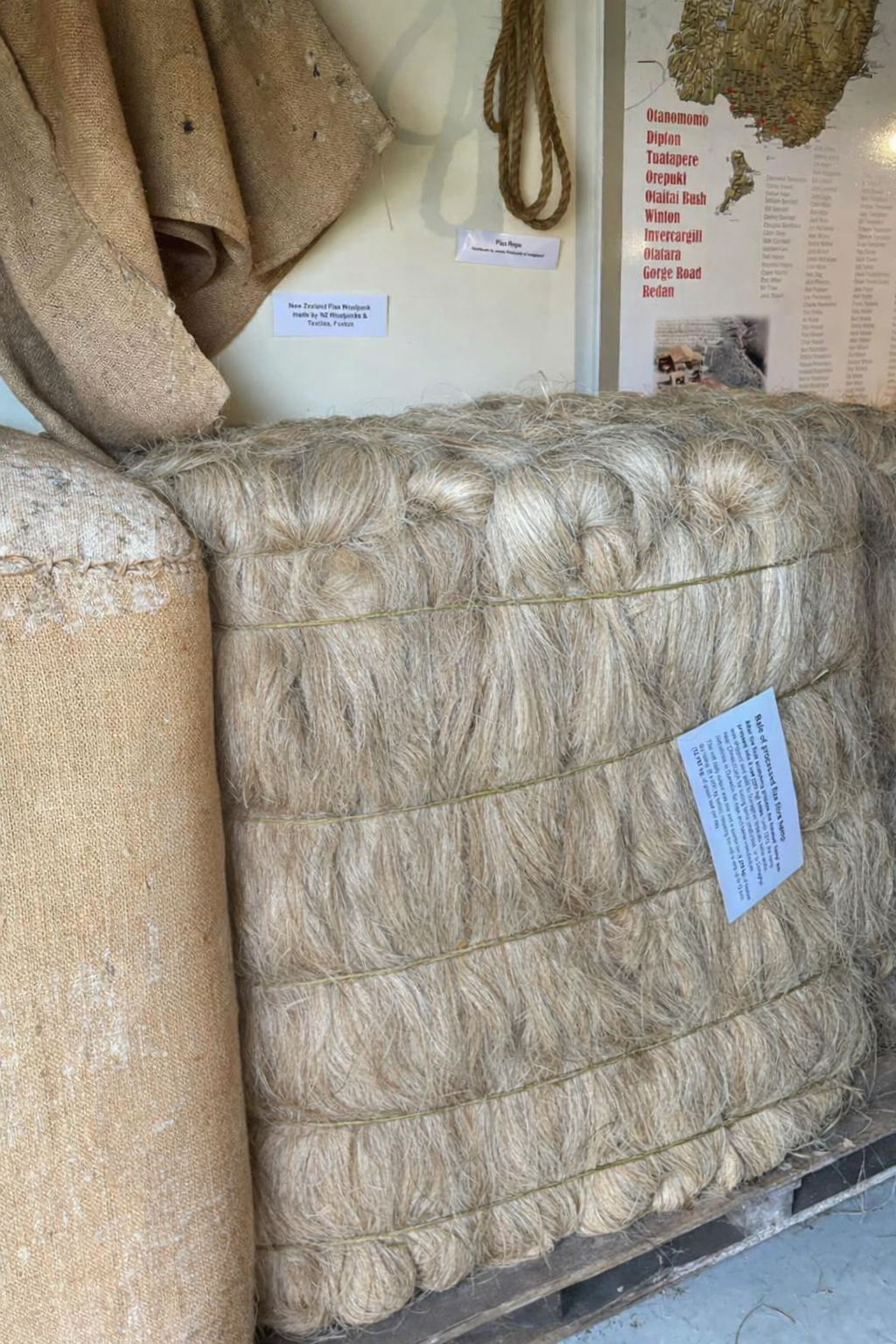
Demonstration with Des Templeton, filmed in 2009.

Useful links

Our thanks to Stephen Logie for his valued contributions to the wording and images included on this page.