
The Albion Hotel - Full Story
Overview
Built: 1859 | Demolished: 1985
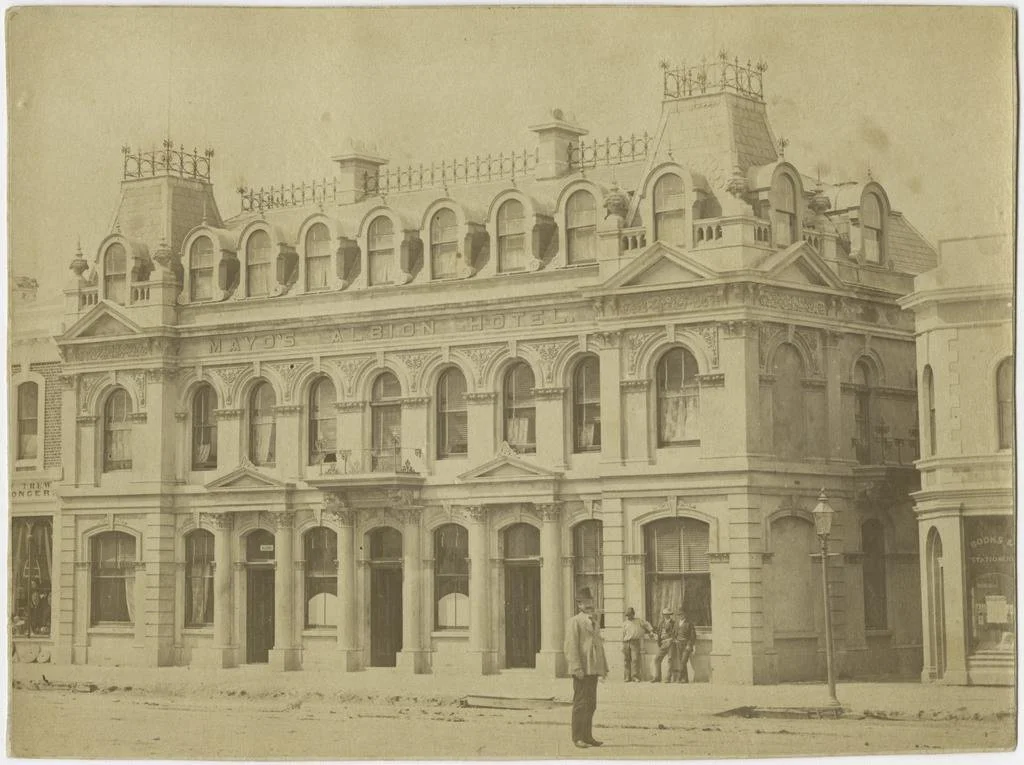
Albion Hotel, Invercargill
Originally built in 1859 and later rebuilt after several fires, the Albion Hotel became one of Invercargill’s most recognisable landmarks on Dee Street. Its final incarnation was transformed into the Albion Picture Theatre in 1916 and later the Majestic Theatre before demolition in 1985. The site’s story traces more than a century of change in Southland’s social and entertainment life.
Mayo’s Albion Hotel c1880 ~ Hocken Collections - Uare Taoka o Hākena ~ Reference Number Box-245-003
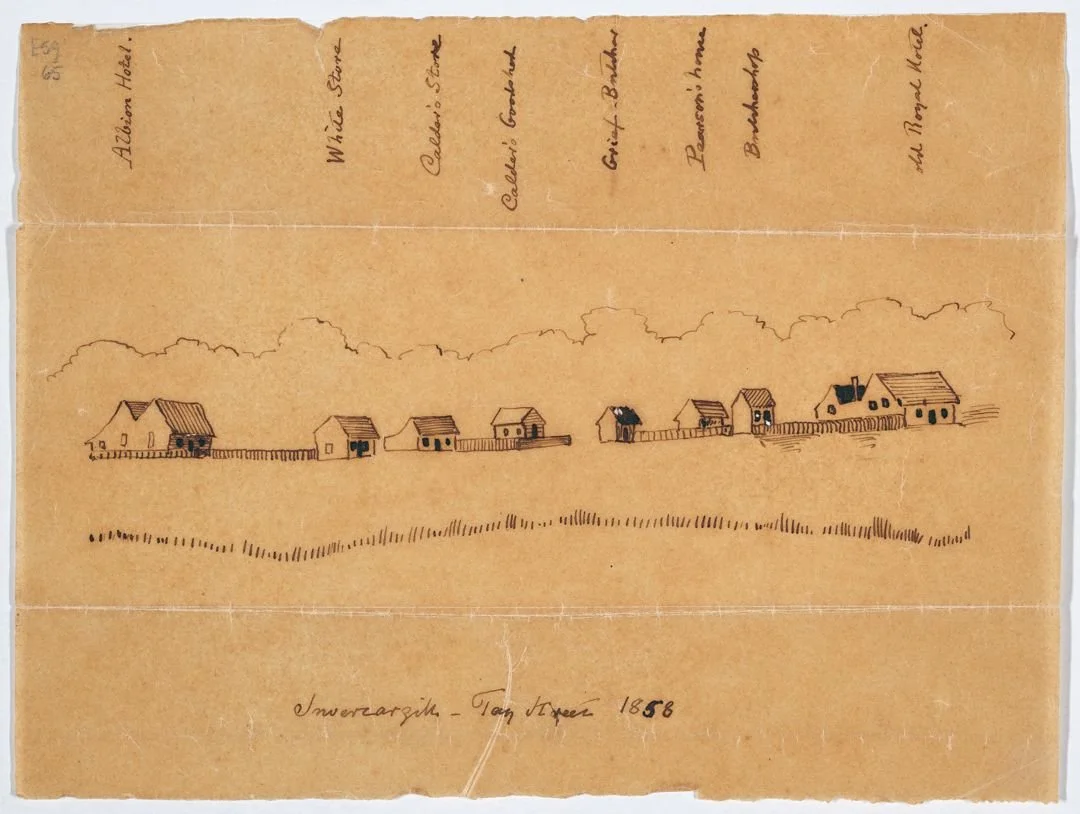
The Albion Hotel (first building) was also known as Lind's Accommodation House. Mantell, Walter Baldock Durrant (Hon), 1820-1895. Artist unknown :Invercargill; Tay Street. 1858.. Douglas, Charles Edward 1840-1916 :[Mountain and West Coast Sketches. Peaks and rivers etc. identified]. Ref: E-059-q-065. Alexander Turnbull Library, Wellington, New Zealand. /records/22347415
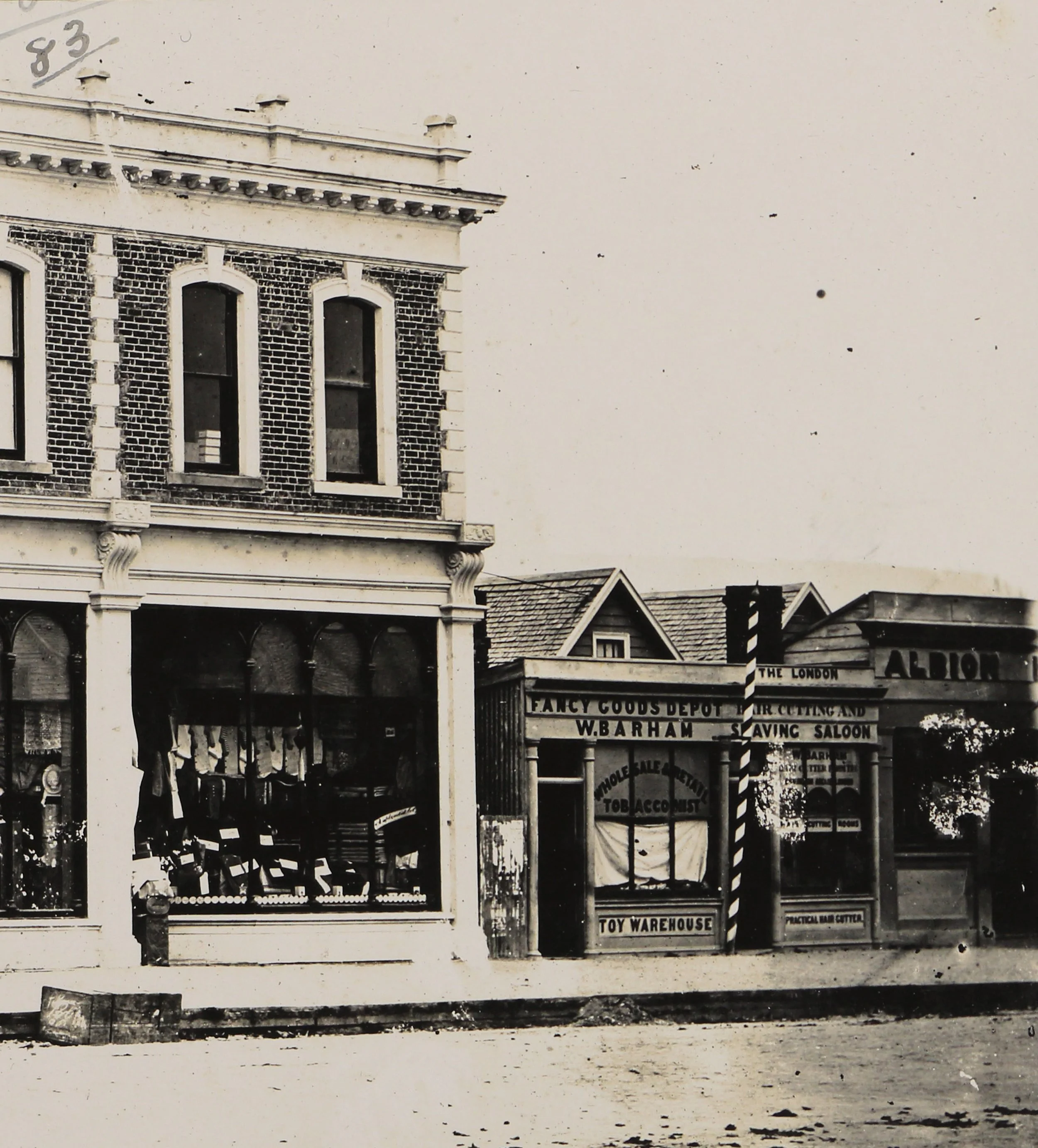
Image includes W. Barham & Invercargill's first hotel, The Albion. c 1870. Invercargill City Libraries and Archives A0105 S27520001_083
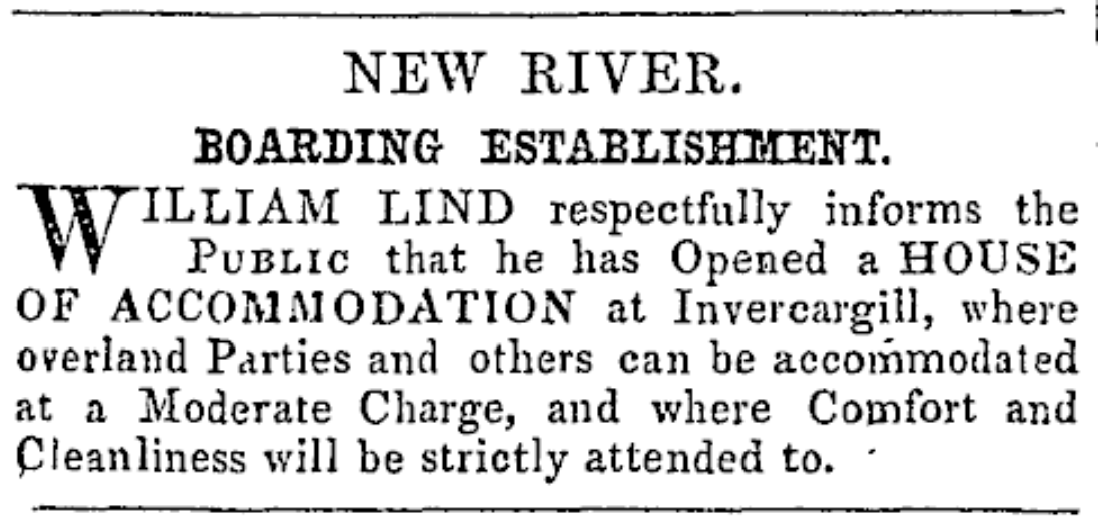
New River Boarding Establishment advert. Otago Witness, Issue 265, 27 December 1856, Page 2
Early Beginnings (1856–1870s)
Invercargill’s Albion appears to have begun in the town’s earliest years, when William Lind built a simple accommodation house on Dee Street in late 1856. It was advertised in January 1857 as the New River Boarding Establishment, offering food and lodging to overland travellers. By August 1857, after Lind had obtained a publican’s licence and enlarged the premises, it was trading as the Waihopai Hotel. The establishment was also later referred to as Lind’s Accommodation House or Lind’s “travellers’ rest”. The Albion Hotel name appears to have been adopted subsequently, beginning a long association between the Albion name and this Dee Street site.
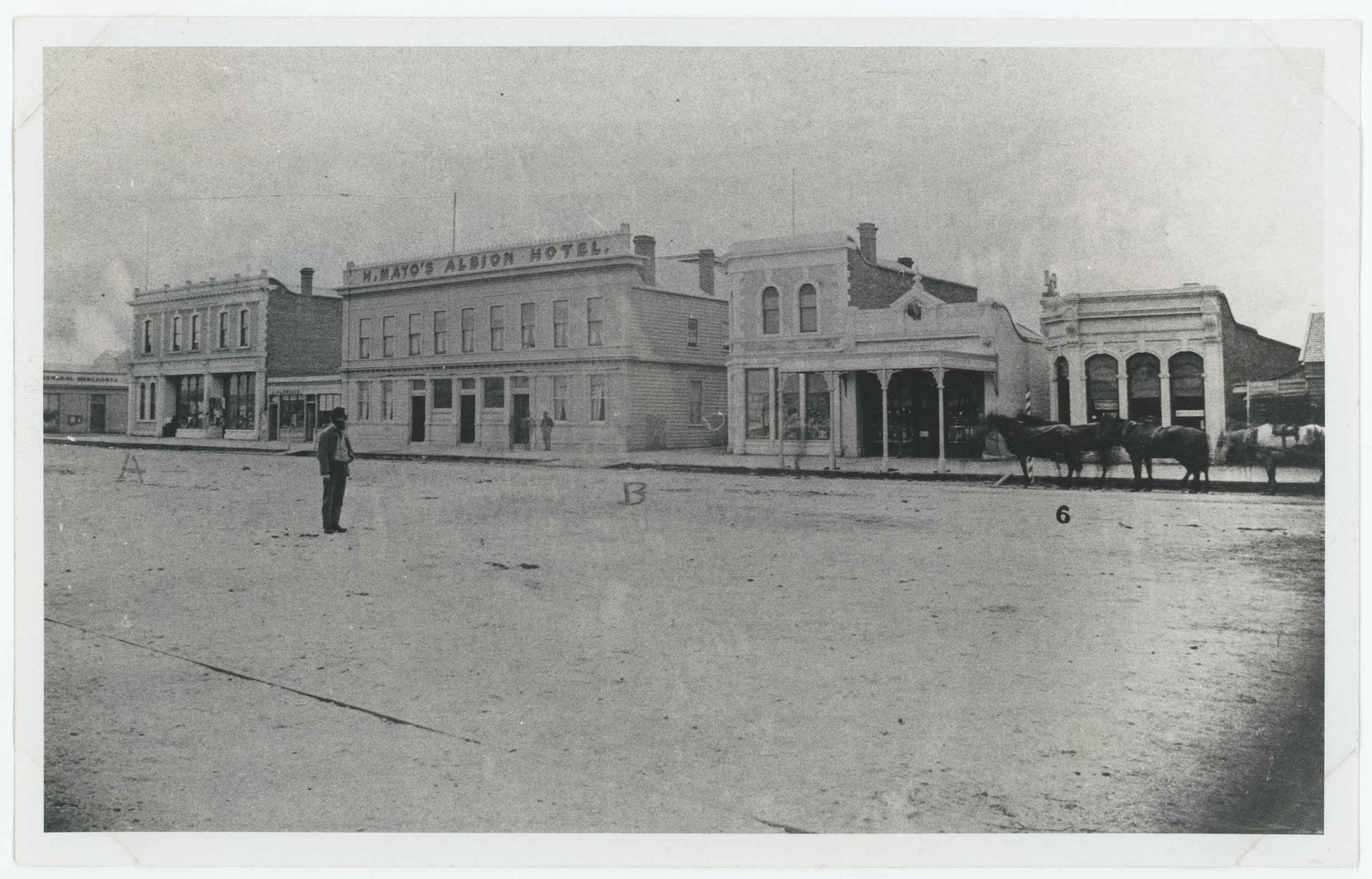
H. Mayo's Albion Hotel, Dee Street c.1874 Wording on back of photo; Invercargill Dee Street showing Lewis’s corner and 2nd Albion Hotel Present site Majestic Theatre Licence lost when prohibition carries 1905 Credit note; Invercargill City Council Archives, Ref:A0248
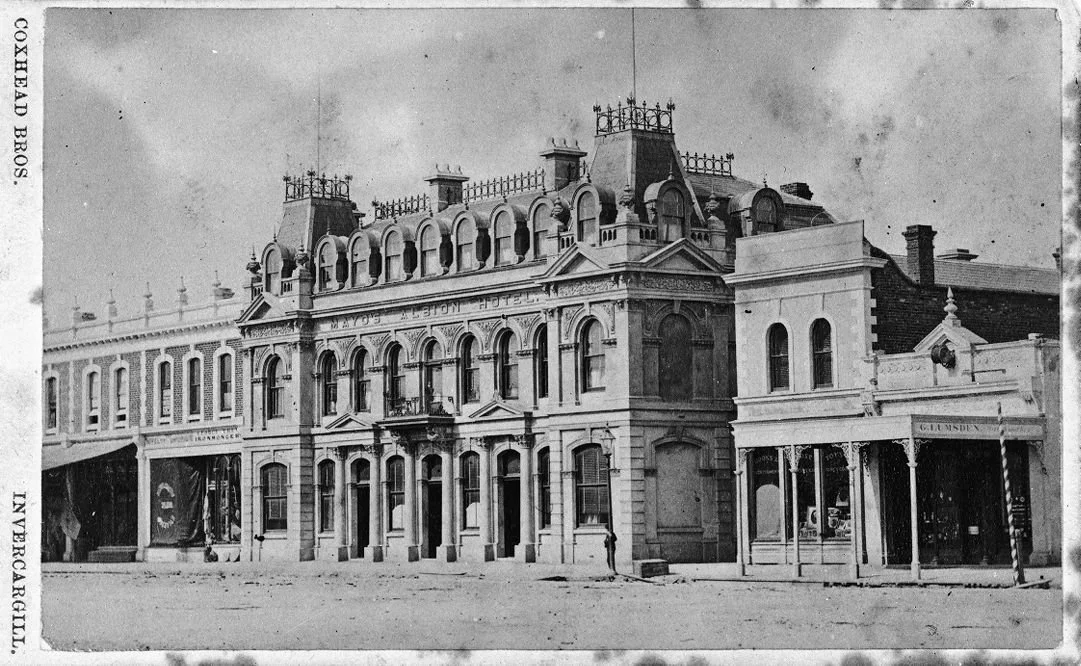
Mayo's Albion Hotel, Invercargill, photographed by the Coxhead Brothers in 1877 National Library ~ Reference 1/2-070865-F
Mayo’s Albion and the 1875 Fire
The original one-storey wooden building was replaced in the early 1870s, after Henry Mayo took ownership, by a larger two-storey wooden hotel known as H. Mayo’s Albion Hotel. In March 1875, a fire reported to have begun in a front parlour destroyed the hotel, its stables and several neighbouring premises. A substantial three-storey brick Albion was erected after the blaze. The hotel became a recognised Invercargill landmark and was the venue for the September 1879 meeting at which the formation of the Invercargill Club was agreed.
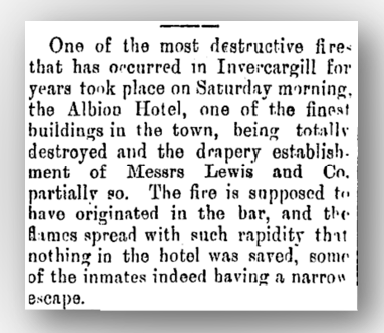
FIRES. Western Star, Issue 1277, 15 August 1888, Page 2
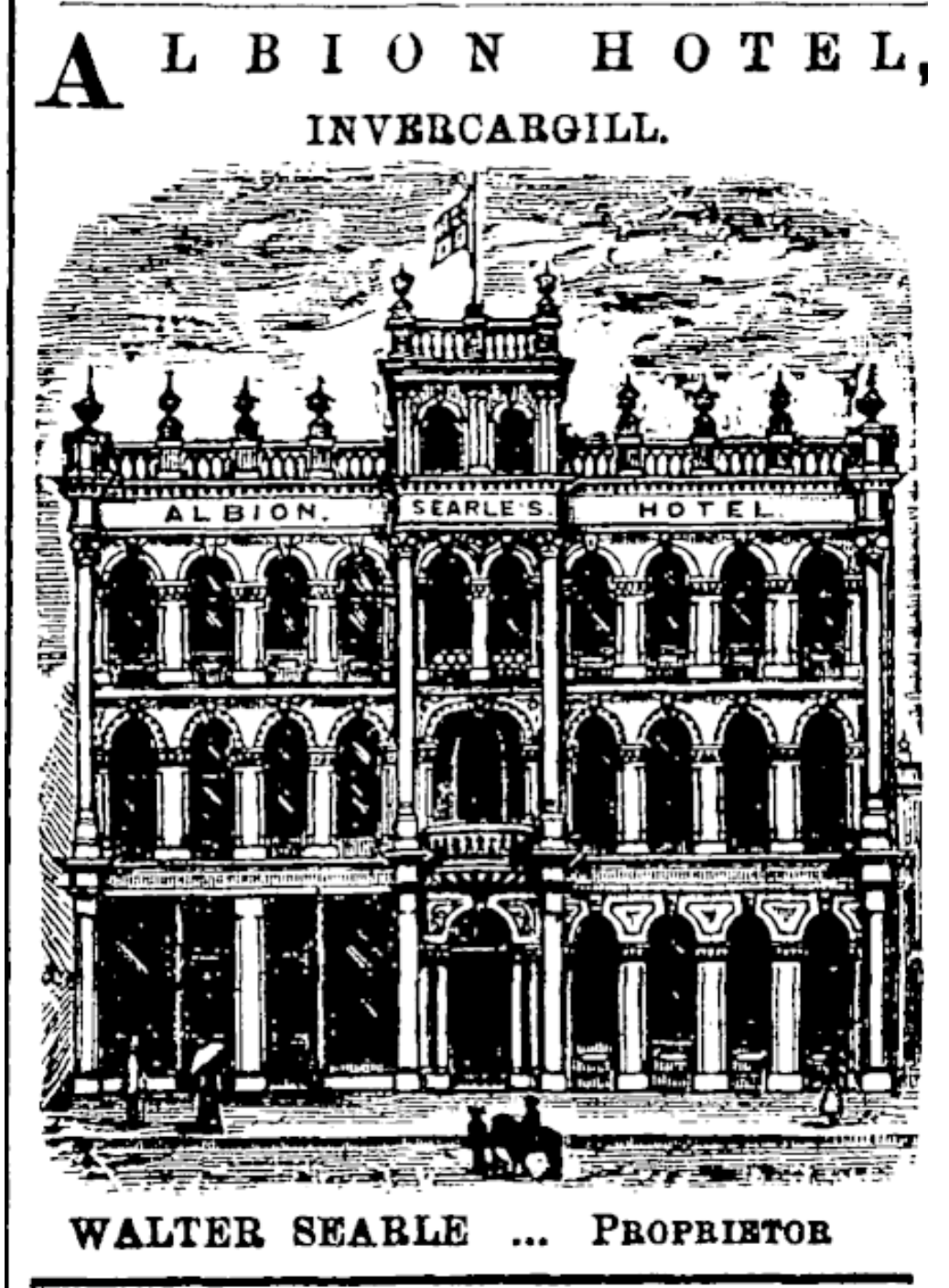
Southland Times, Issue 11830, 2 September 1891, Page 1
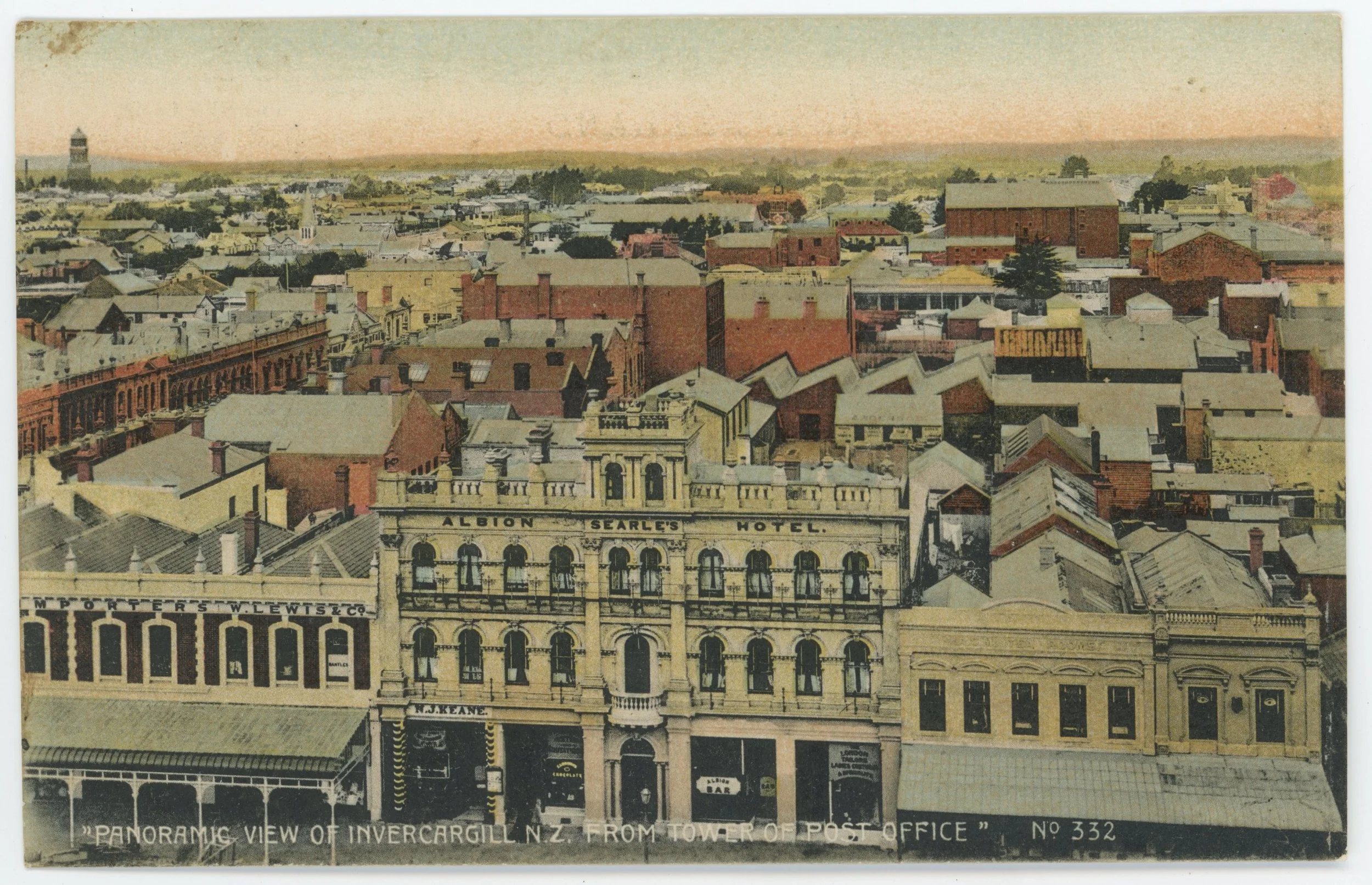
Panoramic View of Invercargill N.Z. From Tower of Post Office featuring Albion Searle's Hotel c.1900 Invercargill City Council Archives A0637_S27880028
The 1888 Fire and Rebuilding
Fire struck again in the early hours of 11 August 1888. Contemporary reports indicated that the blaze may have started near the bar and spread rapidly through Heywood’s Albion Hotel, forcing guests to escape with few belongings. Although parts of the brick exterior remained standing, the hotel’s interior was destroyed. Firefighters prevented the flames from consuming the entire block, while adjoining businesses, including Lewis and Co.’s drapery, sustained damage. Sources in the research notes attribute the subsequent four-storey Albion to architects Mackenzie and Gilbertson and date its completion to about 1889–1890. A later newspaper account identifies Walter Searle as the first licensee of the rebuilt premises, and the business was subsequently advertised as Searle’s Albion Hotel.
The morning after the fire, Louis Elerig wrote to his daughter describing his experiences during the 1888 blaze at the Albion Hotel in Invercargill. He told her he woke around two o’clock to the sound of a bell and stepped into a passage “full of smoke,” feeling the heat of the floor beneath his bare feet as dense smoke poured up the staircase. Realising he could not escape through the main stairway, he rushed to the far end of the building and climbed out a window onto the billiard‑room roof, escaping down a ladder as the fire spread rapidly. He explained that he got out with only “the drawers & flannel I slept in,” emphasising how quickly the blaze overtook the hotel.
Source; Christchurch City Libraries — Archive 459, File Reference CCL‑Arch459‑003
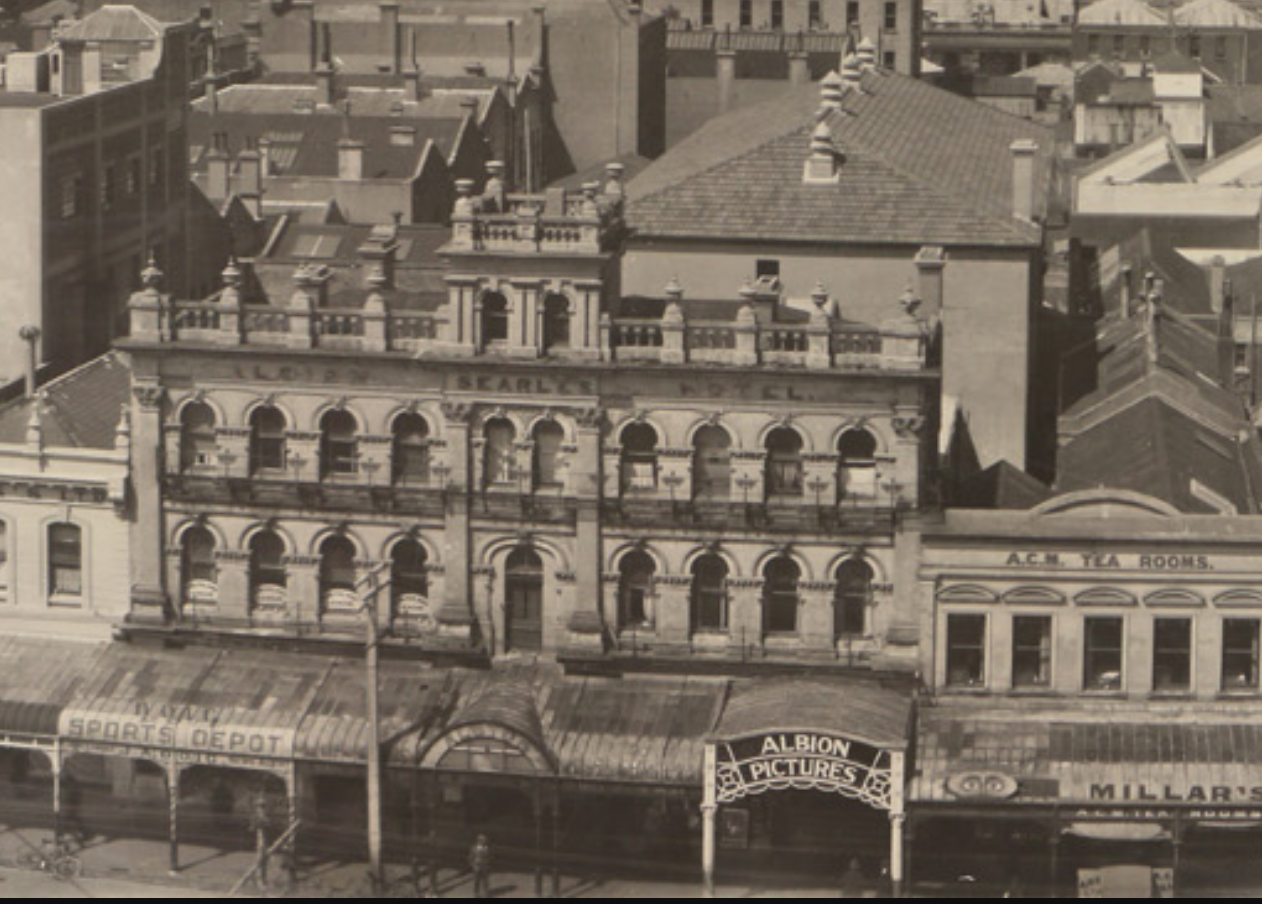
Albion Pictures c. 1924
Acknowledge Invercargill City Libraries and Archives, Ref: A0010 S00940011
No Licence Era and the End of Hotel Operations (1906)
The hotel era ended after Invercargill voted for No Licence in December 1905. The measure came into effect on 30 June 1906, when the Albion was among sixteen city hotels that ceased selling liquor. The building was subsequently used as office space before being converted for entertainment. Available secondary accounts date the opening of the Albion Picture Theatre to April 1916 and describe it as a 1,050-seat cinema promoted at the time as one of Australasia’s finest picture houses.
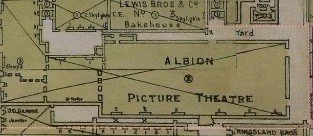
Plans as part of the hotel conversion to theatre, lodged for insurance purposes.
Source: Council of Fire Underwriters’ Association of New Zealand, 1910 (public domain)
Hotel‑keepers and publicans had six months to re‑arrange their lives, for the vote was to come into effect on Saturday, 30 June 1906. At 10 o'clock that night, 16 hotels — the Albion, Appleby, Carriers Arms, Clarendon, Criterion, Deschlers, Empire, Hibernian, Imperial, Princess, Railway, Royal, Shamrock, Southland Club, Victoria and White Swan — closed their doors to drinkers.
Credit: Pubs, Pints and People – 50 years of ILT
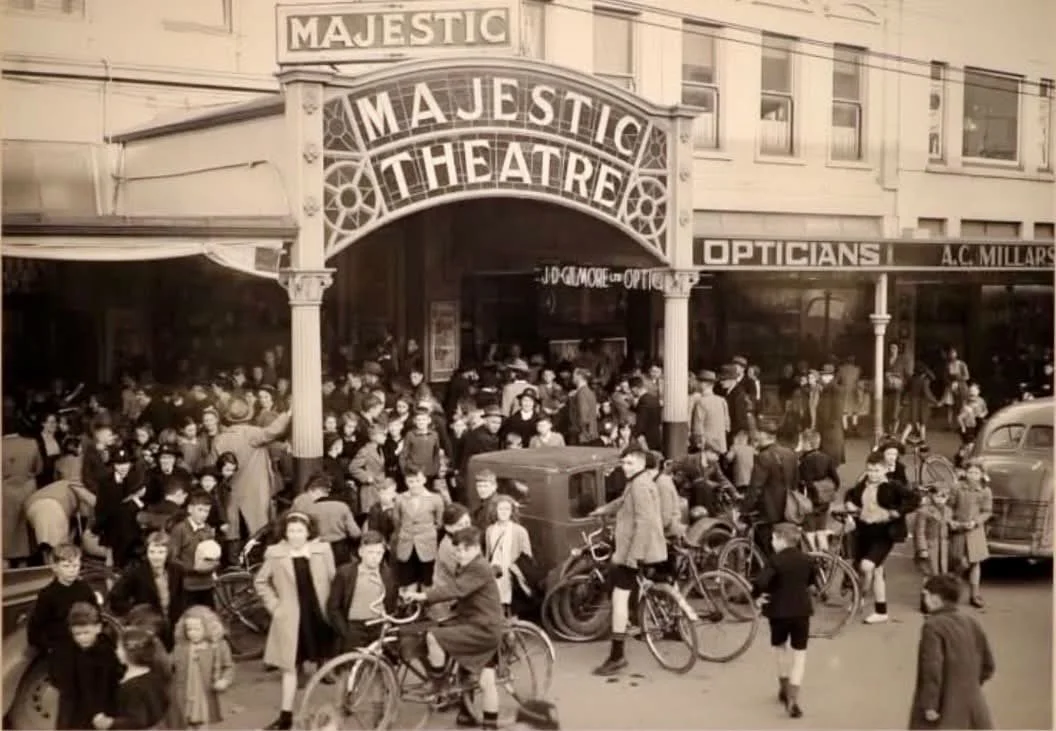
Albion Picture Theatre and Majestic Theatre (1916–1981)
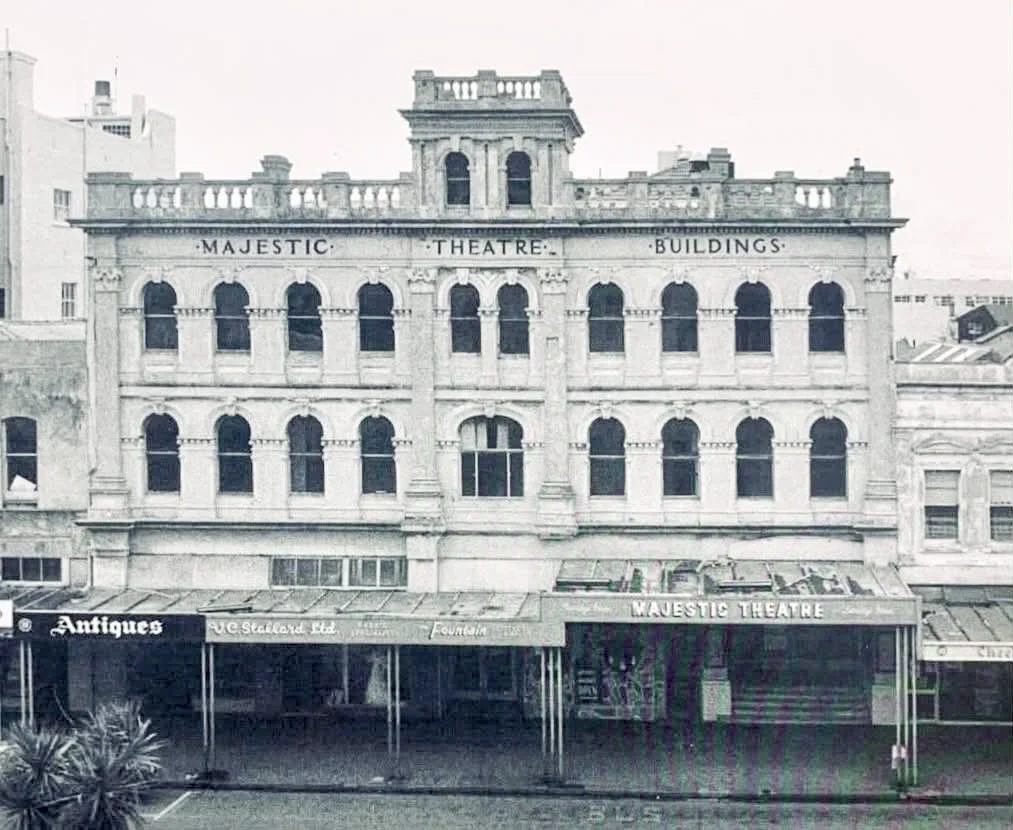
The cinema was renamed the Majestic Theatre in 1928 and remained a familiar Dee Street landmark for more than half a century. Published accounts state that its last regular screening took place on 2 February 1981, followed by occasional special features and holiday programmes.
Demolition and Later Development (1985–1990s)
The building was demolished in 1985. Accounts differ on the date of the later multiplex development, but a new cinema complex ~ Reading Cinema ~ was operating on or near the site by the early 1990s.
Images:
Top right: Photo - Collection of the Southland Museum & Art Gallery Niho o te Taniwha. Accession number: 2001.1868
Bottom left: Southland Museum & Art Gallery
This blog article draws on newspapers published at the time, along with archival records, local histories and specialist heritage sources.
In places where dates or details differ between sources, the wording reflects that uncertainty.